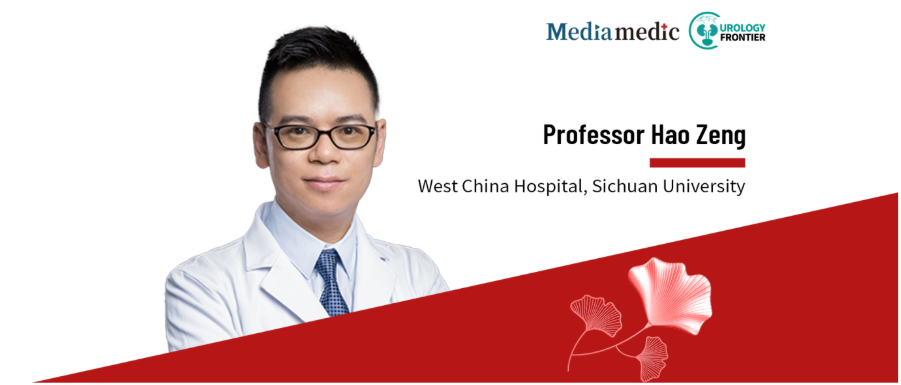
Editor’s Note: From November 10–16, 2025, the 9th West China Uro-Oncology Tianfu Academic Conference and the 11th Annual Meeting of the Genitourinary Tumor Committee of the Sichuan Anti-Cancer Association were successfully held in Chengdu, Sichuan. The conference invited leading experts from across China and abroad to deliver lectures covering clinical data analysis, translational breakthroughs, complex case discussions, and cutting-edge diagnostic and therapeutic innovations. Oncology Frontier – UroStream invited Professor Hao Zeng of West China Hospital, Sichuan University, to discuss the major highlights of this year’s conference and share his perspectives on precision medicine in prostate cancer.
01
Oncology Frontier – UroStream: Could you share the major highlights of this year’s conference?
Professor Hao Zeng:
This year’s Tianfu Conference featured a program closely aligned with practical clinical needs, with three major highlights.
First is the annual scientific review, a well-recognized tradition of the meeting. Held in early November, the conference comes at a time when most major research updates of the year have already been released. A key session therefore focuses on summarizing and interpreting the year’s advances across the three major urologic malignancies—renal cell carcinoma, urothelial carcinoma, and prostate cancer. Top national experts were invited to provide structured overviews, allowing participants to quickly grasp year-round scientific developments, especially innovations in treatment concepts and technological progress. In addition, the Voice of China session showcased important achievements from Chinese investigators, ranging from basic research to clinical translation, further promoting academic exchange among centers nationwide.
The second highlight lies in debate-style panel discussions. For each of the three tumor types, we brought together scientists focused on mechanistic research and clinicians with extensive real-world experience to debate key questions and unmet needs. This format helps bridge basic advances with clinical challenges, offering fresh perspectives on future development.
The third highlight involves a dedicated section on radiation oncology. Most attendees come from urologic surgery, yet modern cancer care increasingly relies on multimodal therapy. We therefore invited renowned radiation oncologists to present the latest technological advances and updated clinical outcome data. This supports stronger multidisciplinary collaboration and ultimately benefits patient care.
Together, these three highlights encapsulate the latest progress in the field and aim to inspire new thinking and meaningful gains for participants.
02
Oncology Frontier – UroStream: The MDT team for urologic oncology at West China Hospital was among the earliest established in China. How do you evaluate the value of multidisciplinary collaboration in precision management of prostate cancer?
Professor Hao Zeng:
Whether for prostate cancer or other urologic malignancies, building a precision, integrated care model is essential. Professor Dingwei Ye from Fudan University Cancer Center was one of the first in China to advocate for this concept and to establish MDT teams at multiple levels nationwide. These teams not only enhance clinical decision-making but also create a platform for identifying unmet needs and fostering clinically driven scientific research.
However, we face a key challenge: How do we ensure homogeneous MDT implementation across different regions and hospital tiers? High-quality MDT work requires coordinated participation from numerous specialties—urologic surgery, medical oncology, imaging, pathology, radiation oncology, and at times cross-disciplinary expertise. This means the needs and obstacles of each MDT team may differ substantially.
Moving forward, we must continue exploring feasible approaches to support standardized and sustainable MDT development nationwide so that precision prostate cancer care can be delivered more equitably and effectively.
03
Oncology Frontier – UroStream: Precision management of prostate cancer remains challenging due to tumor heterogeneity and drug resistance. From your perspective, what are the key bottlenecks in current clinical practice and translational research?
Professor Hao Zeng:
Although my presentation was titled “Frontiers in Precision Diagnosis, Treatment, and Translation in Prostate Cancer,” the reality is that cancer treatment—especially precision medicine—is highly complex.
The first issue is heterogeneity: – Within a single tumor – Between individual patients, and – Across the entire patient population. To implement true precision care, we must establish standards for classifying these heterogeneity patterns. Using molecular, clinical, and pathological markers, prostate cancer needs to be divided into more refined subgroups so that we can design specific and effective therapies—whether PARP inhibitors, AKT inhibitors, radioligand therapy, or others—for the right population.
The second issue concerns variation within known driver mutations. Even when HRR pathway alterations are identified and PARP inhibitors are indicated, not all mutations behave the same. For example, BRCA1/2, CDK12, and ATM alterations differ significantly in biological impact and drug sensitivity. A single therapeutic strategy cannot uniformly apply to all HRR mutations. Identifying the optimal targeted therapy for each specific alteration remains a major challenge.
The third issue is tumor evolution and resistance. Cancer is dynamic. Effective therapies may lose efficacy as resistance develops. Thus, we must consider resistance before it occurs: – Should we intervene earlier based on dominant molecular clones? – Should we select optimal upfront combinations (dual or triple therapy) to delay resistance? – Or should we adopt a sequential approach based on evolving genomic profiles?
These are critical unanswered questions in precision oncology.
In summary, while we emphasize precision medicine, achieving it in real-world practice remains difficult, requiring ongoing refinement and innovation.


Biography

Professor Hao Zeng West China Hospital, Sichuan University