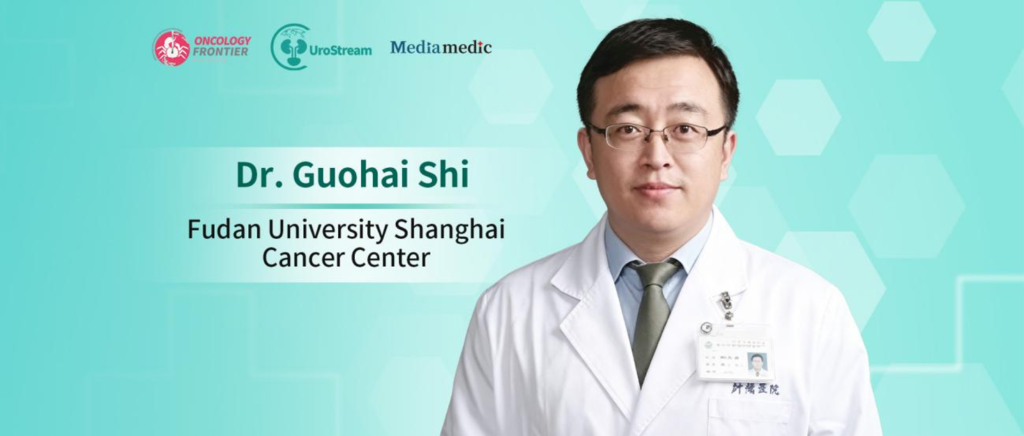
Editor’s Note: The 2026 Pujiang Urological Oncology Academic Conference was held in Shanghai. With the deeper integration of targeted therapy and immunotherapy, survival outcomes for advanced renal cell carcinoma (RCC) continue to improve. Clinical attention has also shifted from “whether to combine treatments” toward “how to select the optimal combination, how to sequence subsequent therapies, and how to balance efficacy with safety.” Oncology Frontier – Urology Frontier invited Professor Guohai Shi of Fudan University Shanghai Cancer Center for an exclusive interview. Professor Shi shared his clinical perspectives on long-term benefit, first-line treatment selection, decision-making after disease progression, and whole-course management in the real-world setting.Long-Term Benefit: Moving from “Having Treatments Available” to Precision Management
01
Targeted therapy combined with immunotherapy has brought major breakthroughs in the treatment of advanced RCC. At the current stage, what areas still require further refinement to truly improve patients’ long-term benefit?
Professor Guohai Shi: The treatment landscape for advanced RCC has undergone profound changes. In the past, median survival was relatively limited. Today, with the use of targeted therapies and immune checkpoint inhibitors, median overall survival (OS) has exceeded 50 months in some studies. Multiple first-line combination regimens have also significantly improved disease control and tumor response rates. Advanced RCC is gradually entering an era of long-term disease management.
However, longer survival does not mean that all challenges have been resolved. The current priority is to improve efficacy while reducing adverse events, avoiding both undertreatment and unnecessary overtreatment. Clinical decisions need to incorporate IMDC risk stratification, histological subtype, rate of disease progression, sites and burden of metastases, symptoms, performance status, organ function, comorbidities, and previous treatments to develop individualized treatment strategies.
At the same time, whole-course management needs to begin earlier. Before treatment starts, potential risks should be assessed; during treatment, efficacy, immune-related adverse events, and toxicities associated with targeted therapies should be continuously monitored, with timely treatment adjustments based on tolerability. Only by integrating risk stratification, response assessment, adverse-event management, and multidisciplinary collaboration throughout the treatment journey can survival benefits demonstrated in clinical studies be more effectively translated into meaningful long-term benefits for patients.
First-Line Treatment Selection: Individualized Matching Within an Evidence-Based Framework
02
As first-line combination regimens become increasingly diverse, the key clinical question has shifted from “whether to combine” to “which combination to choose.” In clinical practice, what factors should be prioritized when making individualized treatment decisions?
Professor Guohai Shi: Current domestic and international guidelines place immunotherapy-based combinations among the important first-line treatment options for advanced RCC, including targeted therapy plus immunotherapy and dual-immunotherapy regimens. Different approaches have their respective evidence bases, but there is no single answer applicable to every patient. The key is to match clinical evidence with individual patient characteristics.
First, we need to consider the disease itself. For patients with a high tumor burden, significant symptoms, or a need for rapid tumor shrinkage, greater attention should be paid to the depth and speed of response. For patients with relatively slow disease progression who may require long-term treatment, long-term tolerability becomes particularly important. IMDC risk category, sarcomatoid features, metastatic organs, and metastases to special sites such as the liver, bone, or brain may also influence treatment selection.
Second, we need to assess whether the patient can tolerate the treatment. A history of autoimmune disease, underlying cardiovascular disease, hepatic or renal dysfunction, bleeding or thrombotic risk, and the patient’s tolerance for different types of adverse events should all be incorporated into the assessment. Drug accessibility, financial burden, and patient preferences also need to be considered. Clinical decisions should be based on thorough communication with the patient and dynamically optimized according to efficacy and toxicity throughout treatment.
Decision-Making After Progression: Identify the Pattern of Progression Before Planning Subsequent Therapy
03
When disease progression occurs after first-line immunotherapy-based combination treatment, there is still debate over whether to continue the original regimen, pursue local intervention, or switch systemic therapy. How should subsequent treatment decisions be made? What additional evidence is needed?
Professor Guohai Shi: Disease progression after first-line treatment does not mean that every patient should immediately receive the same second-line treatment. The first step is to reassess whether the progression is genuine and determine its pattern, including the duration of previous treatment benefit, rate of progression, metastatic sites, number and burden of lesions, as well as laboratory indicators such as hemoglobin, calcium, and lactate dehydrogenase. A new risk assessment should then be performed in conjunction with the patient’s performance status and organ function.
For patients in whom most existing lesions remain controlled but only a small number of lesions have progressed, local treatment such as stereotactic radiotherapy, ablation, or surgery may be considered following multidisciplinary discussion, together with an assessment of whether effective systemic therapy should be continued. For patients with rapid progression at multiple sites or clear treatment resistance, the mechanism of treatment should be changed in a timely manner. Depending on previous therapies and individual patient characteristics, subsequent options may include VEGFR-TKIs, cabozantinib, lenvatinib plus everolimus, HIF-2α pathway-targeted agents, or appropriate clinical trials.
Future prospective evidence is needed to answer three key questions: Which patients can continue their original regimen after local intervention? Which patients should switch treatment at an earlier stage? And what is the optimal sequencing of therapies with different mechanisms of action? Integrating biomarkers, dynamic imaging, and real-world data may help move post-progression decision-making from experience-driven practice toward more refined, evidence-driven strategies.
Real-World Practice: Adapting Guideline Evidence to Individual Patients
04
There are often differences between patients enrolled in randomized controlled trials and those encountered in real-world clinical practice. What practical experience would you like to share regarding whole-course management of advanced RCC?
Professor Guohai Shi: Large phase III randomized controlled trials provide the foundation for clinical decision-making. However, patients enrolled in these studies are generally carefully selected in terms of age, performance status, organ function, and comorbidities, and therefore cannot simply be considered representative of every patient encountered in routine clinical practice. Trial results provide an important reference, but when applying them in clinical practice, we still need to reassess them in the context of each patient’s specific circumstances.
In clinical practice, we consider guideline recommendations, disease characteristics, and patient preferences simultaneously. Treatment intensity is selected according to metastatic sites, tumor burden, and the pace of disease progression; dosage and follow-up frequency are adjusted according to adverse events and quality of life; and when efficacy is comparable, accessibility and financial burden are also taken into consideration. Ultimately, the goal is not only to prolong survival, but also to minimize treatment burden as much as possible—helping patients live longer and live better.
Summary
Professor Guohai Shi emphasized that first-line treatment for advanced RCC should achieve precise matching between individual patients and therapeutic strategies within an evidence-based framework. When disease progression occurs, clinicians should first identify the pattern of progression before deciding whether to pursue local intervention, continue the existing treatment, or switch therapeutic mechanisms. Real-world whole-course management also requires balancing efficacy, safety, quality of life, accessibility, and patient preferences, with continuous dynamic assessment serving as the foundation for maximizing long-term benefit.
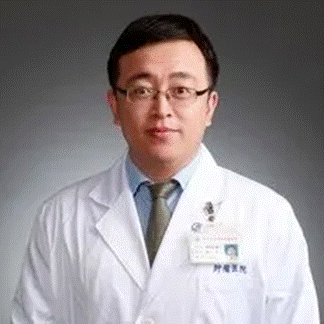
Professor Guohai Shi