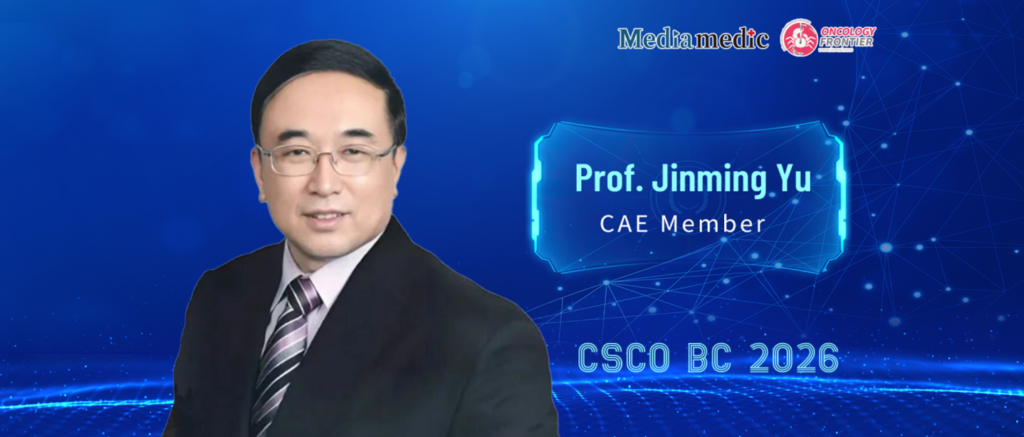
Editor’s Note: The 2026 Chinese Society of Clinical Oncology (CSCO) Guidelines Conference was grandly held in Harbin from April 24–25. Bringing together more than a thousand experts, the meeting focused on guideline updates, intelligent healthcare, and multidisciplinary collaboration, with a strong emphasis on extending standardized cancer care to grassroots medical institutions and narrowing regional disparities in oncology practice.During the conference, Oncology Frontier conducted an exclusive interview with Professor Jinming Yu, current President of CSCO and Academician of the Chinese Academy of Engineering. The discussion centered on the unique strengths of CSCO guidelines—rooted in Chinese patient data and clinical practice—as well as the internationalization of Chinese guidelines alongside the global expansion of China-developed innovative therapies.
01
Oncology Frontier: Multiple CSCO guidelines received major updates during this conference. Could you explain the unique advantages of CSCO guidelines for Chinese patients? While remaining grounded in local clinical realities, how can CSCO guidelines further expand internationally to benefit cancer patients worldwide?
Academician Jinming Yu: CSCO guidelines are fundamentally built upon data from Chinese patients, as well as the clinical experience and practical insights of Chinese physicians. Their primary purpose is to serve Chinese patients. As a result, the guidelines place greater emphasis on improving treatment efficacy, minimizing treatment-related toxicity, and enhancing patients’ quality of life, making them particularly applicable within the Chinese clinical setting.
At the same time, we actively benchmark ourselves against internationally recognized guidelines such as those from NCCN and ESMO. This means that CSCO guidelines must also “go global.” Only through internationalization can they truly benefit cancer patients worldwide, and this remains one of CSCO’s key strategic goals.
02
Oncology Frontier: CSCO guidelines are accelerating their internationalization efforts. How do you view the relationship between the global expansion of innovative Chinese drugs and the internationalization of Chinese guidelines? In your opinion, what further efforts are needed to truly achieve globalization in both areas?
Academician Jinming Yu: The global expansion of innovative therapies and the internationalization of guidelines are not contradictory—they are mutually reinforcing.
In recent years, China’s pharmaceutical innovation landscape has advanced tremendously, progressing from “following” to “running alongside,” and in some areas even taking a leading position globally. This progress has attracted significant international attention.
In addition, for certain malignancies—such as nasopharyngeal carcinoma and liver cancer—the majority of patients are concentrated in China. Consequently, we possess extensive clinical data, practical experience, and research resources in these disease areas.
Therefore, we should actively engage with the international community by integrating China’s clinical experience with Western treatment concepts and practices. Through this East–West collaboration, we can develop guidelines that are applicable to global patient populations.
This is also why CSCO continues to prioritize collaboration with international partners. For example, we strongly encourage globally oriented clinical research projects led by Chinese investigators. Only through such efforts can the true internationalization of CSCO guidelines be realized.
03
Oncology Frontier: CSCO guidelines are regarded as nationally authoritative academic standards. Beyond nationwide educational programs and in-depth guideline interpretation, what additional measures do you believe are necessary to promote guideline implementation and truly narrow disparities in oncology care between regions and healthcare institutions?
Academician Jinming Yu: One of the defining characteristics of the CSCO brand is the CSCO guidelines themselves.
During this conference, CSCO leadership held extensive discussions regarding the future direction of guideline development. On one hand, the guidelines must continue serving as standardized references for major medical centers. On the other hand, we must devote even greater effort toward bringing experts and guidelines down to the grassroots level.
At this conference’s media briefing, I emphasized that we need to reach primary care hospitals, county-level hospitals, and hospitals located in historically underserved revolutionary regions. Only by enabling physicians in these settings to achieve standardized and homogeneous cancer care can we genuinely address the problem of inconsistent oncology management at the grassroots level.
04
Oncology Frontier: There are currently many oncology guidelines, consensus statements, and expert recommendations available, and discrepancies between them are sometimes unavoidable. Faced with so many options, how should clinicians—especially grassroots physicians—approach clinical decision-making?
Academician Jinming Yu: At present, the market includes not only legitimate guidelines but also counterfeit versions, unauthorized publications, and recommendations issued by non-standard academic organizations. In clinical practice, grassroots physicians should adhere to guidelines officially recognized by the state and designated by government authorities.
There are already numerous guideline systems across different disease areas. In addition to CSCO guidelines, organizations such as the Chinese Medical Association, the Chinese Anti-Cancer Association, and the Chinese Medical Doctor Association have also issued their own guideline documents.
Taking CSCO guidelines as an example, they enjoy a high level of national recognition. Many decisions regarding drug formularies and reimbursement lists are developed with reference to CSCO recommendations.
Of course, this also places a greater responsibility on us. In developing CSCO guidelines, we must consistently uphold fairness, objectivity, academic rigor, and scientific leadership. This is an ongoing mission that requires continuous collective effort from all stakeholders moving forward.
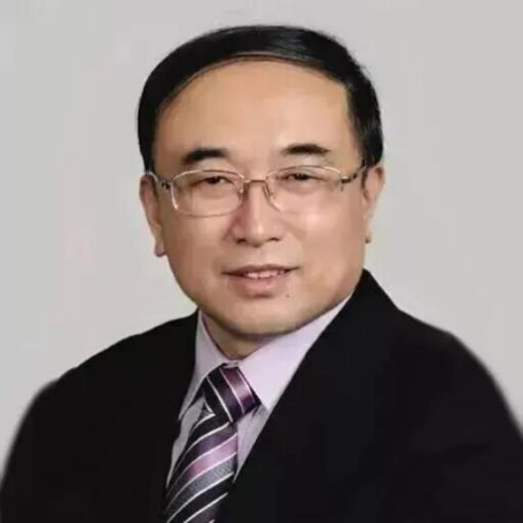
Professor Jinming Yu
Academician of the Chinese Academy of Engineering