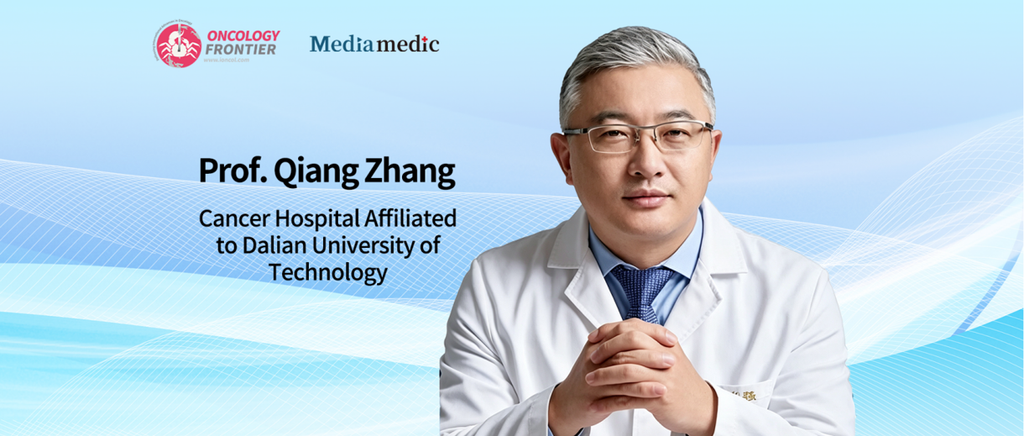
Editor's Note: From November 6 to 8, 2026, the 7th Dalian Xinghai Medical Forum Academic Conference on Comprehensive Cancer Treatment was successfully held. After seven years of development, the Xinghai Forum has grown into an academic platform that brings together multiple disciplines and showcases cutting-edge advances in oncology. During the conference, Professor Qiang Zhang of the Cancer Hospital Affiliated with Dalian University of Technology shared the “Liaoning experience” in breast specialty development. Professor Zhang emphasized the importance of establishing standards and technical expertise as the foundation, giving equal priority to clinical practice and research, and advancing MDT and full-cycle patient management. In developing specialized disease centers, priorities should include establishing unified standards, strengthening talent development, building shared research platforms, and standardizing long-term data follow-up. As breast surgery moves toward greater precision and functional preservation, surgeons must be equipped with both a comprehensive treatment philosophy and a diverse range of surgical skills. This article summarizes the key points from the interview for our readers.01
Oncology Frontier: At this conference, you shared the Liaoning experience in specialty development. Compared with technological breakthroughs at individual hospitals, the Liaoning experience has achieved notable results in building a regional breast specialty ecosystem. What are the key drivers behind this approach?
Professor Qiang Zhang: The key drivers behind the development of Liaoning Cancer Hospital’s breast specialty and regional network can be summarized in three areas.
First, standards provide the benchmark, while technology forms the foundation. Our hospital is well prepared to implement updated guidelines and incorporate prospective advances in breast cancer treatment. Our breast surgery department was established in 1989, making it one of the earliest specialized breast surgery departments in China. Through the dedication of successive generations of physicians, it has grown from 45 beds to six wards with 280 beds. We also have three breast medical oncology departments and one breast radiation oncology department. We treat approximately 3,500 patients with breast cancer annually, making us one of the largest breast centers in Northeast China and across the country.
In addition to traditional radical surgery, sentinel lymph node biopsy, oncoplastic breast-conserving surgery, endoscopic reconstruction, and robotic surgery, we also perform highly complex reconstructive procedures such as deep inferior epigastric perforator (DIEP) flap reconstruction. The breast-conserving surgery rate in China is approximately 20%, whereas our department has achieved a rate of over 55%, with a reconstruction rate of 12%. Our technological leadership enables us to better meet patients’ needs.
Second, we place equal emphasis on clinical expertise and clinical research. Our clinical research is primarily focused on three areas. We conduct investigator-initiated trials (IITs) targeting clinical challenges and unmet needs. We also lead regional and national multicenter studies, focusing on areas such as neoadjuvant endocrine therapy and HR-positive/HER2-low breast cancer, and have achieved encouraging results. In addition, we prioritize innovative concepts in clinical research, using IITs to identify new areas of innovation and lay the groundwork for future large-scale randomized controlled trials (RCTs).
At the same time, we are advancing clinical translation. Last year, our hospital became affiliated with Dalian University of Technology. Drawing on the university’s strengths in engineering and artificial intelligence, we jointly established an AI-based platform for predicting and evaluating responses to neoadjuvant therapy. We hope that predictive models will help guide the future development of neoadjuvant treatment.
Third, we prioritize unity, collaboration, and innovative research, shifting from a disease-centered to a patient-centered approach. MDT has been incorporated into our department’s routine operations, and approximately 80% of patients with breast cancer can now receive early MDT assessment and care. After admission, cases are discussed to determine the surgical approach, postoperative adjuvant treatment, the need for neoadjuvant therapy, and potential enrollment in clinical trials.
In the future, our outpatient services will become more diversified, encompassing screening clinics, breast cancer diagnosis and treatment clinics, and psychological rehabilitation clinics. Through one-stop services, we aim to provide full-cycle management covering prevention, screening, diagnosis, treatment, and rehabilitation, thereby ensuring comprehensive care throughout the breast cancer journey.
We are also establishing and improving patient databases and biobanks, strengthening postoperative rehabilitation, adjuvant treatment, and regular follow-up. These resources will support big-data-driven clinical translational research and help us provide patients with better-standardized diagnosis and treatment.
02
Oncology Frontier: The transition from individual specialty development to specialized disease centers has been a recurring theme at this forum. When establishing a fully integrated specialized disease center, which areas should receive investment priority?
Professor Qiang Zhang: As our department develops, we hope to expand the number of beds and invest in more resources and equipment. However, two elements are indispensable to a specialized disease center.
The first is standards. Establishing unified standards for diagnosis and treatment is the most important priority when setting up a specialized disease center. Otherwise, different physicians may offer different treatment plans—Plan A or Plan B—to the same patient, making it difficult for the patient to trust the recommendations and feel reassured about treatment. Our specialized disease center currently comprises six breast surgery departments, three breast medical oncology departments, and one breast radiation oncology department. Because patients are distributed across different wards, we have adopted unified diagnostic and treatment standards to ensure consistent, high-quality care regardless of which department or ward they receive treatment in.
The second is talent. MDT requires not only surgeons but also specialists in breast medical oncology, imaging, pathology, and breast radiation oncology, among other disciplines. If the surgical team is strong but imaging and pathology capabilities are weak, the center cannot meet the requirements for precision breast-conserving surgery, and effective MDT collaboration becomes difficult.
We hope that physicians in every department will achieve a high level of expertise so that collaboration can be smoother, the quality of care can be higher, and patients can receive more responsible treatment. For departments with relatively weaker capabilities, we have brought in outstanding experts from across China and involved them in MDT collaboration remotely. Through routine cooperation and expert mentorship, we aim to promote the development of MDT teams. Only when talent development brings all participating disciplines to a comparable level can we truly ensure the quality of MDT and establish high-quality standards of care for patients.
03
Oncology Frontier: Regarding operational mechanisms such as performance assessment for cross-disciplinary teams and research data sharing, what pitfalls do you think should be avoided?
Professor Qiang Zhang: First, in data sharing and cross-disciplinary collaboration, we must prioritize consistent and standardized treatment. Patient populations and case profiles differ among centers. If data are simply pooled without standardization, they often cannot be meaningfully used for scientific research. Once standardized, however, patients across different wards can receive treatment according to the same protocols, improving case comparability and enhancing the scientific value of the data.
Second, we need to establish a standardized and comprehensive database. Its data fields must be continuously refined and its content expanded to facilitate subsequent data extraction.
Third, we must attach great importance to data quality and long-term follow-up. Our department requires patients to undergo regular follow-up at one month, three months, six months, and one year after surgery, with the relevant information entered into the database. Long-term follow-up findings, particularly patient-reported outcome (PRO) research, are highly meaningful for clinical diagnosis and treatment. Continuously improving long-term follow-up and database systems can help reduce pitfalls in clinical research and make research data more accurate.
04
Oncology Frontier: Breast cancer diagnosis and treatment are continually evolving, as are the underlying treatment philosophies. Surgical management is gradually moving beyond traditional tumor resection toward precision treatment, functional preservation, and aesthetic reconstruction. What technological and conceptual changes in breast surgery do you consider most important today? What new capabilities will surgeons need in the future?
Professor Qiang Zhang: Advances in systemic treatment have brought breast cancer into an era of precision medicine. Patients are living longer, and cure rates are increasing. At the same time, longer survival means that patients have increasingly high expectations for quality of life, and the standards expected of breast surgeons are also rising. Breast surgery has evolved from the original Halsted radical mastectomy to breast-conserving surgery and, more recently, to functional breast surgery. This evolution reflects increasingly demanding standards for both surgical quality and quality of life, while maintaining survival as the primary goal.
I believe breast surgery is evolving in three main areas.
First, precision treatment based on artificial intelligence and big-data models. Breast-conserving surgery rates in Europe and the United States are approximately 70%, compared with around 20% in most centers in China, although some centers have exceeded 50%. Increasing the breast-conserving surgery rate depends on imaging assessment, pathological evaluation of surgical margins, and the application of breast-conserving surgical techniques before surgery. For example, when more than 20% of breast tissue is removed due to a defect, level I oncoplastic surgery (OPS) may be used for reconstruction. We have already established a philosophy of precision surgery.
Second, functional surgery. Patients want not only complete tumor removal but also preservation of function. In the past, axillary lymph node dissection was routinely performed during breast cancer surgery. Today, sentinel lymph node biopsy is performed in almost all patients with early-stage breast cancer. If one or two sentinel lymph nodes contain macrometastases and the assessment is sufficiently accurate, further axillary lymph node dissection may not be necessary; radiotherapy can be used instead. This helps preserve upper-limb function and avoid lymphedema. Preserving arm function improves quality of life and helps patients return to their social and family lives.
Third, the evolution of surgery in the context of comprehensive treatment. Comprehensive treatment has become possible because patients are living longer and cure rates are increasing. Building on these improvements, we can further advance surgical techniques. For every patient, comprehensive treatment begins with surgery as the first point of assessment. Surgeons must evaluate the patient’s overall condition. Some patients need neoadjuvant treatment first, with subsequent surgery determined by their response. Other patients with early-stage disease do not require neoadjuvant therapy and can proceed directly to surgery, followed by adjuvant treatment.
Therefore, surgeons must have more than a surgical mindset. They should also adopt a comprehensive treatment philosophy with a strong understanding of medical oncology. By selecting appropriate patients and choosing rational surgical approaches and treatment strategies, they can improve cure rates.
Future surgeons should have a strong foundation in systemic treatment knowledge and be proficient in multiple surgical techniques. In the past, a surgeon might have been able to practice throughout their career using just one surgical approach. That is no longer sufficient. If a department performs only one or two types of breast cancer surgery, its development will inevitably be constrained.
As systemic treatment advances and patients live longer, their needs will become increasingly diverse. Surgeons capable of performing a wider range of procedures will therefore be increasingly sought after. Meanwhile, advances in biomaterials are bringing more materials into clinical practice, making increasingly complex procedures easier to perform. They can also help avoid situations in which tissue must be borrowed from one area to repair another. The goal is to achieve the best possible therapeutic and aesthetic outcomes with the least possible injury to patients. This is an essential direction for the future of breast surgery.