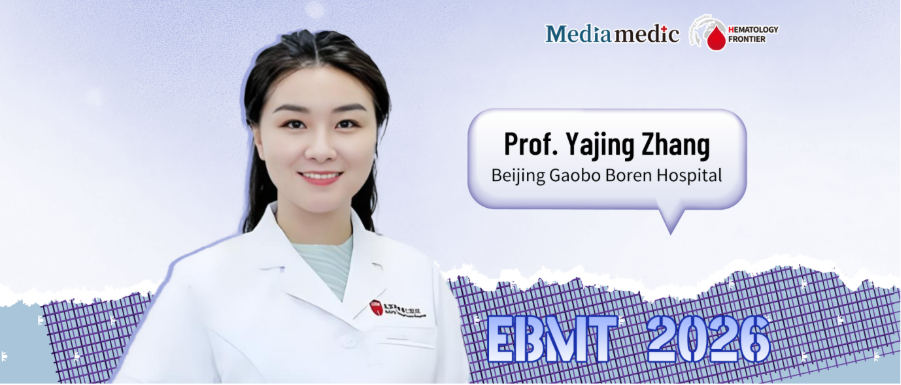
At the 52nd EBMT Annual Meeting held in Madrid in March 2026, the team led by Prof. Zhang Yajing presented a novel therapeutic approach targeting one of the most challenging clinical scenarios in hematology—early relapse after allogeneic hematopoietic stem cell transplantation (allo-HSCT). The study, presented by Dr. Su Aiguo, explored a recipient-derived (donor-chimeric) CAR-T strategy combined with multimodal therapy, offering a new direction for patients with extremely poor prognosis.
Background
Early relapse within 12 months after allo-HSCT, particularly when accompanied by extramedullary disease (EMD), is associated with dismal outcomes and very limited survival. Conventional salvage approaches, such as donor lymphocyte infusion (DLI) or intensive chemotherapy, are often associated with significant toxicity and a high risk of life-threatening graft-versus-host disease (GVHD).
A key clinical challenge, therefore, is how to preserve antitumor activity while minimizing alloimmune complications.
This study introduces an innovative concept: generating CAR-T cells from dual donor-derived lymphocyte sources. These include donor-derived cells that have been “educated” within the recipient’s in vivo environment after transplantation, as well as original donor cells. By integrating these into a multimodal treatment strategy, the approach aims to eradicate aggressive disease, overcome drug resistance, and bridge patients to a potentially curative second allo-HSCT.
Methods
Four patients with early relapse (6–12 months post-transplant) and extramedullary disease were included. The cohort consisted of two patients with multiple myeloma, one with T-lymphoblastic lymphoma, and one with acute myeloid leukemia, with a median age of 37 years.
At relapse, all patients demonstrated donor chimerism greater than 98% and had no prior history of severe GVHD.
Three patients received CAR-T cells generated from post-transplant peripheral blood, representing donor-derived cells functionally “educated” within the recipient environment. Among them, two multiple myeloma patients received BCMA-targeted CAR-T (one with single-target and one with sequential BCMA/GPRC5D dual-target therapy), while the T-LBL patient received CD7-targeted CAR-T.
The fourth patient, an AML case with aberrant CD7 expression, received CD7 CAR-T generated from the original healthy haploidentical donor.
All patients underwent lymphodepletion with fludarabine and cyclophosphamide prior to CAR-T infusion. Treatment response was evaluated according to IMWG or ELN criteria. The study was approved by the institutional ethics committee (ChiCTR1900025419).
Results
All four patients achieved a response, resulting in an objective response rate of 100%, with all patients reaching MRD-negative status.
From a safety perspective, no cases of GVHD induction or exacerbation were observed. No immune effector cell–associated neurotoxicity syndrome (ICANS) occurred, indicating excellent neurological safety. Cytokine release syndrome (CRS) was mild in all cases (grade 1 or lower), and overall treatment was well tolerated.
Conclusion
This study provides a proof of concept for donor-derived CAR-T therapy in the setting of early post-transplant relapse.
Recipient-derived (donor-chimeric) CAR-T combined with multimodal strategies can rapidly and effectively eradicate aggressive extramedullary disease while maintaining strong antitumor activity and avoiding GVHD.
Importantly, this approach demonstrates that integrating “recipient-educated” donor CAR-T cells with original donor-derived CAR-T cells may offer a feasible pathway to bridge heavily pretreated patients toward a potentially curative second haploidentical transplant.
Expert Profile

Prof. Zhang Yajing is Director of the Oncology & Immunotherapy Innovation Center at Borui Hospital, Gaobo Medical Group. She is a leading investigator in cellular immunotherapy and translational oncology, with a strong focus on applying advanced cell-based therapies to both malignant and autoimmune diseases.