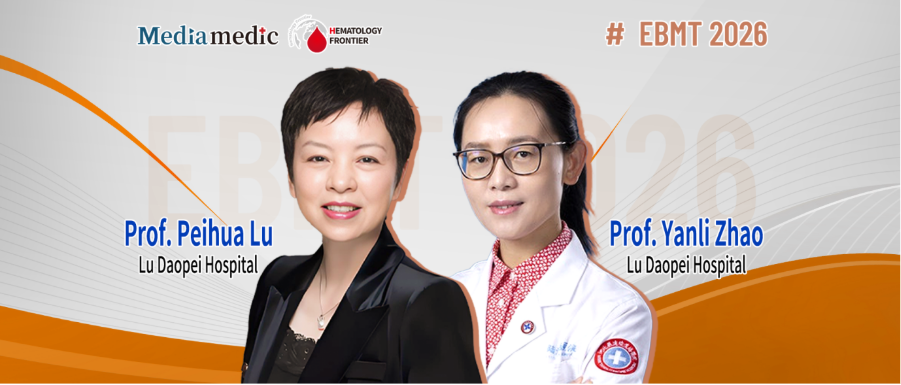
Allogeneic hematopoietic stem cell transplantation (HSCT) in elderly patients with hematologic malignancies remains associated with substantial treatment-related risks. Choosing among haploidentical, matched sibling, and matched unrelated donors remains challenging due to the lack of robust head-to-head comparative data. At the 52nd EBMT Annual Meeting (March 22–25, 2026, Madrid, Spain), a retrospective single-center study conducted by the team of Prof. Peihua Lu and Prof. Yanli Zhao from Lu Daopei Hospital was presented. The study systematically analyzed long-term outcomes in 133 patients aged ≥60 years undergoing HSCT with different donor sources.
This article features a detailed summary provided by Prof. Yanli Zhao.
Study Background
For patients aged ≥60 years, allogeneic HSCT carries increased risks, including higher toxicity, elevated non-relapse mortality (NRM), and graft-versus-host disease (GVHD).
However, direct comparative evidence among haploidentical (haplo), matched unrelated donor (MUD), and matched sibling donor (MSD) transplantation in this population remains limited. A reliable comparison is needed to guide optimal donor selection.
Methods
We retrospectively analyzed 133 patients aged ≥60 years who underwent first allogeneic HSCT between December 2013 and January 2015.
Patients were categorized by donor type:
- Haploidentical (haplo, n = 99)
- Unrelated donor (URD, n = 16)
- Matched sibling donor (MSD, n = 18)
Comparisons included clinical characteristics, engraftment kinetics, GVHD incidence, viral reactivation, relapse, transplant-related mortality (TRM), and long-term survival outcomes.
Results
Among the 133 patients:
- 99 received haploidentical HSCT
- 16 received unrelated donor HSCT
- 18 received matched sibling HSCT
Median ages differed slightly (haplo: 63 years; URD: 62 years; MSD: 61 years; P = 0.010).
Disease distribution was similar across groups:
- AML: 60.9%
- MDS: 25.6%
- ALL: 7.5%
- CMML: 6%
Most patients underwent transplantation in CR1 (57.9%) or ≥CR2 (9.8%), with similar pre-transplant MFC-MRD positivity (~22%).
Conditioning regimens were predominantly busulfan-based (92.5%). Antithymocyte globulin (ATG) use differed significantly by donor type (100% in haplo and URD vs. 44.4% in MSD; P < 0.001).
Graft sources varied:
- Haplo: bone marrow + peripheral blood (98%)
- URD: peripheral blood (100%)
- MSD: bone marrow + peripheral blood (66.7%), peripheral blood alone (33%) (P < 0.001)
The haplo group received higher mononuclear cell (MNC) doses (median 9.10 × 10⁸/kg) compared with URD (5.97 × 10⁸/kg) and MSD (7.20 × 10⁸/kg) (P < 0.001), while CD34⁺ and CD3⁺ doses were comparable.
Median engraftment times were similar across groups:
- Neutrophils: 15–16 days
- Platelets: 13–15 days
During a median follow-up of 20.8 months:
The unrelated donor group demonstrated the best overall survival (OS) at 68.75%, followed by the matched sibling group (55%), while the haplo group had the lowest OS (46.96%).
The 3-year cumulative relapse incidence did not differ significantly among groups.
Transplant-related mortality was highest in the haplo group (44.20%).
Within 100 days post-transplant:
- Grade II–IV acute GVHD: 30.08%
- Grade III–IV acute GVHD: 15.79%
- Chronic GVHD incidence: 11.71%
Subgroup Analysis
Among 90 patients in complete remission:
- MSD group had the highest 3-year OS (72.73%)
- URD group: 66.67%
- Haplo group: 53.90%
MSD had the lowest TRM, while relapse rates remained low across all groups.
Among 43 non-remission patients:
- URD group showed superior 2-year OS compared with haplo and MSD
- URD group had 0% relapse rate
- Haplo group had the highest relapse rate
- MSD group had the highest TRM
Conclusion
For patients undergoing transplantation in complete remission, matched sibling donor transplantation remains the preferred option due to its favorable survival and safety profile.
For patients with relapsed or refractory disease, matched unrelated donor transplantation may offer superior outcomes.
When neither matched sibling nor unrelated donors are available, haploidentical HSCT remains a viable and effective alternative.
Expert Profiles

Peihua Lu, MD Lu Daopei Hospital
Prof. Lu serves as Medical Director of Lu Daopei Hospital and Director of the Beijing Lu Daopei Institute of Hematology. She completed medical training at Peking University, residency at the University of Nebraska Medical Center, and subspecialty training at Stanford University. She is board-certified in hematology and oncology in the United States and holds multiple leadership roles in national academic societies.
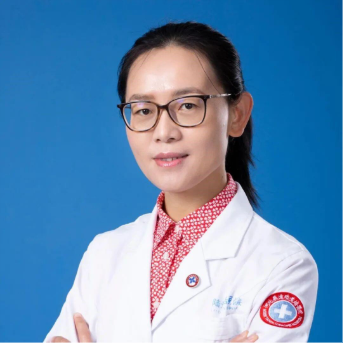
Yanli Zhao, MD Lu Daopei Hospital
Prof. Zhao is Director (vice president level) of the Hematopoietic Stem Cell Transplantation Department at Lu Daopei Hospital, with over 20 years of experience and more than 1,500 allogeneic transplants performed.
She trained at MD Anderson Cancer Center and has extensive expertise in haploidentical, unrelated, sibling, and cord blood transplantation. Her clinical focus includes acute leukemia, MDS, CMML, and complex hematologic diseases, as well as transplantation following immunotherapy (e.g., CAR-T).
She has published in international journals and frequently presents at major conferences including ASH, EBMT, and APBMT.