Pediatric aplastic anemia (AA) patients undergoing umbilical cord blood transplantation (UCBT) face outcomes that are closely tied to the infused cell dose. While recommended CD34⁺ cell doses have been established for hematologic malignancies, no clear standard exists for AA, leaving an important gap in clinical decision-making. At the 52nd EBMT Annual Meeting held in Madrid in March 2026, Prof. Jianping Zhang and colleagues presented a study addressing this issue, offering evidence to guide dose optimization in pediatric AA.
Background
UCBT has become an established therapeutic option for a range of hematologic diseases. However, unlike malignant conditions, pediatric AA lacks well-defined guidance regarding the optimal CD34⁺ cell dose. This study was therefore designed to identify a clinically meaningful threshold that could improve transplant outcomes while reducing complications.
Methods
This retrospective analysis included 63 pediatric AA patients treated between March 2013 and April 2024, all of whom received ATG-based unrelated UCBT. The investigators used a Fine–Gray competing risk model, with death treated as a competing event, to determine the CD34⁺ cell dose cutoff associated with 180-day EBV viremia.
Based on this analysis, patients were stratified into two groups according to CD34⁺ cell dose: ≤0.16 × 10⁶/kg and >0.16 × 10⁶/kg. The study evaluated EBV viremia within 180 days, overall survival (OS), and GVHD-free, failure-free survival (GFFS), while also comparing immune reconstitution between groups.
Results
The cohort included 29 boys and 34 girls, with a median age of 5 years (range, 1–16). Nearly all patients received a BU/CY/FLU/ATG-based conditioning regimen. The median infused CD34⁺ cell dose was 0.203 × 10⁶/kg. Engraftment outcomes were favorable overall, with neutrophil engraftment achieved in 95.2% of patients at a median of 16 days, and platelet engraftment in 88.9% at a median of 29 days.
A CD34⁺ cell dose threshold of 0.16 × 10⁶/kg emerged as the optimal cutoff for predicting early EBV reactivation. Patients receiving doses above this threshold had a significantly lower 180-day incidence of EBV viremia (7.89% vs. 28.63%, P = 0.024).
Although not reaching statistical significance, higher CD34⁺ dosing was also associated with improved long-term outcomes, with a 5-year overall survival of 89.0% compared with 75.6% in the lower-dose group. A similar favorable trend was observed for GVHD-free, failure-free survival.
Multivariate analysis confirmed CD34⁺ cell dose as an independent predictor of EBV risk. A higher dose markedly reduced the likelihood of EBV viremia (HR 0.05; 95% CI: 0.00–0.82; P = 0.035), with a comparable trend observed for CMV. Other variables, including ATG dose and T-cell subsets, were not significantly associated with outcomes.
In terms of immune recovery, overall reconstitution patterns were comparable between groups. However, CD4⁺ T-cell recovery appeared to occur earlier in patients receiving higher CD34⁺ doses, suggesting a potential immunological advantage.
Conclusion
A CD34⁺ cell dose greater than 0.16 × 10⁶/kg appears to significantly reduce early EBV reactivation in pediatric AA patients undergoing UCBT, while also showing a trend toward improved long-term survival. Although further research is needed to clarify its impact on immune reconstitution, higher CD34⁺ dosing may offer an additional benefit in accelerating CD4⁺ T-cell recovery.
Expert Profile

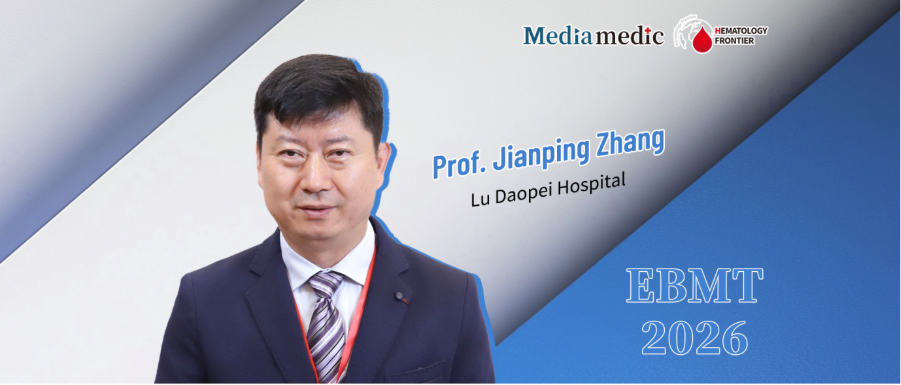
Prof. Jianping Zhang is a senior transplant specialist at Lu Daopei Hospital and serves as Director of the Transplant Ward at both Hebei Yanda Lu Daopei Hospital and Beijing Lu Daopei Hospital. He has extensive experience in hematopoietic stem cell transplantation, particularly in cord blood transplantation, and is actively involved in multiple national academic societies in hematology and transplantation.