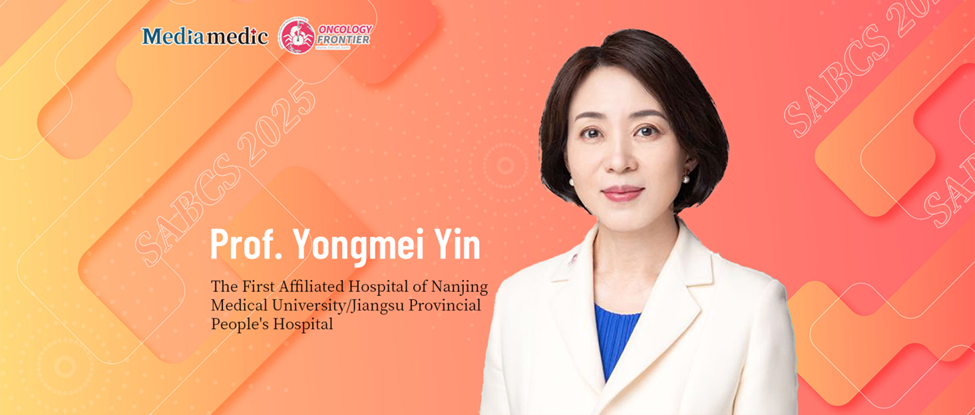
Editor’s Note: At the 2025 San Antonio Breast Cancer Symposium (SABCS), the team led by Professor Yongmei Yin from the First Affiliated Hospital of Nanjing Medical University / Jiangsu Province Hospital released results from a landmark Phase II clinical study (Abstract No. PS3-11-12). The study demonstrated that disitamab vedotin (RC48) combined with pyrotinib, as a chemotherapy-free neoadjuvant regimen for HER2-positive breast cancer, achieved encouraging efficacy with a favorable safety profile.
This fully China-developed HER2-ADC plus TKI neoadjuvant “de-chemotherapy” strategy establishes a novel treatment paradigm for HER2-positive breast cancer. This article provides an overview of the study.
Study Background: Why Is De-Chemotherapy Important?
Currently, the standard neoadjuvant treatment for HER2-positive breast cancer is dual HER2 blockade (trastuzumab + pertuzumab) combined with chemotherapy. Although this approach achieves pathological complete response (pCR) rates of 50%–70%, chemotherapy-related toxicities—such as myelosuppression, neurotoxicity, alopecia, nausea, and vomiting—significantly impair patients’ quality of life.
As a result, there has been long-standing clinical interest in whether it is possible to maintain or even improve efficacy while reducing or eliminating chemotherapy. This Phase II clinical trial from China provides new hope in this regard.
Disitamab vedotin (RC48) is a novel HER2-targeted antibody–drug conjugate (ADC) carrying the cytotoxic payload MMAE, featuring a cleavable linker and a bystander effect. It can eliminate not only HER2-positive tumor cells but also HER2-low or heterogeneously expressing tumor cells. Pyrotinib is an irreversible pan-HER tyrosine kinase inhibitor (TKI) capable of blocking compensatory signaling pathways. Notably, both agents are developed in China.
With the goal of removing chemotherapy without compromising efficacy, Professor Yin’s team combined these two China-developed anti-HER2 agents and evaluated a chemotherapy-free neoadjuvant regimen of HER2-ADC plus TKI in patients with operable or locally advanced HER2-positive breast cancer. The efficacy and safety of this strategy were systematically assessed.
Study Design
This was a multicenter, single-arm Phase II clinical trial enrolling eligible patients with operable or locally advanced HR-negative/HER2-positive breast cancer.
Patients received four cycles of neoadjuvant RC48 plus pyrotinib, followed by surgery. The primary endpoint was the pCR rate (ypT0/is ypN0) in patients receiving neoadjuvant therapy.
Postoperative adjuvant treatment was determined based on pathological response:
- Patients achieving pCR received maintenance therapy with trastuzumab plus pertuzumab
- Patients without pCR received T-DM1 (another ADC) or dual HER2 blockade
Study Results
As of June 25, 2025, 17 patients were evaluable, with a median follow-up of 5.2 months (range: 1.9–8.5 months).
All patients were female, with:
- Mean age: 51.9 years (range: 29.0–67.0)
- Mean BMI: 21.8 kg/m² (range: 17.5–30.5)
01 | Efficacy Outcomes
Pathological Complete Response (pCR): pCR is a key surrogate marker for long-term survival benefit. Among the 15 patients who underwent surgery, the pCR rate reached 53.3%, meaning that more than half had no residual invasive cancer in both the breast and axillary lymph nodes.
Overall Response Rate (ORR): Based on preoperative imaging assessment, 88.2% (15/17) of patients achieved significant tumor shrinkage, demonstrating strong antitumor activity.
Survival Outcomes: At a median follow-up of 5.2 months, no patients experienced disease progression, recurrence, or death. Longer-term outcomes such as event-free survival (EFS) require further follow-up.
02 | Safety Profile
The most common adverse event was abnormal liver function (94.1%), with 29.4% being grade ≥3 and requiring medical intervention. However, the median duration was 13 days, and no patients discontinued treatment due to adverse events.
Other common adverse events included hypokalemia and elevated serum creatinine.
Overall, the regimen did not exhibit the expected severe chemotherapy-related toxicities (such as significant myelosuppression). Its safety profile differed from conventional chemotherapy and was clinically manageable and monitorable.
Study Summary and Future Perspectives
This exploratory study achieved several breakthrough findings:
- First proof of concept: A chemotherapy-free neoadjuvant regimen of RC48 plus pyrotinib is feasible and highly effective in HER2-positive breast cancer, achieving pCR rates comparable to many chemotherapy-containing standard regimens.
- Paradigm shift: This strategy offers a potential new option for patients who are unwilling or unsuitable for chemotherapy, with the possibility of maintaining efficacy while significantly improving quality of life.
- Future directions: Longer follow-up is required to further characterize hepatotoxicity. As a single-arm study, these findings must be validated in head-to-head randomized Phase III trials against standard chemotherapy-based regimens. Exploratory biomarker analyses are ongoing and may help identify patients most likely to benefit from this approach.
Professor Yin’s team stated that these results support the initiation of randomized controlled trials comparing this chemotherapy-free regimen with standard chemotherapy-containing strategies. Biomarker analyses are also underway to refine patient selection.
This study opens a promising new pathway for neoadjuvant treatment of HER2-positive breast cancer—a China-developed “ADC + TKI” combination strategy. While larger and longer studies are still needed, it represents a meaningful step toward a precision, de-chemotherapy era, with the potential to deliver better outcomes while reducing treatment-related toxicity.
“Allowing patients to achieve strong efficacy without suffering from chemotherapy has always been our goal. This study represents an important first step.” — Professor Yongmei Yin
Author Notes
The research team led by Professor Yongmei Yin has long been dedicated to precision diagnosis and treatment of breast cancer. In this study, Dr. Tianyu Zeng served as first author. Team members also included Dr. Chunxiao Sun, Professor Jue Wang, Professor Xiaoming Zha, among others. Professor Yongmei Yin was the corresponding author.
Corresponding Authors
- Professor Yongmei Yin

- Professor Xiaoming Zha

- Professor Jue Wan

- Dr. Tianyu Zeng

- Dr. Chunxiao Sun