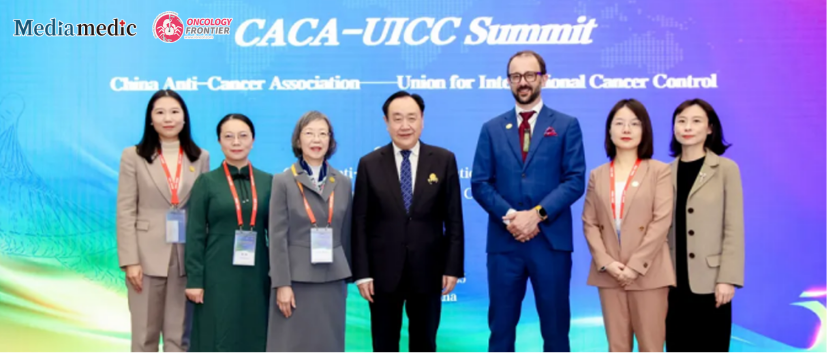
Editor’s Note: The 2025 China Conference on Holistic Integrative Oncology (CCHIO), jointly hosted by the Chinese Anti-Cancer Association (CACA), the Organizing Committee of the Tengchong Scientists Forum, the World Association of Integrative Oncology (WAIO), and the China Academy of Integrative Medicine Development Strategy, was held in Kunming, Yunnan from November 6–9, 2025. On November 7, the CACA–UICC Special Session, co-organized by CACA and the Union for International Cancer Control (UICC), concluded successfully. The session brought together experts and scholars from China and abroad to discuss comprehensive cancer management, global challenges and opportunities, and collaborative strategies for advancing global cancer control.
The CACA–UICC Special Session
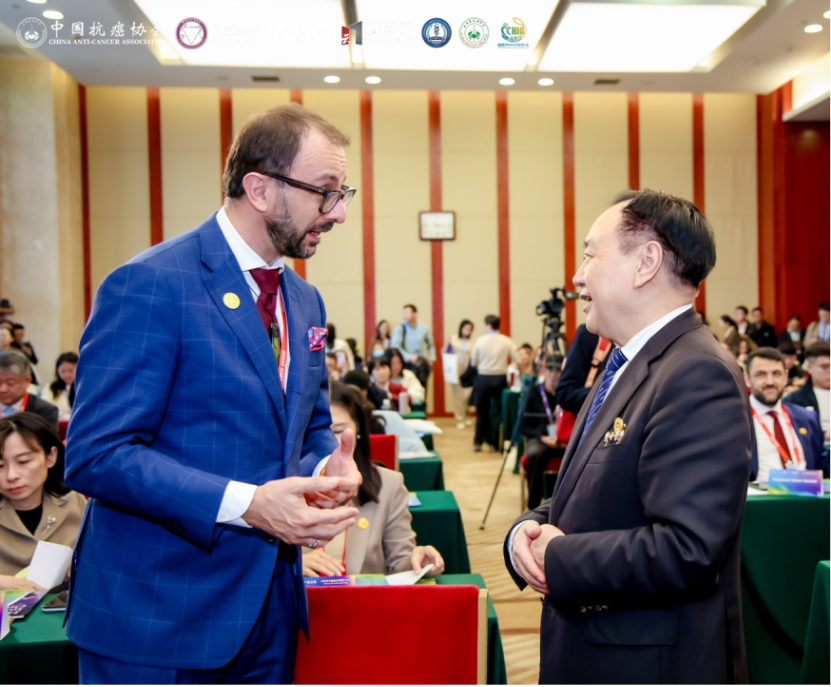
The session was co-chaired by Professor Fan Daiming, President of CACA, and Professor Ulrika Arehed Kagström, President of UICC. Professor Lu Yuanyuan from Xijing Hospital of the Air Force Medical University served as Executive Chair.
△ Professor Fan Daiming
In his opening keynote, “China’s Path to Integrative Cancer Management,” Professor Fan Daiming systematically outlined the new model of Holistic Integrative Medicine proposed for tackling China’s cancer burden. He emphasized that China’s cancer etiology and patient characteristics — such as the high prevalence of HBV-related liver cancer — differ significantly from those of Western countries, making direct adoption of international guidelines less effective.
To address this, CACA organized 13,000 experts to jointly develop the Chinese Guidelines for Holistic Integrative Oncology (CACA Guidelines), forming a full-cycle management framework that integrates:
- modern precision medicine,
- traditional Chinese medicine principles,
- prevention, screening, diagnosis, treatment, and rehabilitation,
- and practice grounded in real-world Chinese clinical data.
Through nationwide educational outreach, publication of the English journal HIO, and establishment of WAIO, this model has shown remarkable success — China’s 5-year cancer survival rate has increased by 10% in the past decade. Professor Fan affirmed that the CACA Guidelines will continue contributing to improved cancer survival nationwide and offer a “Chinese solution” for global cancer control.
△ Professor Ulrika Arehed Kagström
UICC President Ulrika Arehed Kagström delivered an in-depth analysis of the global cancer landscape and future directions. She noted that cancer causes nearly 10 million deaths annually, with incidence continuing to rise, most deaths occurring in low- and middle-income countries lacking basic treatment (surgery, radiotherapy) and trained health workers.
She emphasized the need for a dual strategy:
- expanding access to essential treatment;
- strengthening prevention efforts targeting tobacco, pollution, alcohol, obesity, and vaccine-preventable infections.
While many nations have established national cancer control plans, most lack adequate funding and evidence-based design. As a global organization of 1,150 members, UICC collaborates closely with WHO and the UN to advance international cancer policy.
She highlighted UICC’s 2025–2031 Strategic Plan, focusing on six priorities, including drug access, cervical cancer elimination, lung cancer prevention, and early detection. She invited global colleagues to attend the 2026 World Cancer Congress in Hong Kong.
△ Professor Chen Wanyi
Professor Chen Wanyi of Chongqing University Cancer Hospital spoke on “Clinical Pharmacists: Key Partners in Solving Hidden Problems in Patient Care.” Using a real case of a lung cancer patient, he demonstrated the critical role of pharmacists.
A patient receiving osimertinib had persistently low drug levels and poor response. Pharmacists discovered that components in the patient’s concurrent traditional Chinese medicine induced CYP3A4, accelerating osimertinib metabolism. After coordinated adjustment of the TCM prescription, drug levels returned to therapeutic range and disease stabilized.
Professor Chen emphasized that pharmacists play indispensable roles in:
- complex drug–drug interaction management,
- therapeutic drug monitoring,
- pharmacogenomics-guided precision dosing,
- long-term medication management.
He concluded that pharmacists are vital connectors across disciplines in holistic integrative cancer care.
△ Professor Christopher Jackson
Professor Christopher Jackson of the University of Otago (New Zealand) presented “Turning Breakthroughs into Benefit: Quality, Affordability, and Sustainability of Cancer Medicines.”
He dissected the tension between innovation and access in oncology. Although targeted and immune therapies significantly prolong survival, their escalating costs have strained global healthcare systems.
He criticized excessive reliance on surrogate endpoints such as progression-free survival, which often fail to reflect real patient benefits in overall survival and quality of life.
Professor Jackson called for a return to the core mission — helping patients live longer and better — through:
- rigorous assessment of trial value,
- involving patients in study design,
- optimizing dosing strategies,
- improving affordability and sustainability.
△ Professor Anne W. M. Lee
Professor Anne W. M. Lee of the University of Hong Kong–Shenzhen Hospital introduced the 9th Edition of the UICC TNM Staging System, announcing its global implementation.
She emphasized that TNM serves as the universal language of oncology, foundational for treatment planning and international comparison.
Professor Lee highlighted China’s important contributions: Since joining the UICC Global Advisory Group, CACA has promoted TNM staging as a quality indicator in public hospitals and supplied key data for high-incidence cancers such as nasopharyngeal carcinoma — multiple findings now incorporated into the new edition.
The 9th edition features major updates in nasopharyngeal, lung, and cervical cancer, and adds new chapters such as lymphoma. She encouraged more Chinese experts to participate in translation and dissemination.
△ Professor Matti Aapro
On behalf of UICC, Professor Matti Aapro, President of the International Society for Geriatric Oncology, addressed the growing threat of antimicrobial resistance (AMR) in cancer care.
He noted that AMR causes millions of deaths annually, with cancer patients particularly vulnerable due to immunosuppression. AMR directly jeopardizes treatment safety and outcomes.
He proposed key strategies:
- establishing regional infection surveillance networks,
- ensuring access to effective antibiotics,
- integrating AMR prevention into national cancer control plans,
- creating global strategic antibiotic reserves,
- strengthening worldwide support for resource-limited regions.
Aapro stressed that AMR is not only a medical challenge but also a social and economic crisis, urging the oncology community to take immediate action.
Professor Matti Aapro, President of the International Society for Cancer Progression, spoke on behalf of UICC about the growing threat of antimicrobial resistance (AMR) in cancer treatment. He noted that AMR causes millions of deaths worldwide each year, and cancer patients—due to immunosuppressive therapies—are especially vulnerable to infections. Drug-resistant pathogens pose a direct threat to the safety and effectiveness of cancer treatment.
Professor Aapro proposed several key strategies to combat AMR:
- establishing regional infection surveillance systems,
- ensuring stable access to effective antibiotics,
- integrating AMR control into national cancer control plans,
- creating international reserves of essential antibiotics,
- strengthening global cooperation to support resource-limited regions.
He emphasized that AMR is not only a medical challenge but also a social and economic crisis, urging the oncology community to take immediate action to protect vulnerable populations around the world.

△ Professor Fan Daiming and Professor Anne W. M. Lee
The closing session of the meeting was co-chaired by Professor Fan Daiming and Professor Anne W. M. Lee. Professor Fan highly praised the outcomes of this special session, noting that both the depth and breadth of the content surpassed previous years and offered participants valuable academic insights and practical guidance. On behalf of the Chinese Anti-Cancer Association (CACA) and the CCHIO Organizing Committee, he expressed sincere gratitude to all speakers, chairs, and attendees, and voiced his hope for continued in-depth international dialogue in the future.
In her concluding remarks, Professor Anne W. M. Lee commended the excellent presentations and meaningful exchanges delivered by experts from China and abroad. She emphasized the importance of sustained collaboration between CACA and UICC in advancing integrated global cancer control efforts. She expressed her expectation that both sides will further strengthen pragmatic cooperation to deliver greater benefits for cancer patients worldwide.