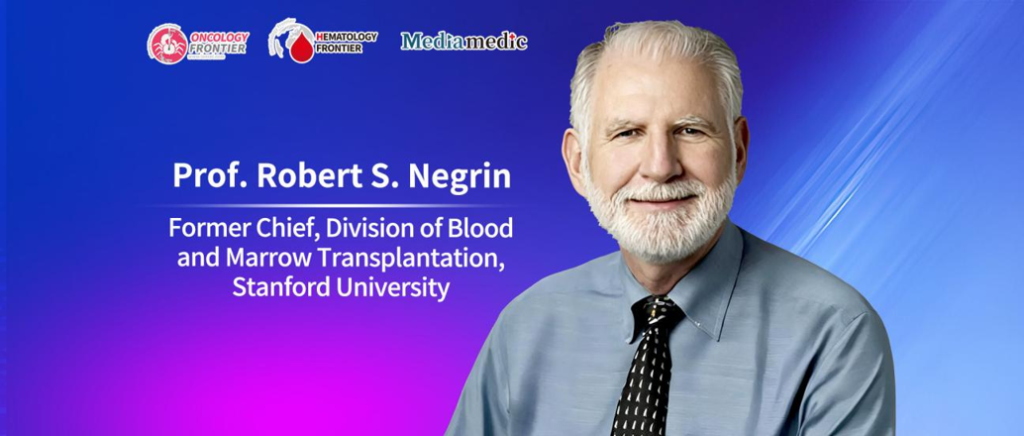
Editor's Note: Bringing together leading experts and remaining committed to advancing the field, the 14th Lu Daopei Hematology Forum opened on August 21, 2026, at Hebei Yanda Ludaopei Hospital. After fourteen years of academic development, this year's conference focused on cutting-edge topics including hematopoietic stem cell transplantation, cellular immunotherapy, and precision diagnosis and treatment of hematologic diseases, bringing together experts and scholars from across China to explore advances in the field. During the conference, Oncology Frontier – Hematology Frontier invited Professor Robert Negrin, Director of the Division of Blood and Marrow Transplantation at Stanford University, for an in-depth interview. He shared his insights into milestone developments in regulatory T-cell (Treg) research, the clinical significance of the breakthrough achieved with Orca-T therapy, and future directions for expanding the Treg technology platform.Q1: Your lecture at this conference is titled “Regulatory T Cells Come of Age.” In your view, what milestone events mark the true “coming of age” for Treg research to date?
I think there are really two major events that bring this research full circle and into the limelight. The first is the awarding of the Nobel Prize in Physiology or Medicine to three individuals, one in particular, Dr. Shimon Sakaguchi, who identified regulatory T cells. So he provided the phenotype that allowed investigators like our group and many other groups around the world to identify this cell population. Interestingly, the Nobel Prize committee stated that one of the reasons that they gave the Nobel Prize in this area is because they felt that there would be many medical advances that came from this work. So the second major event I believe is our work, led by the company Orca BioSystems, who translated the pre-clinical mouse data into a therapy that received FDA approval in the United States on June 30th of this year. So I think that’s the second big watershed moment where a therapy that came from this fundamental science was brought to patients and shown to be effective and received regulatory approval at least in the United States for its use. So I believe those two events are really major findings in the last year.
Q2: The recent Phase 3 study of Orca-T demonstrated that Treg-enriched adoptive transfer significantly reduced moderate-to-severe chronic GVHD (cGVHD) and improved non-relapse mortality (NRM). As one of the pioneers who laid the foundation for Treg-based research, how do you view the significance of this clinical breakthrough?
I think it’s very significant because it showed that we can do better. And since the beginning of transplantation, the way we’ve done transplant is to collect the cells from the donor and infuse them without any modification. And it always seemed to me and I think to many people that could be improved upon, that we know that there are cells within that mix that are beneficial and then there are others that can cause harm. And the greatest harm that we see is what we call non-relapse mortality. That is that patients unfortunately can die from treatment-related effects. And that’s the most devastating outcome.
So I think the Precision-T trial, the randomized trial, one of the major findings is that the non-relapse mortality was reduced to only 3.4%. Still room for improvement, but that’s a major advance and that it reduces the risk that our patients must assume when they go through a transplant. And I hope that will allow us to use transplant in other settings, for example, in the treatment of severe autoimmune disorders where we know it works. We’ve known that for many years because of the observation that patients who have leukemia and an autoimmune disorder are both cured with a successful transplant. And we’ve never used transplant to treat other types of patients because of the risk. If we can reduce that risk, it has obvious implications for our cancer patients but also may extend this field into other areas.
Q3: Treg therapy has now demonstrated efficacy for the first time in a Phase 3 trial. Beyond hematologic malignancies, what expansion opportunities do you foresee for this platform? And what are the key challenges ahead?
I think this is just the beginning. This is, like anything in science, another step. I think it’s an important step because it establishes that these cell populations can be isolated. That’s, from a technical perspective that you can do it. And second, that they have clinical value and they’ve been shown to have a regulatory pathway to approval at least in the United States and hopefully in other countries around the world.
Now there are many other ideas of how these cells can be modified, for example, with a CAR, or with various other strategies to improve their effects? And so I think hopefully we’ll see a whole series of other approaches that are built upon this fundamental science and can treat a whole series of other disorders, in oncology but also I think outside of oncology.
Expert Profile
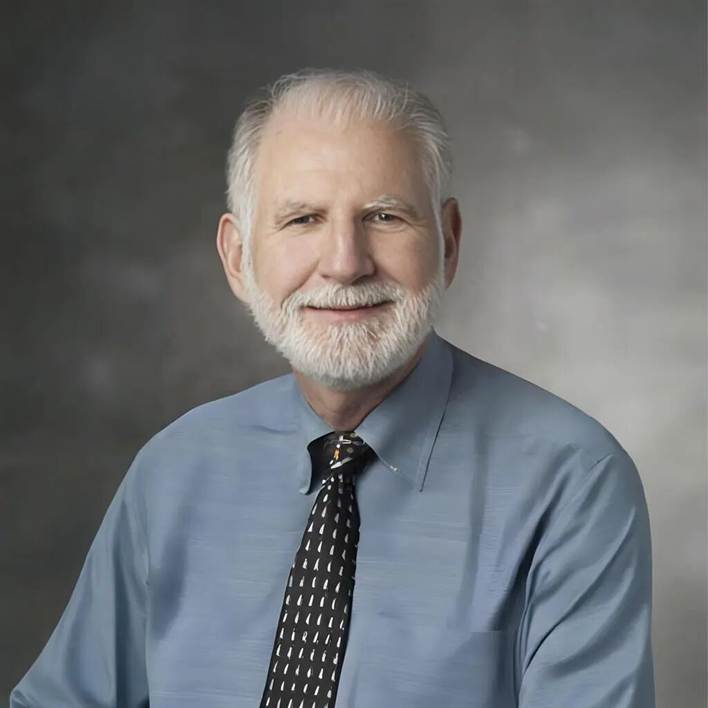
Professor Robert Negrin
Professor of Medicine, Stanford University
Professor Robert Negrin served as Director of the Division of Blood and Marrow Transplantation from 2000 to 2020. He received his undergraduate degree from the University of California, Berkeley, followed by his MD from Harvard Medical School. After completing his training in internal medicine and hematology at Stanford University, he joined the Stanford faculty in 1990.
His research focuses on cellular immunology, with particular emphasis on understanding the complex biological mechanisms underlying graft-versus-host responses and graft-versus-tumor effects in both animal models and clinical settings. He has published more than 300 original research articles and 40 book chapters and has co-edited a book.
He has received numerous honors, including the Doris Duke Distinguished Clinical Scientist Award, and was elected to the American College of Physicians.
He has served as President of the International Society for Cell and Gene Therapy and President of the American Society for Transplantation and Cellular Therapy.
He previously served as Deputy Editor of Blood and founded Blood Advances.
In 2025, he became President-Elect of the American Society of Hematology and officially assumed the presidency in 2026.