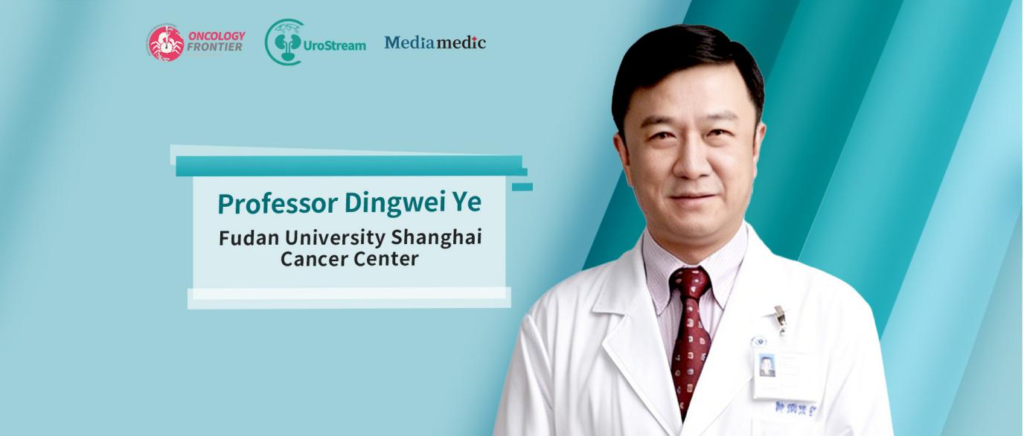
The 2026 Pujiang Prostate Cancer Summit was held in Shanghai on June 26–27 under the theme "Standardization, Precision, Chinese Innovation, and Global Collaboration." The meeting brought together leading experts in genitourinary oncology to showcase the latest advances in standardized prostate cancer management and innovative treatment strategies.As Congress President, Professor Dingwei Ye from Fudan University Shanghai Cancer Center has dedicated many years to advancing precision prostate cancer care. Guided by the institution’s “Four Precision” strategy—precision screening, precision surgery, precision translational research, and precision clinical research—his team has developed the distinctive FUSCC model, substantially improving long-term survival among patients with prostate cancer and helping shape the development of uro-oncology in China.
During the meeting, UroStream interviewed Professor Ye to discuss strategies for narrowing China’s prostate cancer survival gap, overcoming barriers in the management of advanced disease, and the key principles driving future specialty development.
Q1. Although China’s five-year survival rate for prostate cancer has improved significantly, a gap remains compared with Western countries. Over the next three years, what do you believe will be the most important priorities for closing this survival gap?
Professor Dingwei Ye:
The incidence of prostate cancer in China is increasing rapidly.
In Shanghai, for example, prostate cancer has ranked as the third most common malignancy among men since 2018, and incidence continues to rise sharply. Even so, our incidence remains nearly 50% lower than that reported in neighboring countries such as Japan and South Korea, as well as Hong Kong, Macau, and Taiwan, indicating that the disease burden is likely to continue increasing.
Compared with Western countries, China has a lower overall incidence but a markedly different disease spectrum. While prostate cancer is much more common in the United States, only a relatively small proportion of patients present with locally advanced or metastatic disease. In contrast, nearly half of Chinese patients are diagnosed with locally advanced or metastatic prostate cancer, which is the primary reason China’s overall five-year survival remains lower than that of Western countries.
Five-year survival approaches 95% in the United States, whereas the national average in China is approximately 70%.
At our center, the FUSCC model, built upon the Four Precision principles—precision screening, precision multidisciplinary treatment, precision clinical trials, and precision translational research—has increased the five-year survival rate to 82.2%, nearly 13 percentage points higher than the national average.
To improve outcomes nationwide over the next three years, I believe three priorities are essential.
First, we must reduce regional disparities in diagnosis and treatment. Expanding the Four Precision model across China would fundamentally improve the disease spectrum by enabling more patients to receive an earlier diagnosis instead of presenting with advanced disease.
Second, we need to strengthen awareness of early screening and early diagnosis, shifting intervention further upstream and increasing the proportion of patients diagnosed at a curable stage.
Third, we must promote standardized multidisciplinary care nationwide. During this meeting, we also provided an in-depth interpretation of the 2026 Chinese Anti-Cancer Association Integrated Guidelines for Prostate Cancer, which will continue to be promoted through nationwide educational programs. Our goal is to ensure that patients in less-developed regions receive the same guideline-based care as those treated in major academic centers.
Ultimately, prostate cancer management must encompass the entire continuum—from prevention and screening to diagnosis, treatment, and survivorship.
Q2. Nearly half of prostate cancer patients in China are still diagnosed with advanced disease. What are the greatest barriers to improving care, and what practical solutions are available?
Professor Dingwei Ye:
Approximately 50% of newly diagnosed prostate cancer patients in China present with either locally advanced or metastatic disease, with some regions reporting rates as high as 60%.
Addressing this challenge requires two major strategies.
The first is strict adherence to guideline-based multidisciplinary management. Regardless of disease stage, most patients initially present to urologists, and treatment decisions often focus primarily on whether surgery is feasible. However, the greatest survival benefit comes from multidisciplinary comprehensive care. Surgery is an important component, but it is only one part of the overall treatment strategy.
Our integrated guidelines already cover the full continuum of care—from prevention and screening to diagnosis, treatment, and rehabilitation—and naturally support multidisciplinary decision-making.
The second priority is embracing clinical research. If we hope to improve cure rates and survival for advanced prostate cancer, high-quality clinical trials remain the fundamental driver of future progress.
Q3. This year’s meeting brought together many of China’s leading prostate cancer experts. What key messages or future directions would you most like colleagues across the country to take away from this conference?
Professor Dingwei Ye:
During the first half of this year, the major international meetings—including ASCO-GU, the EAU Congress, and the ASCO Annual Meeting—highlighted numerous important contributions from Chinese investigators in prostate cancer research.
Through the Pujiang Prostate Cancer Summit, I hope to emphasize two core principles.
The first is to actively embrace clinical trials and promote high-quality clinical research. I trained at MD Anderson Cancer Center and have visited many leading international uro-oncology centers, where the majority of patients participate in clinical trials. Clinical research is the driving force behind continued advances and is essential for overcoming current therapeutic limitations. Alongside standardized patient care, Chinese clinicians should place greater emphasis on designing and conducting clinical studies.
The second is to maintain a balance between standardization and innovation. Standardized care provides the foundation, while clinical research delivers future breakthroughs. Both are indispensable if China is to bring its prostate cancer management to the highest international standards.
Expert Profile
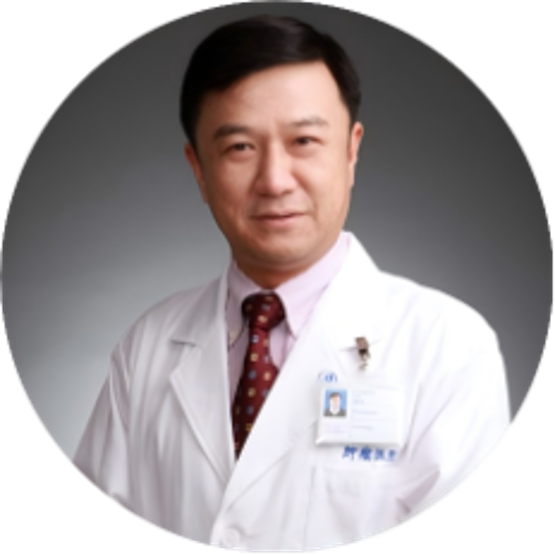
Professor Dingwei Ye Fudan University Shanghai Cancer Center