Beijing Urologic Oncology Young Physicians Academic Exchange Meeting
Editor’s Note: From January 10 to 11, 2026, the Beijing Urologic Oncology Young Physicians Academic Exchange Meeting was successfully held in Beijing. The meeting brought together leading experts and young physicians in the field of urologic oncology to engage in in-depth discussions on cutting-edge scientific advances and key challenges in clinical practice, with the goal of promoting academic innovation and supporting the professional development of early-career clinicians.
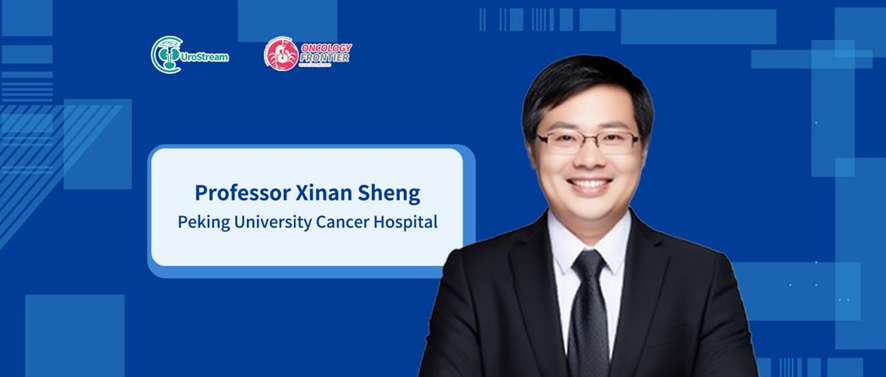
The emergence of antibody–drug conjugates (ADCs) has profoundly reshaped the treatment landscape for advanced urothelial carcinoma. While ADCs have delivered significant survival benefits for patients, they have also made clinical decision-making increasingly complex. Against this backdrop, Urolog Frontier invited Professor Xinan Sheng, Executive Chair of the meeting and faculty member at Peking University Cancer Hospital, to share his insights on sequential ADC treatment strategies in advanced urothelial carcinoma, approaches to overcoming drug resistance, and his vision for the future development of academic exchange platforms for young physicians.
Opening Remarks by Executive Chair Professor Xinan Sheng
01
Urology Frontier:
Q: In your presentation, “Advances and Reflections on First-Line Treatment of Advanced Urothelial Carcinoma,” you discussed the expanding range of options, including immunotherapy and ADCs. In real-world practice, how should clinicians formulate personalized sequential treatment strategies? Which biomarkers are most likely to play a decisive role?
Professor Xinan Sheng:
With the rapid development of immunotherapy and ADCs, first-line treatment for advanced urothelial carcinoma has entered a new era of combination therapy. ADCs exert their antitumor effects through the precise coupling of a targeting antibody and a cytotoxic payload, and their clinical efficacy is highly dependent on target expression. As a result, in an ADC-dominated treatment paradigm, target assessment has become the cornerstone of individualized therapeutic decision-making.
At present, ADC-based first-line treatment strategies in China can be broadly categorized into two evidence-based approaches. The first is enfortumab vedotin, which targets Nectin-4, in combination with pembrolizumab. The second is the domestically developed HER2-targeted ADC disitamab vedotin combined with toripalimab. From a clinical trial design perspective, the EV-302 study enrolled an all-comer population, whereas the RC48-C016 study specifically focused on patients with HER2 expression levels ranging from IHC 1+ to 3+.
It is worth noting that approximately 70% of patients with advanced urothelial carcinoma exhibit HER2 expression. This suggests that the disitamab vedotin–based regimen may be applicable to the majority of patients, while also highlighting HER2 status as a critical prerequisite for treatment selection. Although the EV-302 study did not mandate Nectin-4 testing, the expression rate of this target in urothelial carcinoma is as high as 80–90%, with only a small subset of patients being negative. This raises an important point: even when target testing is not explicitly required by trial protocols, target expression remains mechanistically linked to therapeutic efficacy. Therefore, we recommend routine target screening in the first-line setting.
Specifically, patients who are HER2-negative can be excluded from disitamab vedotin–based therapy, while those who are Nectin-4–negative should be carefully evaluated before receiving enfortumab vedotin. For patients with co-expression of both targets, head-to-head comparative data between these two ADC-based combination regimens are currently lacking. In such cases, practical considerations—including drug availability, reimbursement policies, tolerability, and economic factors—often play a decisive role in clinical decision-making.
In the second-line setting, if a patient has not previously received an ADC, target testing becomes even more valuable. In addition to HER2 and Nectin-4, other biomarkers such as TROP-2, EGFR, and FGFR are also clinically meaningful. For example, patients harboring FGFR alterations may benefit from targeted therapies such as erdafitinib.
Looking ahead, the management of advanced urothelial carcinoma will increasingly move toward precision stratification. We should actively promote the clinical adoption of convenient and efficient techniques such as immunohistochemistry to systematically evaluate key biomarkers—including HER2, Nectin-4, and TROP-2—thereby enabling comprehensive, individualized sequencing strategies from first-line through later-line therapy.
Professor Xinan Sheng Delivering His Scientific Presentation
02
Urology Frontier
Q: The meeting included dedicated discussions on treatment options after ADC failure in advanced urothelial carcinoma. How do you view strategies for addressing ADC resistance? Is there potential to overcome this bottleneck through combination therapies or emerging technologies?
Professor Xinan Sheng:
The widespread use of ADCs marks a new phase in the treatment of advanced urothelial carcinoma. However, a deeper understanding of resistance mechanisms is essential for navigating subsequent lines of therapy. From a mechanistic perspective, resistance to ADCs primarily arises from two major factors.
First, resistance may result from reduced or lost target expression. Even when baseline testing demonstrates high target expression, selective pressure during treatment can lead to downregulation over time, preventing effective tumor recognition by the ADC and ultimately resulting in resistance. For this reason, dynamic monitoring of target expression during treatment warrants close attention.
Second, cross-resistance may occur when sequential ADCs share the same cytotoxic payload. Even if the targets differ, similar mechanisms of action can limit the effectiveness of subsequent therapy. In clinical practice, sequential treatment with enfortumab vedotin and disitamab vedotin has generally produced suboptimal outcomes, supporting the existence of cross-resistance among ADCs carrying identical payloads.
A more promising strategy involves switching to ADCs with different cytotoxic payloads. For patients who develop resistance to enfortumab vedotin or disitamab vedotin, we are currently exploring novel Nectin-4–targeted ADCs such as SHR-A2102. Encouraging efficacy signals have already been observed in later-line clinical studies, providing evidence that altering the payload may help overcome resistance.
In addition, real-time monitoring of target expression holds significant potential. Accurately capturing dynamic changes in biomarker status during treatment could enable more precise identification of resistance mechanisms and facilitate timely adjustments in therapeutic strategy. This is an important direction for future research and clinical development.
03
Urology Frontier
Q: As Executive Chair of this Young Physicians Academic Exchange Meeting, how do you feel the conference met its original objectives? Do you have further plans for the future development of this platform?
Professor Xinan Sheng:
Since its inaugural meeting in 2021, the Beijing Urologic Oncology Young Physicians Academic Exchange Meeting has now been successfully held six times. Over the years, both the academic depth of the program and the level of engagement among young physicians have steadily improved. The meeting has gradually established a strong brand identity and earned a positive reputation within the field of urologic oncology.
Young physicians represent a vital force on the front lines of urologic oncology, playing central roles in both clinical practice and scientific research. They are often highly motivated, quick to identify clinical challenges, and more inclined toward innovative thinking. Through this platform, we hope to support the rapid professional growth of outstanding young clinicians.
Looking ahead, we plan to further strengthen the meeting in several ways. First, topic selection will be more closely aligned with real-world clinical needs, enhancing both practical relevance and academic value. Second, we will continue to expand participation and attract more promising young talent. This year’s meeting already demonstrated a trend toward a younger participant demographic, which is a very encouraging sign.
We actively encourage capable young physicians to engage in discussion, share perspectives, and stimulate new ideas through collaboration. Through such interactive platforms, we aim not only to promote individual development, but also to harness the collective intelligence of young physicians. By fostering deeper collaboration around key issues in urologic oncology, we hope to generate high-quality academic output and ultimately enhance the overall clinical standards and academic influence of this field in China.
Professor Xinan Sheng