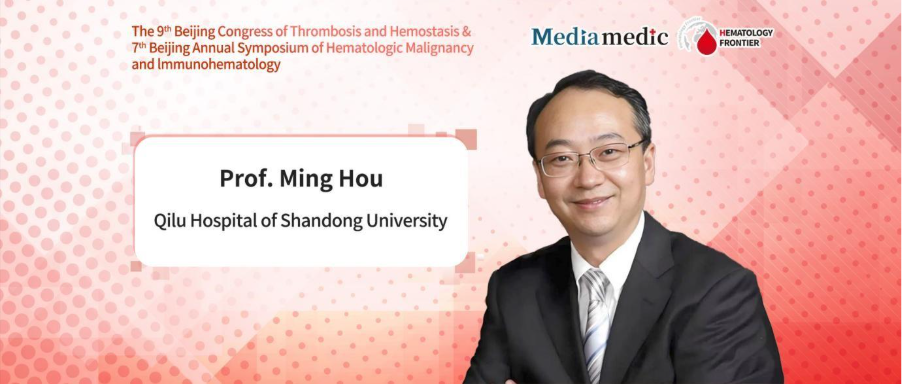
Editor’s Note In March, as spring brings renewed vitality to Beijing, the 9th Beijing Conference on Thrombosis and Hemostasis, together with the 7th Beijing Hematologic Oncology and Immunology Summit Forum, was held from March 27 to 28, 2026. Centered on advances in the diagnosis and treatment of thrombotic and hemostatic disorders, as well as hematologic malignancies and immunology, the meeting highlighted cutting-edge developments and evolving clinical strategies. During the conference, Oncology Frontier – Hematology Frontier invited Professor Ming Hou from Qilu Hospital of Shandong University to provide an in-depth interpretation of the updated Chinese Guidelines for the Diagnosis and Treatment of Adult Primary Immune Thrombocytopenia (2025 Edition).
This revision is grounded in major domestic and international advances over the past five years and systematically integrates emerging local evidence while promoting an upgrade in clinical practice concepts. Updates span epidemiology, pathogenesis, diagnostic evaluation, and therapeutic strategies, collectively reflecting a transition from “following” international standards to assuming a leading role in guideline development.
Background of the Update: From Following to Leading
Professor Ming Hou: The previous edition of the Chinese guidelines for adult primary immune thrombocytopenia (ITP) was published in 2020 during the COVID-19 pandemic. Five years have since passed, and under the leadership of Professor Yu Hu, Head of the Thrombosis and Hemostasis Group of the Hematology Branch of the Chinese Medical Association, a multidisciplinary panel of experts has completed the 2025 update.
This revision is based on significant advances in ITP research over the past five years, encompassing basic, translational, and clinical studies. Chinese research teams have made notable contributions in this field, including those from Qilu Hospital of Shandong University, the Institute of Hematology and Blood Diseases Hospital of the Chinese Academy of Medical Sciences, Union Hospital in Wuhan, Peking University People’s Hospital, and other leading centers. These efforts have provided robust, localized evidence to support the guideline update.
Although major international references, such as the ASH guidelines and international working group consensus reports, have not been updated for more than six years, it was considered essential to revise the Chinese guidelines. Unlike previous editions, which largely followed international recommendations, the 2025 update represents a shift toward a more proactive and leading role, completing a comprehensive revision ahead of ongoing international updates.
Key Updates: Advances in Epidemiology, Pathogenesis, and Diagnosis
Professor Ming Hou: The 2025 guidelines introduce important updates in epidemiology, pathogenesis, and diagnostic evaluation.
From an epidemiological perspective, previous data were largely derived from Western populations, with limited large-scale studies in China. In recent years, large cohort studies conducted in regions such as Yunnan, Gansu, and Taiwan have provided representative data on ITP incidence in Chinese populations. Based on these findings, the updated incidence rate is estimated at 3–7 per 100,000, which differs somewhat from the internationally reported range of 2–10 per 100,000.
Regarding pathogenesis, three classical mechanisms have long been established: antibody-mediated platelet clearance by the monocyte–macrophage system (particularly in the spleen), hepatic destruction of desialylated platelets, and direct cytotoxic T-cell–mediated platelet destruction via granzyme B and perforin release. Building on this foundation, recent research from Zhengzhou University has identified a critical role for the complement pathway in ITP pathogenesis. This is further supported by international clinical studies demonstrating response rates of 30%–40% with complement inhibitors as monotherapy. Accordingly, the complement pathway has been incorporated as a newly recognized mechanism in the updated guidelines.
In terms of diagnosis, overall changes are modest, but greater specificity has been introduced in antiphospholipid antibody testing. While previous recommendations broadly suggested testing, the updated guidelines specify particular markers to improve the identification of thrombocytopenia associated with antiphospholipid syndrome. This distinction is clinically important, as such patients carry a high risk of thrombosis despite low platelet counts and require specialized management strategies.
Additional updates in specialized testing include the incorporation of genetic testing for myelodysplastic syndromes (MDS), such as next-generation sequencing, whole-exome sequencing, and whole-genome sequencing. The guidelines also introduce parameters such as reticulated platelet counts and immature platelet fraction. These investigations are primarily recommended for patients with poor responses to standard therapies or those who have failed multiple treatment lines, with the aim of strengthening differential diagnosis, particularly in excluding MDS.
Optimization of Treatment Strategies: Redefining Concepts and Clinical Pathways
Professor Ming Hou: The most significant advancement in the updated guidelines lies in the refinement of therapeutic concepts. A key emphasis is placed on individualized treatment and shared decision-making, with the goal of achieving a safe platelet count while minimizing adverse effects, rather than pursuing normalization of platelet levels (100–150 × 10⁹/L).
Given that approximately 70%–80% of adult ITP cases progress to chronic disease, management should follow a chronic disease model. A platelet count of 30,000–50,000/μL without bleeding is considered a safe and acceptable target.
Another important concept introduced is the strategy of “limited-duration therapy aiming for sustained remission.” Although ITP is often chronic, prolonged continuous treatment is not recommended. Instead, treatment should be administered in defined courses to achieve durable remission. Even if relapse occurs, retreatment is generally preferable to the long-term burden and risks associated with continuous therapy. The updated guidelines also emphasize comprehensive management of ITP-associated thrombosis and comorbidities, integrating recommendations from the 2023 Chinese expert consensus.
In terms of treatment pathways, the traditional stratification into first-, second-, and later-line therapies has been simplified into two stages: initial treatment and subsequent treatment. In the initial phase, in addition to conventional corticosteroids and intravenous immunoglobulin, a “1.5-line” strategy has been introduced, involving high-dose dexamethasone combined with other agents. While conventional steroid therapy achieves response rates of approximately 60%–70%, sustained remission at six months remains below 30%. Recent studies indicate that combination regimens can increase six-month sustained remission rates by 20–30 percentage points, enabling more than half of patients to achieve durable remission with limited treatment duration.
For subsequent treatment, the guidelines expand beyond traditional options such as thrombopoietin receptor agonists and rituximab to include a range of small-molecule agents, including SYK inhibitors, BTK inhibitors, and low-dose decitabine. Splenectomy remains an option supported by well-designed phase II/III studies. Although its use has declined, it continues to offer definitive efficacy in selected patients, with careful consideration required for risks such as infection, thrombosis, and surgical complications.
Overall, the 2025 Chinese guidelines for adult ITP reflect the integration of localized evidence, a deeper understanding of disease mechanisms, and significant advances in therapeutic strategy. It is anticipated that these developments will contribute to future updates of international guidelines, demonstrating China’s emerging leadership in this field.
Expert Profile

Ming Hou, MD, PhD Chief Physician, Professor (Second-Level), Doctoral Supervisor
Professor Hou is a distinguished expert in hematology at Qilu Hospital of Shandong University. He is Director of the Shandong Key Laboratory of Hematologic Immunology and Director of the Shandong Clinical Research Center for Hematologic Diseases, as well as Deputy Director of the National Clinical Research Center for Hematologic Diseases.
He serves as a member of the ITP International Working Group guideline panel, a Fellow of the American Society of Hematology (ASH), and an Executive Committee member of the Asian-Pacific Society on Thrombosis and Hemostasis (APSTH). He also holds leadership roles in multiple national academic organizations, including the Chinese Medical Association and the Chinese Medical Doctor Association.
Professor Hou has received numerous honors, including recognition as a Taishan Scholar Distinguished Expert and recipient of government special allowances, reflecting his significant contributions to hematology research and clinical practice.