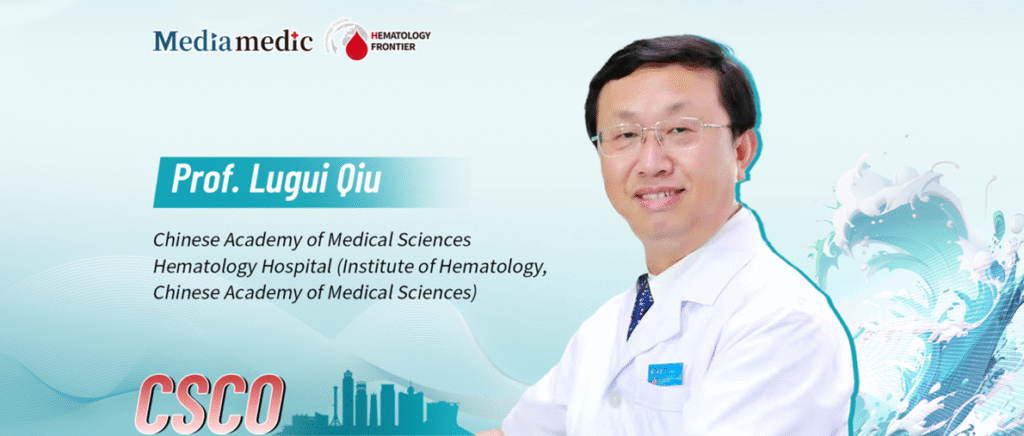
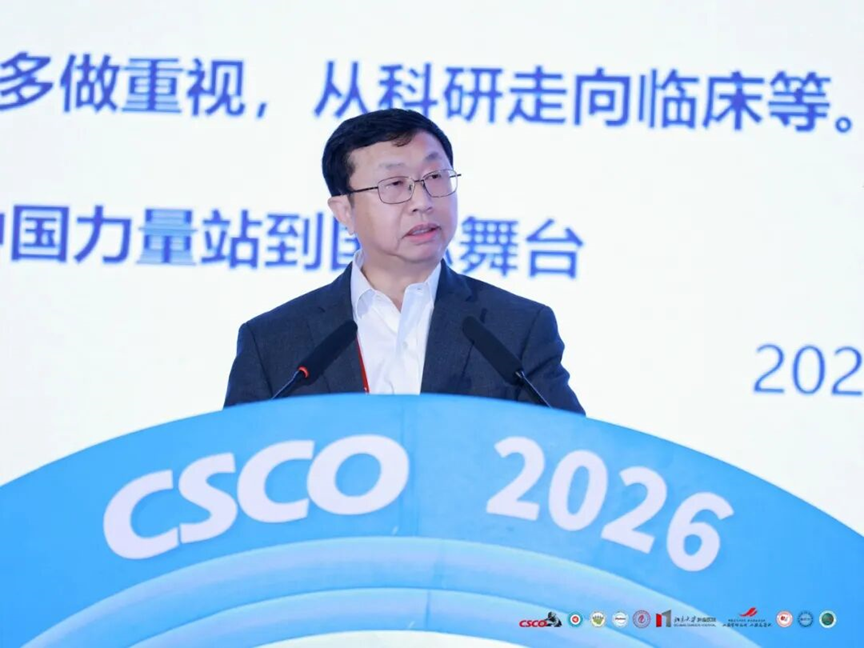
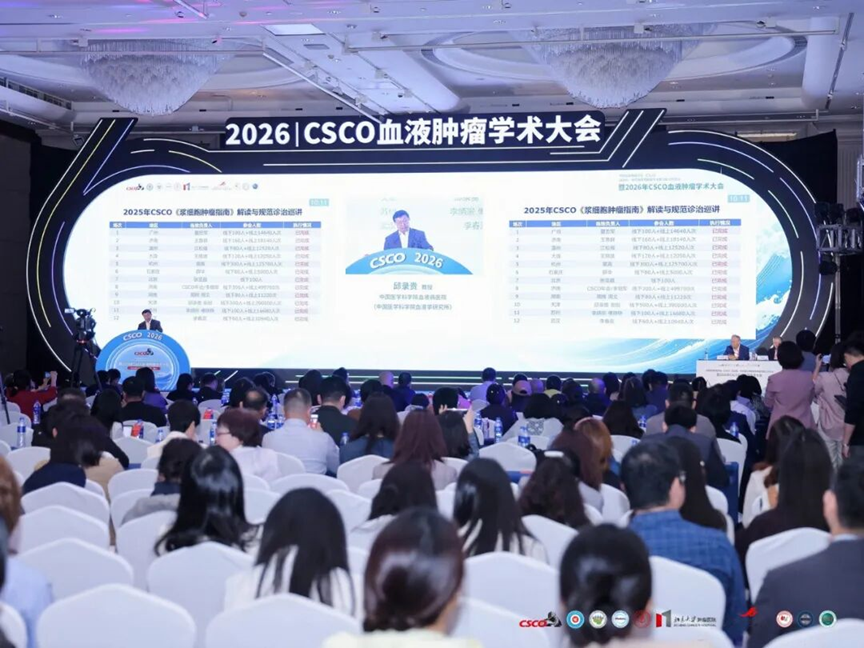
From January 16–18, 2026, the CSCO Leukemia, Lymphoma, and Myeloma Expert Committee Working Meeting and the 2026 CSCO Hematologic Oncology Conference were held in Haikou. As a malignant plasma cell disorder predominantly affecting older adults, multiple myeloma (MM) requires continuous advancement in standardized diagnosis, scientific innovation, and patient-centered management, all of which are critical to the high-quality development of hematologic oncology in China.Anchored in clinical needs and guided by the principles of “Guideline Leadership, Research-Driven Innovation, Global Integration, and Patient Empowerment,” the CSCO Myeloma Expert Committee has systematically advanced national discipline-building efforts. During the meeting, Professor Lugui Qiu, Chair of the CSCO Myeloma Expert Committee and Clinical Chief Expert at the Institute of Hematology and Blood Diseases Hospital, Chinese Academy of Medical Sciences, presented a comprehensive review of 2025 achievements and a strategic roadmap for 2026.
2025: Four Core Missions Implemented, Substantial Progress Achieved
01. Strengthened Organizational Structure and Talent Pipeline Development
In May 2025, the CSCO Myeloma Expert Committee convened its first Standing Committee meeting in Hangzhou, defining guideline updates and academic initiatives as primary drivers for harmonizing clinical practice and strengthening the talent pipeline.
A major milestone was the establishment of the CSCO Myeloma Young Investigators Committee, designed to accelerate leadership development among emerging experts. Key initiatives include:
- Launching the CSCO Myeloma Research Fund to support investigator-initiated trials (IITs)
- Organizing multicenter clinical studies under the CSCO platform to strengthen evidence-based research capacity
- Expanding patient education outreach (“MM Patient Education Nationwide Initiative”)
- Supporting youth participation in IMS/IMWG and international congresses to elevate China’s global academic voice
- Publishing the CSCO Myeloma Guidelines as a standalone volume, updated annually, with GRADE-based English editions aligned to international standards
In July 2025, at the CSCO Hematology Congress in Harbin, the “Myeloma Young Leaders Committee (髓心飞young)” was formally launched. Eighty-three young investigators across seven national regions were selected, guided by 15 senior advisors, including Professor Jun Ma and Professor Zhixiang Shen, establishing a balanced mentorship structure of senior leadership and young academic backbone.
02. Guideline System Upgrade and Deepening Standardized Care
The CSCO Plasma Cell Tumor Diagnosis and Treatment Guidelines were published as an independent volume for the first time, expanding from ~10,000 words to nearly 50,000 words, with a structured annual revision cycle.
- Over 9,000 copies sold, ranking among the top oncology clinical guidelines in China
- A Patient Edition was released, becoming CSCO’s second patient-oriented guideline, enhancing doctor–patient communication and treatment adherence
Additionally, the committee led the development of the 2025 Chinese Expert Consensus on Plasma Cell Leukemia, published in the Chinese Journal of Hematology, filling a national gap in standardized management of this rare disease.
Throughout 2025, 12 national guideline roadshows were conducted across Guangzhou, Jinan, Tianjin, and other cities, reaching:
- ~2,000 in-person attendees
- Over 100,000 online viewers
These efforts significantly promoted nationwide uniformity in myeloma care.
03. Large-Scale Epidemiological Research Strengthening Disease Awareness
Leveraging the National Clinical Quality Control Information System (NCIS) and the Hospital Quality Monitoring System (HQMS), the committee completed a 2022–2024 national epidemiological analysis of 155,367 MM cases.
Key Findings
- Crude incidence: ~2.6 per 100,000
- Rising prevalence: 6.42 per 100,000
- Estimated patient population: 150,000–200,000
- Median age: 65 years
- Male proportion: 56%
- 85% treated at tertiary hospitals
- Higher disease burden in Jiangsu and Shandong
Clinical Trends
- Most common comorbidities: metabolic/endocrine (76.5%), cardiovascular (66.1%)
- In-hospital mortality decreased from 3.73% (2022) to 3.05% (2024)
- Shorter median hospital stays (7.4 days)
- Declining annual inpatient costs
- Evidence of transition toward chronic-disease management models
04. Expanded International Engagement and Academic Impact
China’s presence at the International Myeloma Society (IMS) advanced from attendance to leadership.
- Professor Lugui Qiu served on the IMS Presidential Panel and chaired sessions
- Chinese CAR-T studies, including Eque-cel, received oral presentations
- Four young investigators from Professor Qiu’s team received IMS Young Investigator Awards
In 2025, Chinese researchers published:
- 131 MM-related papers (IF >5)
- 45 papers (IF >10)
- In top journals including The Lancet, Blood, and The Lancet Haematology
The committee also launched development of a GRADE-based Clinical Practice Guideline for High-Risk Multiple Myeloma, expected to be submitted in 2026.
05. Research Funding Launch and Talent Development Mechanisms
The CSCO Hematologic Oncology Research Fund — Myeloma Program was officially launched, focusing on translational research.
- Eight funded projects, each receiving RMB 80,000–120,000
- Targeted at associate senior and above investigators
- Designed to support youth-led IIT projects and reduce research entry barriers
2026: Precision Execution to Drive High-Quality Discipline Growth
01. Guideline Iteration and Expanded National Outreach
- Continued annual updates to CSCO Myeloma Guidelines
- Integration of new reimbursed drugs and Phase III evidence
- Expansion to 14 national guideline roadshows, including new coverage in Northwest China
- Encouraging young committee members to lead academic events and case-based education initiatives
02. Upgraded Global Collaboration and International Influence
- Expanding participation in IMS and IMWG
- Organized team participation at the 2026 IMS Congress in Glasgow
- Encouraging global abstract submissions and showcasing Chinese original research
- Strengthening collaboration with international myeloma centers
03. Expanded Research Funding and Multicenter Clinical Trials
- Finalizing and distributing first-round CSCO Myeloma Research Fund awards
- Securing additional funding streams
- Launching new-drug trials and multicenter IIT studies
- Generating high-quality China-based clinical evidence
04. Innovative Patient Education and Public Outreach
- Continuing the “MM Patient Education Nationwide Tour”
- Hosting online science outreach programs and in-person patient forums
- Strengthening public disease awareness and empowering long-term patient self-management
Conclusion
In 2025, the CSCO Myeloma Expert Committee achieved comprehensive progress through:
- Organizational strengthening
- Guideline modernization
- Research acceleration
- International expansion
- Patient education empowerment
These efforts are driving China’s myeloma care from standardization toward precision medicine and global leadership.
In 2026, the committee will continue to uphold a patient-centered mission, guided by evidence-based guidelines, scientific innovation, talent development, and social responsibility, striving to overcome clinical challenges and elevate China’s myeloma field from “following” to “leading.”
Through sustained execution, China’s multiple myeloma care will continue to advance, delivering longer survival, improved quality of life, and meaningful global contributions to hematologic oncology.
Expert Profile
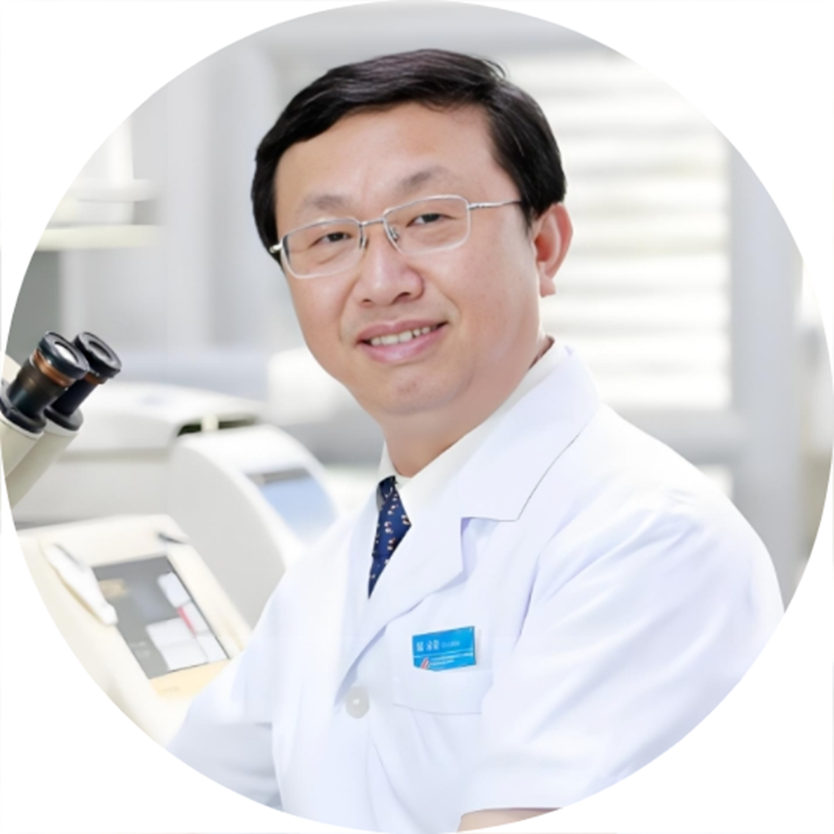
Professor Lugui Qiu
Clinical Chief Expert Institute of Hematology & Blood Diseases Hospital, CAMS
- Chair, CSCO Myeloma Expert Committee
- Member, International Myeloma Society (IMS)
- Member, International Myeloma Working Group (IMWG)
- Editorial Board Member, Blood Advances
- Standing Board Member, China Anti-Cancer Association (CACA)
- Author of ~600 publications (180+ SCI papers)
- Recipient of Tianjin Science and Technology Progress Award (First Prize)