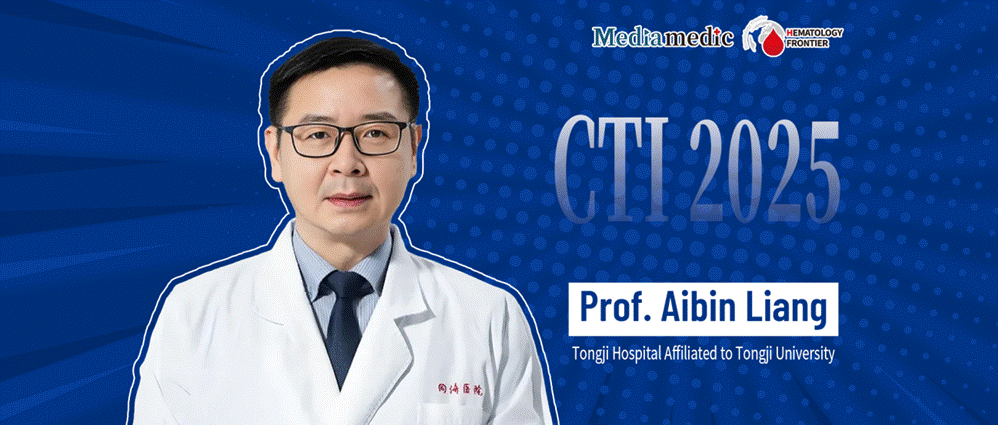
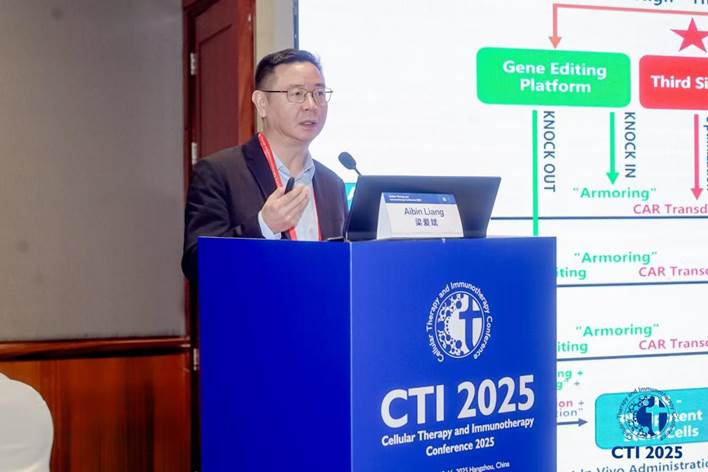
To promote innovation in the fields of cell therapy and immunotherapy in China, facilitate in-depth discussion of key scientific challenges, and share the latest clinical research advances from a global perspective, the 2025 International Conference on Cell and Immunotherapy (CTI 2025) was held in Hangzhou, China, from November 13–16, 2025. The meeting was jointly organized by Zhejiang University, the International Academy for Clinical Hematology (IACH), the Zhejiang Immunology Society, and the Zhejiang Anti-Cancer Association, and co-hosted by The First Affiliated Hospital, Zhejiang University School of Medicine and Liangzhu Laboratory.During the conference, Oncology Frontier – Hematology Frontier invited Professor Liang Aibin from Tongji Hospital, Tongji University for an in-depth discussion on key topics, including strategies to address relapse and resistance after CD19 CAR-T therapy, the mechanisms and target populations for dual-target CAR-T therapy, and future directions in cellular therapy innovation. The goal was to provide forward-looking insights and practical experience to advance the field.
Q1
In recent years, CAR-T cell therapy has achieved remarkable progress in the treatment of relapsed/refractory B-cell non-Hodgkin lymphoma (r/r B-NHL). However, a subset of patients still experiences relapse or resistance after CD19 CAR-T therapy. What innovations and explorations has your team pursued to overcome this challenge?
Professor Liang Aibin:
In clinical practice, significant heterogeneity exists in patient responses to CD19-targeted CAR-T cell therapy for hematologic malignancies. Approximately 30% of patients achieve deep remission after CD19 CAR-T treatment, with some attaining long-term survival; follow-up data indicate that sustained remission can exceed two years. However, about 10% of patients show minimal or no response, with tumor burden remaining inadequately controlled. The remaining 50–60% of patients may achieve partial or complete remission initially but subsequently develop new lesions at different sites or experience disease relapse within three to six months after treatment.
To address resistance or relapse following CAR-T therapy, multiple strategies are currently under investigation. At the basic research level, efforts focus on modulating the tumor microenvironment, intervening in tumor anti-apoptotic mechanisms, and optimizing CAR construct design.
From a clinical perspective, individualized treatment guided by precision medicine is essential. First, comprehensive pretreatment companion diagnostics are required to identify high-risk molecular and genetic features—such as TP53 mutations, double-expressor status, and double- or triple-hit lymphomas—that are associated with poor prognosis. For such high-risk patients, CAR-T monotherapy is often insufficient. Combination strategies may be necessary, incorporating epigenetic modulators such as decitabine, histone deacetylase inhibitors, immune checkpoint inhibitors targeting PD-1/PD-L1, radiotherapy, or small-molecule targeted agents such as BTK inhibitors and XPO1 inhibitors, thereby forming a “CAR-T Plus” comprehensive treatment model.
For patients with highly aggressive subtypes, such as lymphoblastic lymphoma, or those who achieve remission after CAR-T therapy but remain at high risk of relapse, consolidation with autologous hematopoietic stem cell transplantation is recommended to reinforce response durability. For patients who experience confirmed relapse after CD19 CAR-T therapy, switching targets—such as CD20, CD22, or emerging targets including CD70 and CD37—represents a feasible salvage strategy.
Based on our long-term clinical experience, patients with high-risk features—such as adverse molecular genetics, high tumor burden, multiple prior lines of therapy, extranodal involvement, or central nervous system disease—are more likely to achieve deeper and more durable responses with multi-target CAR-T therapy compared with single-target approaches.
Q2
Prizlon-cel is a dual-target CAR-T product simultaneously targeting CD19 and CD20. With a median follow-up of 30 months, median PFS and OS have not yet been reached, and the 2-year PFS rate is 62.6%. What do you consider the key mechanisms underlying the durable responses achieved with Prizlon-cel, and which patient populations are most likely to benefit?
Professor Liang Aibin:
In the clinical application of CAR-T cell therapy, treatment strategies should be stratified according to individual patient risk. For low-risk patients, single-target CAR-T therapy combined with other treatment modalities can often achieve long-term remission and survival benefit.
However, for ultra-high-risk patients—those with TP53 mutations, double- or triple-hit cytogenetic abnormalities, other adverse molecular features, or a high tumor burden—current evidence supports prioritizing multi-target CAR-T strategies. In lymphoma, CD19/CD20 dual-target CAR-T therapies such as Prizlon-cel have demonstrated superior clinical potential compared with single-target approaches. Long-term follow-up data extending to five years (not yet published) further support this advantage.
The mechanisms underlying dual-target CAR-T therapy are complex and depend largely on CAR structural design and target-combination strategies. Various approaches have been explored, including sequential CD19/CD22 targeting strategies and tandem CD19/CD20 CAR-T constructs (TanCAR). Available clinical evidence suggests that tandem CD19/CD20 CAR-T structures offer particularly promising efficacy.
Mechanistically, tandem CAR-T cells may form more stable immunological synapses upon engagement with tumor cells, enabling more efficient signal transduction and reduced energy dissipation. In addition, dual-antigen recognition may synergistically modulate the immunosuppressive tumor microenvironment, thereby enhancing CAR-T cell persistence and antitumor activity. To further elucidate why dual-target CAR-T therapy achieves higher complete remission rates, longer progression-free survival, and superior overall response compared with single-target therapy, our related research has received support from a Key Project of the National Natural Science Foundation of China. Findings will be released once definitive conclusions are reached.
It is also important to note that certain patient subgroups may respond poorly even to dual-target CAR-T therapy, such as those with high tumor expression of immune checkpoint molecules including PD-1 or CTLA-4. In these cases, T-cell dysfunction may limit the antitumor activity of autologous CAR-T products. Alternative strategies—such as universal CAR-T, in vivo CAR-T, or CAR-NK therapies—may help overcome these limitations.
Q3
This year, results from the first-in-human study of Prizlon-cel were published in Blood. How does your team plan to advance the clinical development of this innovative therapy, and what additional innovations are you pursuing in cellular therapy for relapsed/refractory non-Hodgkin lymphoma (R/R NHL)?
Professor Liang Aibin:
Building on our prior clinical experience with CD19/CD20 dual-target CAR-T therapy, we have launched a series of expanded studies aimed at achieving further breakthroughs from both clinical and scientific perspectives. In terms of dual-target strategy development, we continue to optimize CD19/CD20 constructs while simultaneously exploring other combinations, such as CD19/CD22 and CD19/CD70.
We have also investigated sequential treatment strategies combining CAR-NK and CAR-T cells to assess their potential synergistic effects.
At the core technology level, we have conducted multiple optimizations of our proprietary CD19/CD20 dual-target sequences, including the incorporation of “armored” genetic modifications and structural refinements designed to promote faster and more organized immunological synapse formation between CAR-T cells and tumor cells.
Furthermore, we are extending the dual-target concept to the development of universal (off-the-shelf) and in vivo–generated CAR-T products. In preliminary clinical observations, platform-optimized universal dual-target CAR-T cells have demonstrated in vivo expansion and cellular persistence comparable to autologous CAR-T therapy. Among more than ten treated patients, this approach has achieved a high complete remission rate.
In summary, dual-target CAR-T therapy has shown considerable promise, yet significant opportunities for further innovation remain. Continued optimization of target selection, structural design, and treatment paradigms will be critical for overcoming resistance and relapse in cellular therapy and expanding its clinical impact.
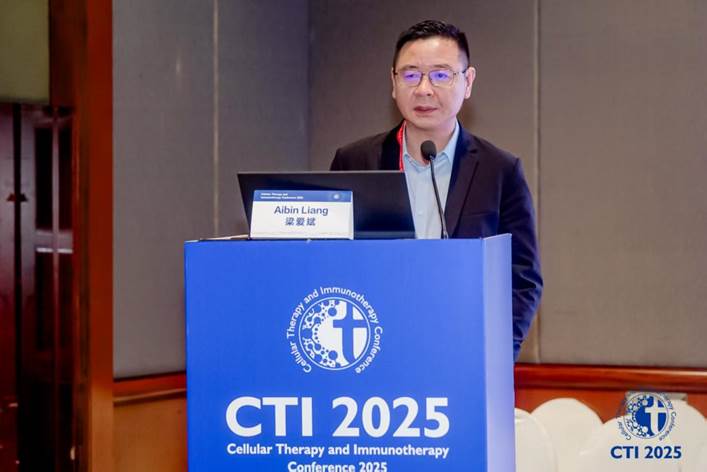
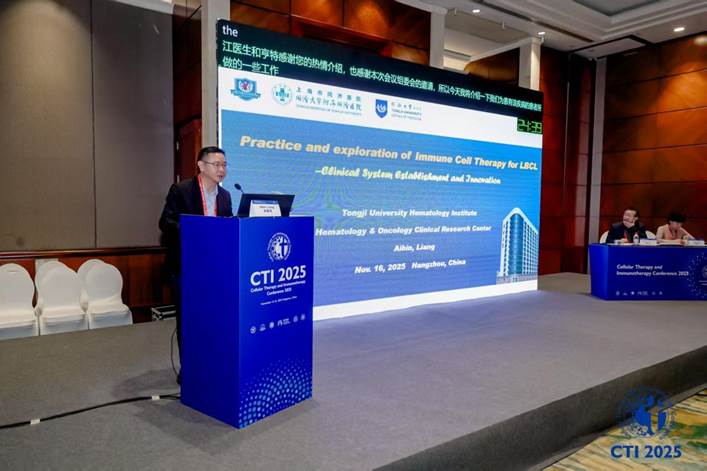
Expert Profile
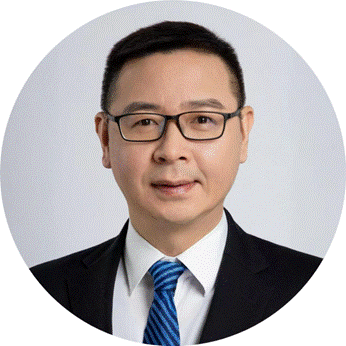
Professor Liang Aibin, MD, PhD
Tongji Hospital, Tongji University
- Chief Physician; Doctoral Supervisor; Level-II Professor
- Director, Institute of Hematology, Tongji University
- Director, Clinical Research Center for Hematologic Malignancies, Tongji University
- Vice President, Hematology Branch, Chinese Medical Doctor Association
- Vice Chair, Integrative Hematologic Oncology Committee, Chinese Anti-Cancer Association
- Vice Chair, Biotherapy Committee, Chinese Research Hospital Association
- Vice Chair, Experimental Hematology Committee, Chinese Society of Pathophysiology
- National Committee Member, Hematology Branch, Chinese Medical Association
- Standing Committee Member, Hematology Branch, Chinese Medical Doctor Association
- Chair, Hematology Branch, Shanghai Medical Association
- Vice Chair, Hematology Branch, Shanghai Anti-Cancer Association
- Vice Chair, Hematologic Immunology Committee, Shanghai Immunology Society
Professor Liang has received numerous honors, including the First Prize of Shanghai Medical Science and Technology Award, designation as a National Outstanding Physician, Chief Scientist of a National Key R&D Program, and recipient of multiple national and municipal awards. He has led more than 30 national and provincial research projects, published over 300 academic papers (including more than 150 SCI-indexed articles), edited more than 10 hematology textbooks, led the development of over 20 clinical guidelines and expert consensuses, and served as principal investigator in multiple CAR-T clinical trials.