Editor's Note: On August 29–30, 2026, the "Gaobo Medical Forum — 6th Symposium on the Clinical Application of Autologous Hematopoietic Stem Cell Transplantation and Training Course on the Clinical Application of Autologous Hematopoietic Stem Cell Transplantation," hosted by the National Clinical Research Center for Blood System Diseases, Institute of Hematology & Blood Diseases Hospital, Chinese Academy of Medical Sciences, and organized by Gaobo Medical Group's Zhaxin Hospital/Shanghai Liquan Hospital, was held in Shanghai. During the Shanghai conference, Oncology Frontier – Hematology Frontier invited Professor Jun Zhu of Gaobo Shanghai Zhaxin Hospital/Shanghai Liquan Hospital for an in-depth discussion on the clinical positioning and key challenges of autologous hematopoietic stem cell transplantation in the era of novel therapies, as well as a systematic overview of comprehensive management strategies for hemophagocytic lymphohistiocytosis (HLH), providing valuable practical guidance for precision transplantation decision-making.01
Oncology Frontier – Hematology Frontier: With the rapid development of novel drugs and cellular therapies in recent years, could you discuss the current clinical positioning and main patient populations for autologous hematopoietic stem cell transplantation in hematologic malignancies? From a technical perspective, what are the major challenges facing its clinical application today?
Professor Jun Zhu: In an era of rapidly advancing novel drugs and cellular therapies such as CAR-T, the clinical role of autologous hematopoietic stem cell transplantation (auto-HSCT) has become increasingly well defined.
In multiple myeloma, autologous transplantation remains an indispensable cornerstone of treatment. For newly diagnosed patients with multiple myeloma who are eligible for transplantation, high-dose chemotherapy followed by autologous transplantation remains the standard consolidation strategy after induction therapy and an effective approach for achieving deep and durable remission. Despite continued advances in novel agents, autologous transplantation continues to provide clear clinical benefits in deepening responses and prolonging progression-free survival.
In lymphoma, autologous transplantation is primarily used for patients with relapsed/refractory disease who remain sensitive to chemotherapy. For patients with classical Hodgkin lymphoma and certain types of non-Hodgkin lymphoma who are sensitive to salvage chemotherapy after first relapse, autologous transplantation remains a standard consolidation strategy. It is worth noting that with the emergence of novel immunotherapies and targeted agents, the efficacy of first-line and later-line treatments has improved substantially, resulting in an overall decline in the number of autologous transplants performed. Nevertheless, its role remains supported by international guidelines in specific clinical settings, particularly in relapsed/refractory disease.
In leukemia, the application of autologous transplantation has narrowed considerably and is now mainly reserved for specific subtypes, such as patients with intermediate-risk disease who are unsuitable for allogeneic transplantation or unable to identify a suitable donor. In addition, autologous transplantation remains a valuable option in certain settings involving acute promyelocytic leukemia (APL) in second remission.
It is important to emphasize that a key prerequisite for autologous transplantation is achieving a deep molecular response before transplantation, such as minimal residual disease (MRD) negativity. Although auto-HSCT is a relatively mature technology, several major challenges remain in clinical practice:
First, the risk of stem cell mobilization and collection failure. This is the primary hurdle for successful transplantation. Particularly among older patients who have received multiple lines of chemotherapy, impaired bone marrow reserve and cumulative treatment toxicity can result in stem cell mobilization failure rates of 15%–30%. Therefore, optimizing mobilization strategies according to individual patient characteristics remains a key clinical challenge.
Second, relapse after transplantation. Unlike allogeneic transplantation, autologous transplantation lacks a graft-versus-tumor effect. Although transplant-related mortality is relatively low, relapse remains the major cause of treatment failure. Therefore, how to manage post-transplant MRD and whether to incorporate novel agents into maintenance therapy to reduce relapse risk remain important unresolved questions.
02
Oncology Frontier – Hematology Frontier: HLH progresses rapidly and is highly heterogeneous. For patients who require hematopoietic stem cell transplantation, how should clinicians determine transplant eligibility and the optimal timing? What clinical or biological factors can help identify patients who should enter the transplantation pathway early?
Professor Jun Zhu: Hemophagocytic lymphohistiocytosis (HLH) is a severe hyperinflammatory syndrome caused by uncontrolled activation of the immune system. It progresses rapidly and exhibits substantial clinical heterogeneity. Its causes include inherited defects, malignancy-associated HLH such as lymphoma-associated HLH, infection-triggered HLH, and autoimmune disease–associated HLH. Hematopoietic stem cell transplantation (HSCT) is currently the only potentially curative treatment for primary (genetic) HLH and certain cases of refractory secondary HLH. However, transplantation itself carries substantial risks. Therefore, accurately selecting patients who are suitable for transplantation, identifying the optimal transplantation window, and recognizing high-risk warning indicators are critical to improving long-term outcomes.
Etiologic stratification is the cornerstone of determining transplant eligibility. First, primary (familial) HLH is the clearest indication for transplantation in children. These patients have well-defined inherited immune defects that cannot be cured with chemotherapy or immunosuppression alone, and disease relapse is inevitable. Therefore, transplant preparation should be initiated promptly after diagnosis. Second, for malignancy-associated HLH, particularly lymphoma-associated HLH, transplantation is also an important treatment option. The specific transplantation strategy should be individualized according to the lymphoma subtype and degree of disease control. Finally, in infection-triggered secondary HLH, most cases caused by bacterial or viral infections can be effectively controlled following appropriate anti-infective and anti-HLH treatment. However, in certain specific infections, such as Epstein-Barr virus (EBV)-associated HLH, allogeneic HSCT is often required to achieve a cure.
Once the indication for transplantation has been established, timing is critical. Clinicians need to identify the optimal transplantation window based on a range of clinical and biological indicators. The first and most important consideration is disease control status, which is the key determinant of prognosis. Before transplantation, the patient should be brought out of a state of high inflammatory activity and into a non-active phase. Specific goals include absence of fever, resolution of hepatosplenomegaly, normalization of blood counts, and reduction of serum ferritin to below 500 μg/L. Second, comprehensive assessment of organ function is essential, as this represents a key determinant of transplant feasibility. Severe hepatic or renal impairment can substantially increase transplant-related risks. Meanwhile, because HLH can progress rapidly, some patients may develop irreversible organ damage while waiting for transplantation.
Therefore, in clinical practice, physicians must remain highly vigilant about missing the optimal transplantation window due to indecision. High-risk patients should be identified as early as possible, with transplant evaluation and donor preparation completed in advance to maximize the likelihood of long-term survival and favorable outcomes.
03
Oncology Frontier – Hematology Frontier: For HLH patients who have clearly entered the transplantation pathway, how should clinicians select the donor, conditioning regimen, and transplantation strategy based on disease type, treatment response, and individual patient characteristics? Meanwhile, how can post-transplant monitoring and intervention reduce the risks of relapse and transplant-related complications and further improve long-term outcomes?
Professor Jun Zhu: The first step is to determine the type of transplantation—whether autologous or allogeneic transplantation should be performed. For patients with cytotoxic function defects, such as those with primary or accelerated-phase HLH and EBV-associated HLH, allogeneic transplantation is a curative approach. It replaces the patient’s defective cytotoxic immune function with a healthy donor-derived hematopoietic and immune system. For lymphoma-associated HLH, it is important to determine whether HLH is directly driven by the lymphoma or whether the patient has an underlying susceptibility. If HLH is directly driven by lymphoma and the patient achieves complete remission (CR) following induction therapy or is able to tolerate intensive therapy, autologous transplantation may be considered. However, for patients with high-risk lymphomas, such as NK/T-cell lymphoma, Burkitt lymphoma, or EBV-associated lymphoma, who achieve only partial remission (PR) or have progressive disease (PD), allogeneic transplantation may be the preferred option.
Donor selection is particularly important in HLH transplantation. It is essential to ensure that the donor does not carry pathogenic gene mutations associated with the recipient’s disease; otherwise, normal immune function may not be successfully reconstituted after transplantation, creating a high risk of HLH relapse. For related donors, HLH-associated genetic screening should be performed, together with assessment of NK-cell activity, T-cell and NK-cell degranulation function, and expression of HLH-associated target proteins. In addition, EBV DNA testing and monitoring of EBV-specific immune function should be performed to ensure that related donors meet the requirements for stem cell donation.
There is currently no universally standardized conditioning regimen. The core objectives are to achieve sufficient immunosuppression to ensure engraftment, eliminate abnormally activated immune cells, and minimize organ toxicity while avoiding reactivation of the cytokine storm. Conditioning should therefore be individualized according to the degree of organ dysfunction before transplantation, age, performance status, and degree of HLH control.
Meticulous post-transplant management is critical for reducing complications and relapse risk. Donor chimerism should be monitored regularly. If donor chimerism declines, timely intervention is required, such as tapering or discontinuing immunosuppressive therapy and administering donor lymphocyte infusions, to consolidate engraftment and prevent relapse. Viral monitoring is also essential. Patients with EBV-associated HLH are at increased risk of viral reactivation after transplantation, and EBV viral load should therefore be closely monitored to facilitate early detection and preemptive treatment of EBV viremia. Cytomegalovirus should likewise be closely monitored. In addition, graft-versus-host disease (GVHD) is one of the major causes of non-relapse mortality, and standardized GVHD prophylaxis and treatment should be implemented according to the conditioning regimen and donor type.
Expert Profile

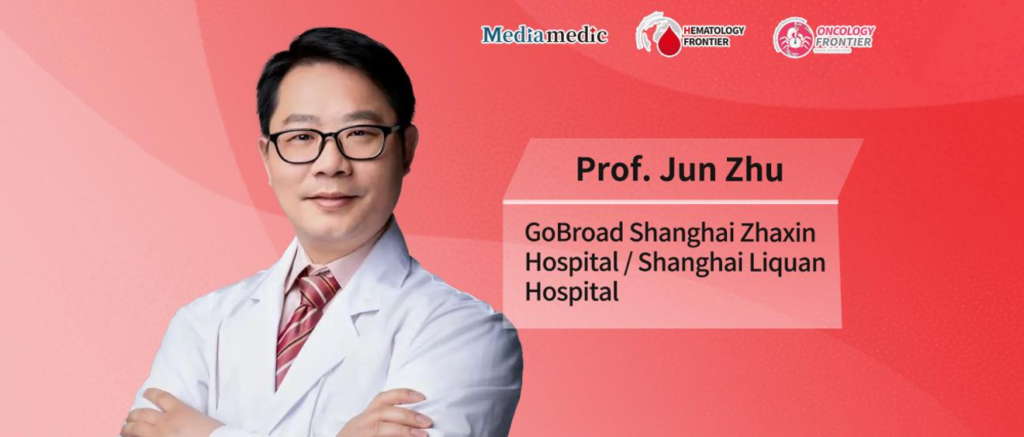
Jun Zhu
Gaobo Medical Group Shanghai Zhaxin Hospital / Shanghai Liquan Hospital
Medical Director, Gaobo Medical Group Shanghai Zhaxin/Liquan Hospital; Chief Physician
Long-term experience in salvage treatment with hematopoietic stem cell transplantation for refractory hematologic diseases
Member, Hematology Branch, Shanghai Medical Association
Member, Infection and Chemotherapy Branch, Shanghai Medical Association
Member, Hematology Institutions Branch, Chinese Hospital Association
Member, Infectious Diseases Professional Committee, China Association of Pharmaceutical Education
Member, Hematology Branch, Chinese Society of Geriatrics
Council Member, Shanghai Social Medical Institutions Association
Committee Member, Oncology Branch and Standing Committee Member, Hematologic Oncology Multidisciplinary Committee, Shanghai Social Medical Institutions Association
Participated in research projects that received the Second Prize of the Chinese Medical Science and Technology Award in 2017 and the Outstanding Achievement Award for Scientific Research in Higher Education Institutions from the Ministry of Education in 2016
Published first-author papers in leading domestic and international journals including Clinical Infectious Diseases, Science Advances, Cancer Management and Research, Frontiers in Medicine, Chinese Journal of Hematology, Chinese Journal of Infection and Chemotherapy, and Journal of Clinical Hematology
Young Editorial Board Member, BLOOD Chinese Edition