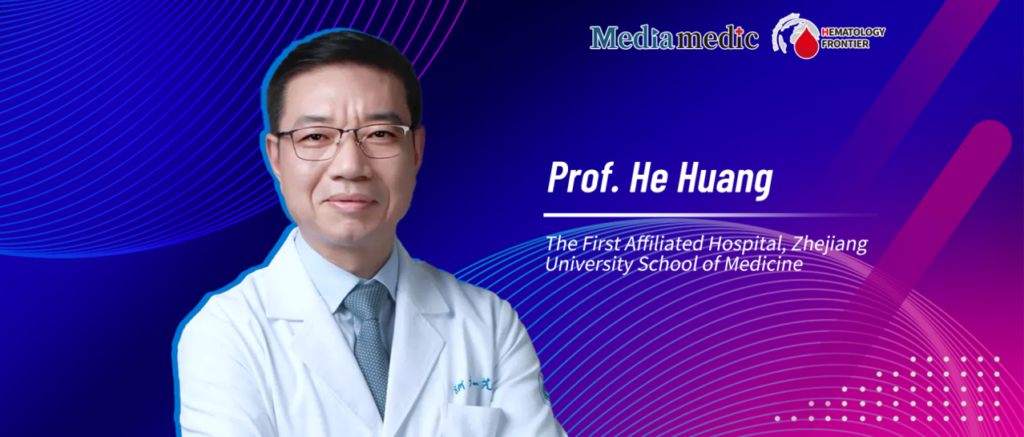
Editor's Note: Cellular immunotherapies such as CAR-T therapy are rapidly evolving, progressing from single-target and dual-target approaches to armored CAR-T cells, in vivo CARs, and other next-generation technologies that continue to overcome the limitations of conventional therapies. The 2026 Cross-Strait Hematology Academic Conference was held in Zhuhai, Guangdong, on August 21–22. During the conference, Oncology Frontier – Hematology Frontier interviewed Professor Huang He from the First Affiliated Hospital of Zhejiang University School of Medicine for an in-depth discussion on advances in novel cellular immunotherapies and their clinical translation. Drawing on his team's original research, Professor Huang systematically discussed key strategies for enhancing CAR-T cytotoxicity, overcoming the bottlenecks of universal manufacturing, and reducing treatment costs, providing a clear roadmap for translating next-generation cellular therapies into clinical practice.Oncology Frontier – Hematology Frontier: In recent years, cellular immunotherapies such as CAR-T therapy have undergone rapid evolution, progressing from single-target CAR-T to dual-target and novel-target approaches, and further to next-generation technologies such as armored CAR-T and in vivo CARs. What do you consider the most important developments currently emerging in the field of novel cellular immunotherapy? What clinical challenges associated with conventional CAR-T therapy are these innovations primarily designed to address?
Professor Huang He: The term “novel” cellular therapy mainly refers to approaches developed beyond the eight currently approved autologous CAR-T products targeting CD19 and BCMA. The emergence of numerous novel targets and technologies is fundamentally driven by three major limitations of existing CAR-T therapies:
First, efficacy still needs to be further improved. Based on current clinical data, the complete response rate in lymphoma is approximately 50%, while the relapse rate in leukemia remains as high as 50%. Therefore, the first major challenge is to further enhance the cytotoxicity of CAR-T cells while maintaining their long-term functional persistence.
Second, there is the issue of off-the-shelf availability. Current autologous CAR-T therapy requires personalized manufacturing. Patients must undergo collection of their own lymphocytes, and the manufacturing process is relatively time-consuming and associated with a certain failure rate.
Third, treatment costs remain extremely high. The price of a single CAR-T treatment in the current market approaches RMB 1 million, which is largely attributable to the high cost of individualized manufacturing.
To address these challenges, current development of next-generation CAR-T therapies is primarily focused on two major directions:
First, enhancing efficacy through “armored” CAR-T technology. Based on the conventional second-generation CAR structure, this approach incorporates cytokine secretion to promote CAR-T cell expansion and functional persistence in vivo, thereby significantly enhancing antitumor activity. This field has recently achieved important breakthroughs. For example, our team recently published a study in Nature Cancer demonstrating that interleukin-10 (IL-10) can effectively enhance CAR-T efficacy. Based on this technology, patients may no longer require complex lymphocyte collection and could potentially receive treatment following only routine blood collection.
Second, developing innovative approaches to achieve universal, off-the-shelf therapy. Early universal CAR-T approaches primarily relied on gene-editing technologies. More advanced strategies currently under investigation include the directed differentiation of pluripotent stem cells into CAR-NK cells, as well as the highly promising in vivo delivery technologies, such as using viral vectors or lipid nanoparticles to deliver RNA and generate CAR-T cells directly within the body. These approaches could not only address the issue of universal availability but also substantially reduce treatment costs.
Oncology Frontier – Hematology Frontier: Moving from laboratory research to clinical application, novel cellular immunotherapies still face multiple challenges, including durability of response, relapse, treatment safety, and product manufacturing. Based on your team’s work on non-viral PD-1 targeted integration CAR-T and function-enhanced CAR-T cells, what do you consider the most critical technological breakthroughs and evaluation criteria for advancing novel cellular therapies toward clinical translation?
Professor Huang He: As discussed earlier, the continued development and innovation of novel cellular therapies are fundamentally driven by the challenges encountered in clinical practice. Regarding the key challenge of further enhancing the cytotoxicity of CAR-T therapy, our team’s research has mainly focused on two approaches.
One approach is structural modification of existing CAR-T products. For example, our team developed an IL-10 metabolic enhancement CAR-T product that achieved significant therapeutic efficacy at only one-thousandth of the dose of existing products, with a complete response (CR) rate of 92% and an objective response rate (ORR) of 100%.
The other approach is enhancing efficacy through immune checkpoint modulation. Our study published in Nature demonstrated that eliminating PD-1 using non-viral transfection technology can effectively enhance the cytotoxic function of CAR-T cells. In addition, the recently emerging in vivo delivery technologies and multi-target strategies are also aimed at further strengthening the antitumor efficacy of CAR-T cells.
To bring next-generation CAR-T therapies into clinical practice as rapidly as possible, several key steps deserve attention. First, against the backdrop of the “818 New Policy,” we should accelerate investigator-initiated trials (IITs) to obtain critical clinical evidence at an early stage. Second, greater support should be sought within the national drug development and translation system to help relevant products generate pivotal clinical research data. Only through these efforts can we build on the promising efficacy demonstrated in early-stage research, continuously develop new products, further improve clinical outcomes, and reduce treatment costs.
Oncology Frontier – Hematology Frontier: As cellular immunotherapy enters a phase of accelerated innovation and clinical translation, enabling these technologies to be “used effectively, affordably, and broadly” has become a major focus of the field. From both clinical and industry perspectives, which areas should China prioritize in the development of novel cellular immunotherapies over the next 3–5 years? What recommendations do you have for advancing original technologies, multicenter clinical research, and translational development?
Professor Huang He: The remarkable efficacy demonstrated by CAR-T and other novel cellular therapies in clinical practice has fully established their irreplaceable clinical value. In patients with relapsed or refractory acute leukemia, lymphoma, and multiple myeloma, CAR-T therapy has achieved significant clinical benefits. Meanwhile, our team is actively exploring the use of CAR-T therapy earlier in the treatment course, including in newly diagnosed patients with leukemia, lymphoma, and multiple myeloma. Preliminary results are highly encouraging. Through comprehensive approaches combining cellular therapy with targeted therapy, patients may achieve improved survival outcomes, potentially reshaping the current treatment paradigm, which relies heavily on long-term chemotherapy and hematopoietic stem cell transplantation.
At the same time, the application of cellular therapy is continuously expanding, extending beyond hematologic malignancies into broader fields such as autoimmune diseases and solid tumors. Against this backdrop, I believe there are three key areas that deserve particular emphasis:
First, deepen industry–academia–research collaboration to accelerate product iteration and upgrading. Continued innovation in CAR-T products requires close collaboration between industry and clinical research communities. More efficient mechanisms for coordination should be established to accelerate the development and iteration of next-generation products, ensuring that cutting-edge technologies can be translated into safe and effective clinical applications more rapidly.
Second, encourage large-scale, multicenter clinical trials. Any new technology that aims to change clinical practice guidelines must be supported by high-quality multicenter evidence. Whether evaluating the applicability of CAR-T therapy in first-line treatment or validating its efficacy in new indications, large-scale, multicenter clinical studies are essential. Industry, clinical institutions, and government agencies should all provide support and encouragement for such research.
Third, establish a multilevel payment system to overcome barriers to accessibility. China has already developed numerous high-quality CAR-T products, and more are expected to enter the market. However, the major bottleneck limiting their widespread adoption lies in the payment system. Because China’s basic medical insurance system primarily focuses on providing essential coverage, most CAR-T products have not yet been included in the national reimbursement drug list. In contrast, some countries and regions have achieved comprehensive insurance coverage for CAR-T therapy. During this transitional period, the deeper involvement of commercial health insurance is therefore crucial. At the national and societal levels, greater efforts should be made to expand commercial insurance coverage for cellular therapies and establish a multilevel protection system combining basic medical insurance with commercial health insurance. This would not only enable more patients to afford this potentially life-saving technology but also provide a solid foundation for the healthy and sustainable development of the cellular therapy industry.
Expert Profile
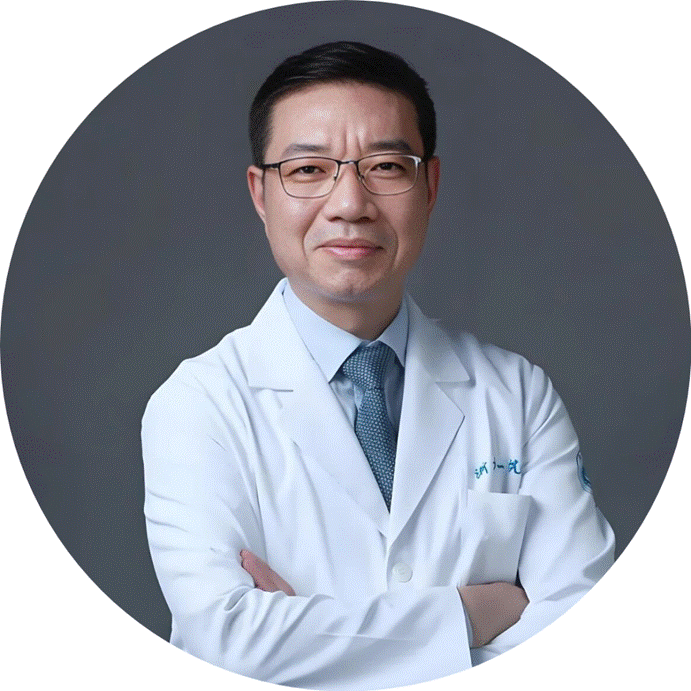
Professor Huang He
The First Affiliated Hospital of Zhejiang University School of Medicine
Qishan Distinguished Professor of Zhejiang University; Chief Scientist of the 973 Program; Chief Physician; Doctoral Supervisor
Director, Bone Marrow Transplantation Center, Department of Hematology, The First Affiliated Hospital of Zhejiang University School of Medicine
Director, Institute of Hematology, Zhejiang University
Director, Zhejiang Provincial Engineering Center for Stem Cell and Cellular Immunotherapy
Expert Group Member, National Key R&D Program “Stem Cell and Translational Research” Key Special Project
Vice Chair, Hematology Branch of the Chinese Medical Association
Deputy Director, Expert Committee of the China Marrow Donor Program
Standing Member, International Scientific Committee, Asia-Pacific Blood and Marrow Transplantation Group
Member, International Scientific Committee, European Society for Blood and Marrow Transplantation
Member, Scientific Committee, Asian Cellular Therapy Organization
Main Research Areas: His primary research focuses on basic stem cell research, the clinical application of hematopoietic stem cell transplantation, and cutting-edge technologies and translational research in cellular immunotherapy. He has received the Second Prize of the National Science and Technology Progress Award twice, in 2003 and 2015. As principal investigator, he has led 27 projects, including projects under the 973 Program, 863 Program, National Natural Science Foundation of China Key Projects, and NSFC International Cooperation and Exchange Projects. He has published 283 SCI-indexed papers as corresponding author in journals including Nature and NEJM, received 15 provincial- and ministerial-level or higher scientific awards, and served as chair, invited speaker, or oral presenter at more than 100 major international conferences over the past five years. He is the editor-in-chief of CAR-T Cell Immunotherapy, the first domestic monograph on CAR-T cell therapy published by People’s Medical Publishing House, and editor-in-chief of the national postgraduate textbook Hematology. He has also contributed to 11 books and textbooks. He serves on the editorial boards of leading international journals in hematopoietic stem cell transplantation, including Bone Marrow Transplantation, Biology of Blood and Marrow Transplantation, and Journal of Hematology and Oncology.