

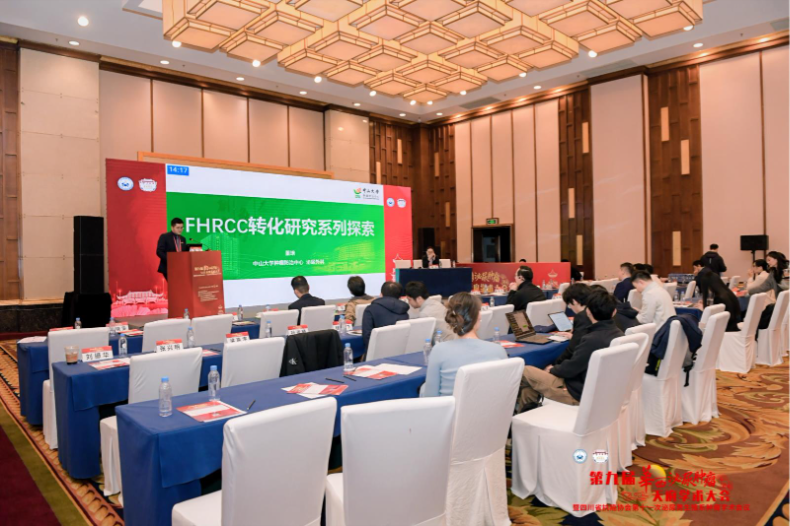
Editor’s Note: With the rapid progress of clinical research, immunotherapy has demonstrated substantial value across multiple treatment settings in renal cell carcinoma (RCC). In particular, immune-based combination regimens have reshaped the treatment landscape of advanced RCC. At the 9th West China Uro-Oncology Tianfu Academic Conference & the 11th Annual Meeting of the Sichuan Anti-Cancer Association Genitourinary Tumor Committee, Professor Pei Dong from Sun Yat-sen University Cancer Center delivered a keynote lecture titled “Rational Reflections Amid the Surge of Immunotherapy in RCC.” After the session, Oncology Frontier – Urology Frontier invited Prof. Dong for an in-depth discussion on the evolving role of neoadjuvant therapy, adjuvant immunotherapy, and precision strategies for FH-deficient RCC. 01
Oncology Frontier – Urology Frontier:
Neoadjuvant immunotherapy has shown potential benefits in reducing surgical difficulty for locally advanced RCC with venous tumor thrombus (e.g., NEOTAX). How do you view its clinical value?
Prof. Pei Dong:
In recent years, multiple neoadjuvant immunotherapy studies for locally advanced RCC have been conducted globally, and some have indeed produced encouraging positive signals. Overall, the objective response rate (ORR) in these settings hovers around 30–40%.
For certain patients, neoadjuvant treatment can meaningfully reduce surgical difficulty—whether through tumor shrinkage or downstaging of tumor thrombus—making previously unresectable disease resectable, or allowing kidney-sparing surgery where nephrectomy would otherwise have been required.
However, it is important to recognize that more than half of patients do not achieve meaningful tumor shrinkage. Thus, while some clearly benefit, neoadjuvant therapy is not universally effective.
Moving forward, the key lies in identifying which patients are most likely to benefit. Precision patient selection will be critical to ensuring that neoadjuvant therapy is applied meaningfully rather than broadly.
02
Oncology Frontier – Urology Frontier:
For high-risk postoperative patients, do you recommend routine adjuvant immunotherapy? How should clinicians weigh immune-related toxicity and potential impacts on future treatment?
Prof. Pei Dong:
Adjuvant therapy for high-risk or locally advanced RCC remains an area of active exploration. Many patients and clinicians hope postoperative therapy will further reduce recurrence risk.
To date, KEYNOTE-564 remains the only phase III trial showing positive results. One year of pembrolizumab reduced recurrence risk by roughly 30%. But crucially, not all patients derive benefit.
Other studies testing dual immunotherapy or ICI-based combinations have not yet demonstrated an overall survival advantage. Therefore, when considering adjuvant treatment, clinicians must evaluate which patients have the highest likelihood of benefit, rather than offering therapy indiscriminately.
Another challenge is that most evidence is derived from clear-cell RCC, while non–clear-cell RCC lacks high-quality evidence. Future research should focus more on these subtypes to guide individualized therapy.
03
Oncology Frontier – Urology Frontier:
FH-deficient RCC is poorly responsive to traditional therapies. Recent Chinese data on immunotherapy-based combinations offer new hope. What are the major challenges and future directions for this population?
Prof. Pei Dong:
FH-deficient RCC is rare and highly aggressive, and conventional treatments often yield suboptimal results. Encouragingly, Chinese teams have reported impressive outcomes with immunotherapy-plus-targeted therapy combinations:
- The Renji Hospital team reported ORR ≈ 90% with a novel targeted-immunotherapy regimen.
- A West China Hospital study published in JAMA Oncology showed ORR 56% and median PFS 19.8 months.
These outcomes indicate that Chinese combination regimens are capable of substantially improving survival for FH-deficient RCC.
However, the challenge is that not all patients respond, and a subset demonstrates primary progression or early resistance. Therefore, the next crucial step is to understand molecular heterogeneity and genomic characteristics—why some respond and others do not.
Future breakthroughs will depend on:
- refining molecular subtyping,
- identifying actionable vulnerabilities, and
- designing more precise, biology-driven combination strategies.
Only then can we consistently improve outcomes for this rare and difficult subtype.
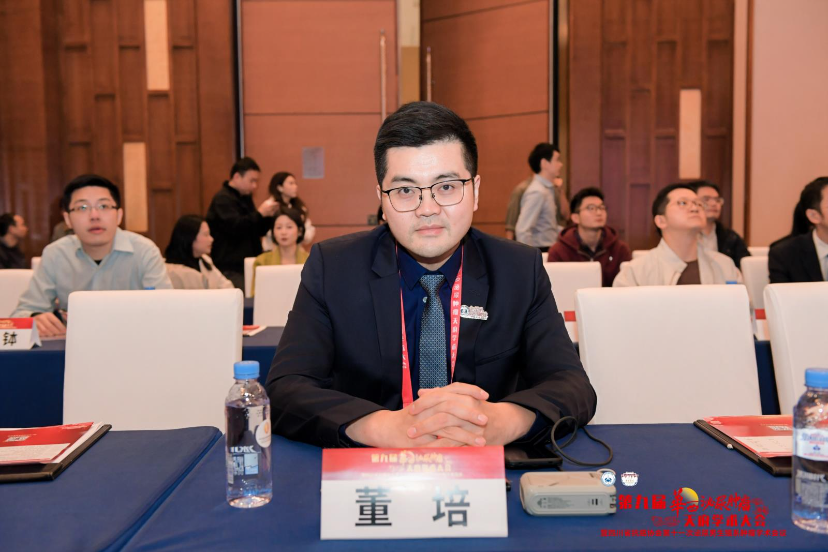
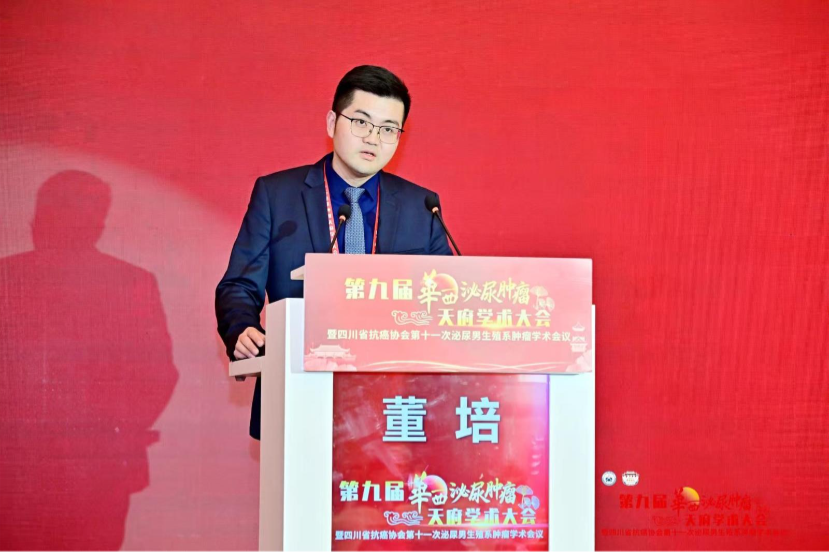

Prof. Pei Dong
Sun Yat-sen University Cancer Center