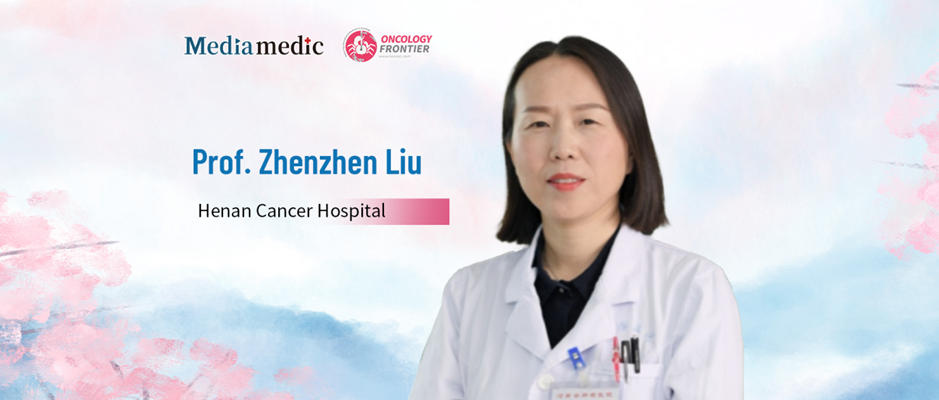
Editor’s note: Breast cancer has become one of the leading malignancies threatening women’s health. Standardized diagnosis and treatment, together with rigorous quality control, are essential for improving survival outcomes and enhancing patients’ quality of life. At the 2025 National Conference on Standardized Breast Cancer Diagnosis and Treatment and Quality Control, held concurrently with the National Key Laboratory Breast Cancer Annual Meeting, Oncology Frontier invited Prof. Liu Zhenzhen of Henan Cancer Hospital to discuss discipline development, regional quality-control alliances, optimization of multidisciplinary care, and strategies for training young specialists.
01
Oncology Frontier: Your presentation at this year’s conference focused on “Discipline Development and the Breast Cancer Quality-Control Alliance.” Could you explain why establishing such an alliance is necessary and what role it will play in improving breast cancer care nationwide?
Prof. Liu Zhenzhen:
My presentation centered on two themes: discipline development and the quality-control alliance. At first glance, the two may seem unrelated, but in practice they reinforce each other. Henan Province has been conducting breast cancer quality-control (QC) initiatives for nearly five years, strictly adhering to national indicators and accumulating substantial experience. We have come to deeply understand that the ultimate goal of quality control is to ensure patients receive standardized, high-quality care. Achieving this requires strong discipline development, a genuinely patient-centered philosophy, breaking down barriers between specialties, and enabling true multidisciplinary collaboration.
However, during our QC work, we observed that provincial and municipal hospitals generally have more advanced specialty development, whereas county-level institutions remain relatively weak. As a specialized oncology hospital responsible for QC leadership, we also reflected on several questions: — What are the national benchmarks for specialty development? — How effective is the dissemination of QC experience when led by comprehensive hospitals? Addressing these questions requires learning from the mature practices of other provinces.
Therefore, after extensive discussions with Prof. Ma Fei of the Cancer Hospital, Chinese Academy of Medical Sciences, and Prof. Yang Jin of the First Affiliated Hospital of Xi’an Jiaotong University, we jointly proposed establishing a Northwest Regional Quality-Control Alliance. The Northwest region is vast and sparsely populated, with uneven distribution of medical resources—making QC efforts both necessary and urgent. Our goal is to promote exchange between provinces and among different types of medical institutions (each with varying QC responsibilities), allowing for mutual learning and complementary strengths. Ultimately, we aim to elevate the level of discipline development across the region and improve care for patients.
02
Oncology Frontier: Within the multidisciplinary model of breast cancer care, which aspects do you believe most urgently need strengthening? How can collaboration among departments be improved?
Prof. Liu Zhenzhen:
Through our work, we have come to recognize that multidisciplinary collaboration is the model that best serves patients. However, practical implementation is often challenged by uneven development across specialties. In institutions with the necessary resources, multidisciplinary work should be fully supported and strengthened. In institutions where conditions are not yet optimal, it is essential to rely on a unified clinical philosophy, using standardized guidelines to guide specialty development and clinical decision-making. Alignment in principles and execution forms the foundation for effective multidisciplinary collaboration.
A particularly critical task is breaking down silos between specialties. Discipline leaders play a pivotal role—they must possess a comprehensive understanding of general oncology, oncology subspecialties, or breast oncology, and they must also emphasize overall quality management. Beyond maintaining their own professional excellence, they must work to elevate the capabilities of the entire team and facilitate effective cross-department collaboration. Ultimately, building a patient-centered care model improves patient experience and satisfaction while allowing the strengths of each specialty to be meaningfully integrated, thereby maximizing treatment outcomes.
03
Oncology Frontier: In developing a strong breast cancer specialty, what strategies do you believe are most important for training young physicians and strengthening the specialty workforce?
Prof. Liu Zhenzhen:
I have always believed that talent development is the most essential element of building a breast cancer specialty. We often say, “Clinical work is today, research is tomorrow, and education is the day after tomorrow.” In my view, however, only when young physicians are strong can the discipline be strong. Young doctors tend to be more innovative, and in today’s environment, they are exposed to academic thinking at earlier stages of their careers. By the time they reach our age, they will have stronger and more complete academic capabilities—this continuity is crucial for the long-term development of the discipline.
As the saying goes, “The waves of the Yangtze River push the waves ahead.” The future of the specialty depends greatly on the academic growth of young doctors. Therefore, in building a breast cancer specialty, we must prioritize the training, education, and guidance of young physicians. Through a systematic training framework, we can support their growth and ensure that the discipline continues to evolve, flourish, and ultimately strengthen the entire specialty workforce.
Prof. Liu Zhenzhen Director, Department of Breast Oncology Henan Cancer Hospital