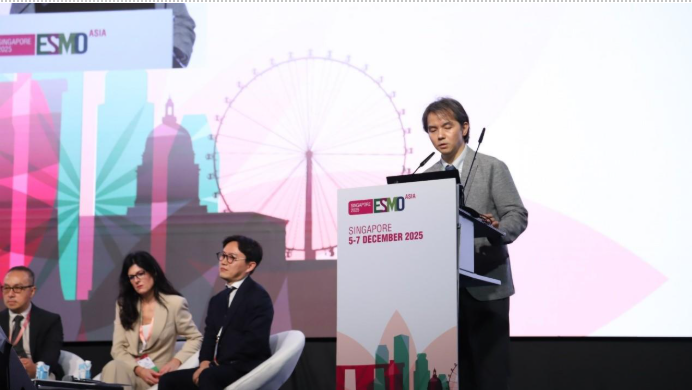
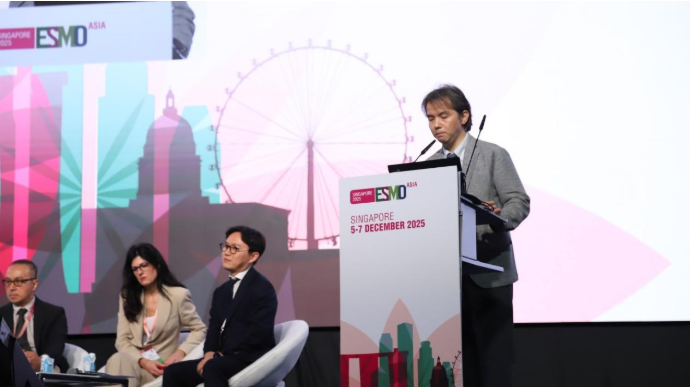
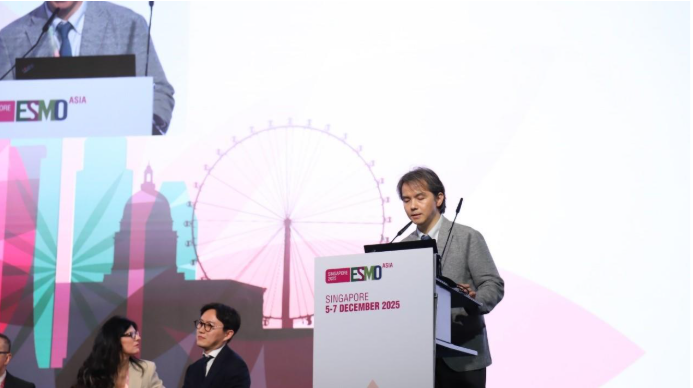
Editor’s Note: At a recent GI oncology symposium, Prof. Jung Yong Hong (Samsung Medical Center, South Korea) presented safety results from the Phase 3b SIERRA study, focusing on Asian patients with unresectable HCC (uHCC) and poor prognostic features treated with the STRIDE regimen (durvalumab + single-dose tremelimumab) as first-line therapy.
Background and Rationale
The Phase III HIMALAYA trial established STRIDE as a first-line standard of care for uHCC, demonstrating superior overall survival versus sorafenib with manageable safety. However, pivotal trials largely excluded patients with Child-Pugh B liver function, ECOG PS 2, or main portal vein tumor thrombosis (Vp4)—a population frequently encountered in real-world practice.
The Phase 3b SIERRA study was designed to evaluate STRIDE specifically in these high-risk groups.
SIERRA Design and Asian Subgroup
SIERRA is a multicenter, single-arm, open-label Phase 3b study enrolling systemic therapy–naïve uHCC patients across three cohorts: Child-Pugh B7–B8, ECOG PS 2, and Vp4. This update reports safety data from Asian centers (Hong Kong, Japan, South Korea, Singapore, and Vietnam). Co-primary endpoints include Grade 3–4 possibly related adverse events (PRAEs) within 6 months and objective response rate.
Key Safety Findings in Asian Patients
As of September 2024, 47 Asian patients received STRIDE with a median follow-up of 6 months. The incidence of Grade 3–4 PRAEs within 6 months was 25.5%, with no PRAE-related deaths. One Grade 5 tumor rupture occurred in the Vp4 cohort and was deemed unrelated to treatment.
Although Grade 3–4 PRAEs were numerically higher in Vp4 patients, this should be interpreted cautiously due to small sample size and baseline disease severity.
Adverse Events and Management
The safety profile was consistent with global SIERRA data and the HIMALAYA trial. Common PRAEs (≥5%) involved endocrine, gastrointestinal, and skin disorders. Immune-mediated and hemorrhagic events were infrequent and manageable, and fewer than half of patients required high-dose corticosteroids.
Conclusion and Outlook
Prof. Hong concluded that STRIDE demonstrates a manageable and consistent safety profile in Asian patients with poor-prognosis uHCC, including those with Child-Pugh B disease and Vp4. These findings support the feasibility of STRIDE in complex real-world populations. Final primary endpoint results are expected in early 2026, with ORR data to further define clinical benefit.
Disclosure: This content is AI-generated. Cross-platform reprinting or redistribution is prohibited.
hashtag#HCC hashtag#STRIDE hashtag#SIERRAStudy hashtag#ImmunoOncology hashtag#LiverCancer hashtag#Durvalumab hashtag#Tremelimumab hashtag#ClinicalResearch