The 2025 Annual Meeting of the American Society of Hematology (ASH) was held in Orlando from December 6 to 9. As one of the world’s premier events in hematology, the meeting drew extensive participation from clinicians and researchers worldwide and received strong attention from the Chinese hematology community.
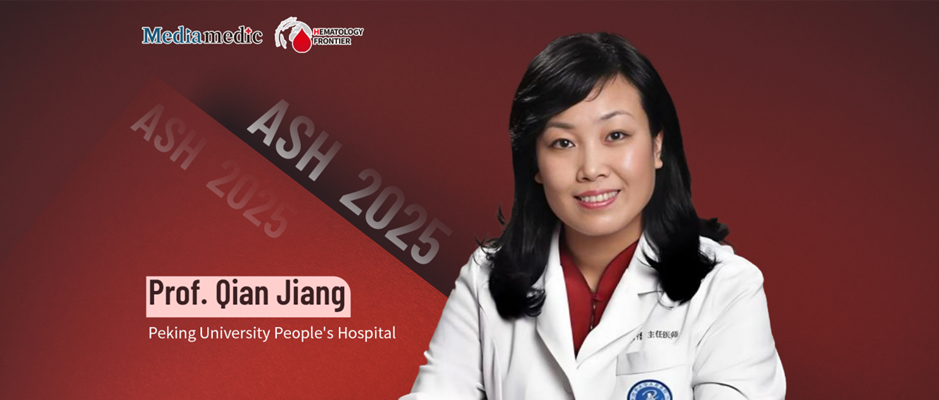
On this occasion, Hematology Frontier launched the special series “ASH Today: Live Updates”, connecting directly with on-site experts to deliver first-hand conference insights. On the second day of the meeting, we were honored to invite Prof. Qian Jiang from Peking University People’s Hospital to summarize key advances, team presentations, and international responses in the CML field from December 6–7.
A Global Perspective
Frontier Developments and Future Directions in CML
Prof. Qian Jiang: During the first two days of ASH, we attended several CML-focused sessions, including the annual meeting of the International CML Foundation (iCMLf) and dedicated oral presentation sessions. The iCMLf meeting, typically held at noon on the day before ASH officially opens, is particularly information-dense.
This year, discussions centered on unresolved issues in the newly released European LeukemiaNet (ELN) recommendations, such as whether the accelerated phase classification should be retained; how to define unfavorable responses at the 12-month milestone that warrant immediate treatment change; criteria for transplant eligibility; and whether BCR-ABL transcript levels must be reduced to very low levels prior to transplantation. Although framed around ELN guidance, these discussions clearly extend beyond Europe and are intended for global application.
Another major topic was first-line treatment selection. Currently available options include first- and second-generation TKIs, and even fourth-generation agents such as asciminib, which are approved in both the United States and China. However, as highlighted by the CEO of The Max Foundation, many countries have access only to imatinib, with limited alternatives after treatment failure. Mutation testing and timely molecular monitoring are often unavailable. This starkly exposes the challenges faced in resource-limited settings, prompting broad discussion.
While current guidelines are well suited to regions with adequate drug availability and monitoring infrastructure, alternative strategies must be considered where such resources are lacking. This issue transcends pure science, touching on health economics, social equity, and humanitarian care, underscoring the multidimensional nature of medicine.
At the CML oral session on the first day, several studies stood out. Among them, Prof. Susan Branford presented the HARMONY study, a landmark project initiated by the HARMONY Alliance before the COVID-19 pandemic. The study integrates large-scale omics and genomic data to provide population-based clinical evidence. Analysis of 466 patients showed that approximately 20% harbored somatic mutations, with ASXL1 mutations associated with poorer outcomes. Beyond specific findings, the study’s major contribution lies in advancing international collaboration and big-data integration, helping to translate genomic insights into routine CML practice.
Another study also focused on the “star gene” ASXL1, which occurs in about 10% of newly diagnosed CML patients. While the mutation may affect depth of response or risk of treatment failure, it showed no significant impact on overall survival. At present, ASXL1 has limited value in guiding treatment decisions, and even more potent therapies cannot fully overcome its adverse influence. These findings offer new perspectives and highlight the potential role of omics-based risk stratification in optimizing CML management.
Sharing China’s Insights
Team Achievements in CML and International Response
Prof. Qian Jiang: On the first day of ASH, our team presented an oral report on the role of the bone marrow microenvironment—particularly endothelial cells—in TKI resistance. This work moves beyond the traditional focus on BCR-ABL mutations or amplification, opening a new avenue of microenvironment-driven resistance mechanisms. The presentation was scheduled as the first talk of the session, reflecting strong international recognition. Post-presentation discussions were lively, and while peers affirmed the significance of our findings, they also offered constructive suggestions that will be highly valuable for our future research.
Earlier this morning, I presented data at the ELN Breakfast Meeting on the use of orebatinib in accelerated-phase CML. The results demonstrated encouraging efficacy; however, international experts expressed considerable concern regarding safety, particularly cardiovascular risks such as hypertension, metabolic abnormalities, and vascular occlusive events. For long-term CML management, drug safety and tolerability are as critical as efficacy.
Tomorrow, I will present additional data on TGRX-678, a China-developed innovative agent, in patients with resistant disease. I look forward to further in-depth discussions with international colleagues and valuable feedback.
Expert Profile

Prof. Qian Jiang
Peking University People’s Hospital
Chief Physician, Second-Class Professor, MD, PhD Supervisor Deputy Director, Department of Hematology National Clinical Research Center for Hematologic Diseases Institute of Hematology, Peking University
Vice President, Qingdao Hospital of Peking University People’s Hospital Director, Hematology Center
Member, National Representative Committee, International CML Foundation Member, International Association for Comparative Research on Leukemia and Related Diseases Standing Member, Chinese Society of Hematology Deputy Head, Leukemia–Lymphoma Group, Chinese Society of Hematology
Chair, Beijing Society of Hematology Chair, Leukemia Committee, Chinese Association of Integrative Medicine and Oncology Vice Chair, First Committee of Integrative Hematologic Oncology, Chinese Anti-Cancer Association Chair, Leukemia Branch, China Medical Education Association