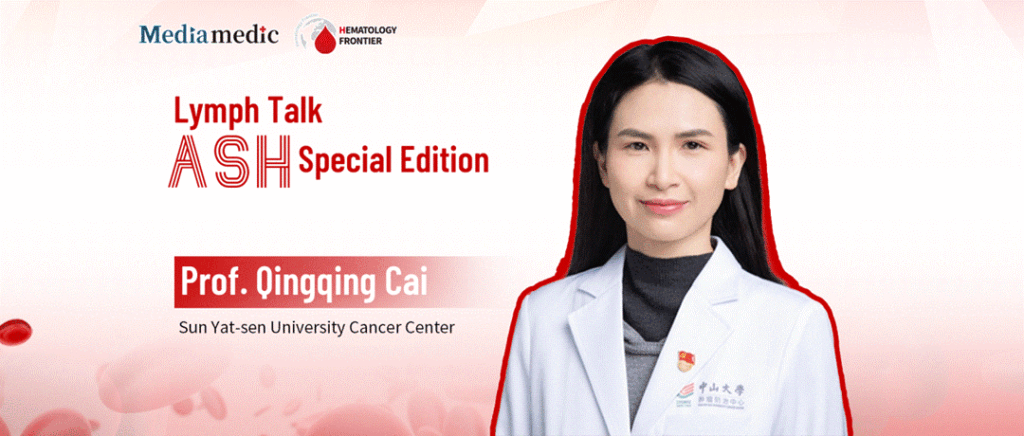
The 2025 Annual Meeting of the American Society of Hematology (ASH 2025) was recently successfully held in Orlando, United States. As the year’s flagship event in hematology, the meeting presented a concentrated series of groundbreaking advances in lymphoma research, offering new directions for the optimization of clinical practice.To better disseminate cutting-edge academic developments and empower clinical application, Oncology Frontier – Hematology Frontier has partnered with Professor Qingqing Cai of Sun Yat-sen University Cancer Center to launch the “Lymphoma Roundtable · ASH Special” series. Each Friday, the column highlights major lymphoma studies presented at ASH, interpreting frontier findings through authoritative perspectives and clinical reasoning. The aim is to distill truly practice-relevant evidence from complex and abundant research data, providing high-quality academic reference for clinicians and researchers.
As bispecific antibodies continue to demonstrate breakthrough efficacy and manageable safety profiles in relapsed/refractory (R/R) lymphoma, they are increasingly recognized as one of the most promising innovative treatment strategies in this field. In this installment of the Lymphoma Roundtable · ASH Special, Professor Qingqing Cai and Dr. Qianqian Li share and analyze in depth two landmark studies on bispecific antibody therapy for R/R lymphoma presented at ASH 2025.
Abstract 9193
Three-Year Follow-Up of a Phase 1 First-in-Human Study of Surovatamig, a Novel CD19×CD3 T-Cell Engager, in Patients with Relapsed/Refractory Follicular Lymphoma
Authors: Jing-Zhou Hou et al.
Background
Surovatamig (formerly AZD0486) is a fully humanized IgG4 CD19×CD3 T-cell engager (TCE) currently under evaluation in a phase 1 study in patients with relapsed/refractory (R/R) B-cell non-Hodgkin lymphoma (B-NHL). This report presents long-term follow-up data on surovatamig in patients with R/R follicular lymphoma (FL).
Study Design
This cohort enrolled patients with CD19-positive R/R B-NHL who had received at least two prior lines of therapy. Prior treatment with CD19 CAR-T therapy or CD20 bispecific antibodies was permitted. During cycle 1, surovatamig was administered using either a non–step-up regimen, a one-step-up regimen, or a two-step-up regimen. From cycle 2 onward (28-day cycles), the target dose was administered once every two weeks for up to 24 months. Patients achieving two consecutive complete responses (CRs) could switch to once-every-four-week dosing after completing six cycles. The primary objectives were to assess safety, tolerability, pharmacokinetics, and to determine the recommended phase 2 dose (RP2D).
Results
A total of 61 patients were enrolled, of whom 23 received treatment at the RP2D. The median number of prior lines of therapy was three (range, 2–11). Prior treatments included alkylating agents (90%), R-CHOP (61%), lenalidomide (43%), CAR-T therapy (11%), and CD20 TCEs (8%).
Among evaluable patients receiving doses ≥2.4 mg (n=52), the overall response rate (ORR) was 96% (n=50), with a complete response (CR) rate of 92% (n=48). Among patients who achieved CR and were evaluable for minimal residual disease (MRD), 93% (38/41) achieved MRD negativity. With a median follow-up of 16 months, the estimated 12-month progression-free survival (PFS) and duration of response (DoR) rates were 88% and 91%, respectively. All 11 patients who completed 24 months of treatment remained in CR. Notably, all eight patients with prior exposure to CD20 bispecific antibodies or CAR-T therapy achieved CR without relapse.
In terms of safety, among the 43 patients treated using the two-step-up dosing regimen, cytokine release syndrome (CRS) occurred in 51% of patients (49% grade 1 and 2% grade 2; no grade 3–4 events), while immune effector cell–associated neurotoxicity syndrome (ICANS) occurred in 5% of patients (one grade 1 and one grade 2 event). Among all 61 patients, the most common grade ≥3 adverse events (AEs) were neutropenia (20%), hypertension (8%), lymphopenia (7%), and pneumonia (7%). Late-onset infections occurring after 12 months of treatment were predominantly low grade, with grade ≥3 infections reported in 8% of patients. No patients discontinued treatment due to treatment-related adverse events.
Conclusions
Surovatamig demonstrated excellent response rates, a high MRD negativity rate, and durable responses in patients with R/R FL, including those who had previously failed CAR-T or TCE therapy. The safety profile was favorable, with no treatment discontinuations due to adverse events.
Commentary by Professor Qingqing Cai
Bispecific antibodies represent an important immunotherapeutic approach in lymphoma. Several CD3×CD20 bispecific antibodies have already been approved as monotherapy for B-cell lymphomas in the third-line setting and beyond. Enhancing efficacy while reducing adverse events such as CRS and ICANS remains a key focus in bispecific antibody research. Surovatamig, a novel CD3×CD19 bispecific antibody, reduces CD3 binding affinity to mitigate CRS risk while preserving antitumor activity. The updated three-year follow-up from this first-in-human study demonstrates a favorable safety profile, with predominantly grade 1–2 CRS and rare, mild neurotoxicity. High and durable response rates with deep MRD negativity were observed, offering a promising new therapeutic option for patients with R/R FL. Ongoing studies include a phase 2 trial of surovatamig monotherapy in patients with at least two prior lines of therapy (NCT06526793) and a phase 3 trial evaluating surovatamig in combination with rituximab in previously untreated FL (NCT06549595).
Abstract 2260
Mosunetuzumab or Glofitamab in Combination with Golcadomide Demonstrates Manageable Safety and Encouraging Efficacy in Patients with Relapsed/Refractory B-Cell Non-Hodgkin Lymphoma
Authors: Charalambos Andreadis et al.
Background
Mosunetuzumab and glofitamab are CD20×CD3 bispecific antibodies that have demonstrated high complete response rates and manageable safety profiles in patients with R/R follicular lymphoma and diffuse large B-cell lymphoma (DLBCL). Golcadomide is a first-in-class, oral molecular glue cereblon (CRBN) E3 ligase modulator with direct antitumor and immunomodulatory activity and has shown favorable efficacy and safety. This study aimed to evaluate the efficacy and safety of golcadomide in combination with mosunetuzumab or glofitamab in patients with R/R B-NHL.
Study Design
Adult patients with R/R B-NHL were enrolled and assigned to two cohorts. In Cohort 1, patients received subcutaneous mosunetuzumab combined with oral golcadomide. Mosunetuzumab was administered using a step-up dosing schedule during cycle 1 (21-day cycle): 5 mg on day 1, followed by 45 mg on days 8 and 15. From cycle 2 onward (28-day cycles), mosunetuzumab was administered at 45 mg on day 1 of each cycle. Golcadomide was initiated in cycle 1 or 2 and administered orally on days 1–14 of each 28-day cycle at doses of 0.1, 0.2, or 0.4 mg.
In Cohort 2, patients received intravenous glofitamab combined with oral golcadomide. Glofitamab was administered using a step-up dosing regimen, with obinutuzumab pre-treatment on day 1 of cycle 1, followed by glofitamab at 2.5 mg on day 8 and 10 mg on day 15. From cycle 2 onward (28-day cycles), glofitamab was administered at 30 mg on day 1 of each cycle. Golcadomide was initiated in cycle 2 or 3 and administered orally on days 1–10 of each cycle at doses of 0.2 or 0.4 mg. The primary endpoints were dose-limiting toxicities (DLTs) and determination of the recommended phase 2 dose (RP2D), while secondary endpoints included investigator-assessed ORR and CR rate.
Results
As of May 5, 2025, 35 patients were enrolled in Cohort 1 and 12 in Cohort 2. The median ages were 63 and 60 years, respectively. Prior CAR-T therapy had been received by 29% of patients in Cohort 1 and 42% in Cohort 2. The median number of prior lines of therapy was three and two, respectively.
Among evaluable patients (Cohort 1: n=27; Cohort 2: n=10), the ORR and CR rates were 70% and 44% in Cohort 1, with a median time to response of 2.6 months. In Cohort 2, the ORR and CR rates were 90% and 70%, respectively, with a median time to response of 1.9 months.
Grade ≥3 adverse events occurred in 74% of patients in Cohort 1 and 67% in Cohort 2, with no grade 5 events reported. The most common grade ≥3 adverse event was neutropenia, occurring in 57% and 58% of patients, respectively. CRS events were limited to grades 1–2, occurring in 43% and 33% of patients. Grade ≥3 neurological adverse events occurred in 3% and 17% of patients, respectively. Treatment discontinuation due to adverse events occurred in 17% of patients in Cohort 1, while no patients in Cohort 2 discontinued treatment for this reason.
Conclusions
The combination of mosunetuzumab or glofitamab with golcadomide demonstrated antitumor activity with a manageable safety profile in patients with R/R B-NHL, consistent with the known safety profiles of the individual agents. No new safety signals were observed.
Commentary by Professor Qingqing Cai
Although CD20×CD3 bispecific antibodies such as mosunetuzumab and glofitamab have shown high response rates as monotherapy, combination strategies are being explored to further enhance response depth and durability. Golcadomide, an oral molecular glue CRBN E3 ligase modulator, exerts both direct cytotoxic and immunomodulatory effects and may act synergistically with bispecific antibodies. The preliminary findings indicate relatively high rates of grade ≥3 adverse events, predominantly neutropenia, while the incidence of CRS and ICANS remained low and mostly mild. These results suggest that combination therapy does not substantially increase immune-related toxicities while offering encouraging efficacy signals. Larger studies are needed to establish the RP2D of golcadomide and to identify optimal combination strategies with different bispecific antibodies.
References
- Hou J-Z, et al. Three-year follow-up of the phase 1 first-in-human study investigating surovatamig, a novel CD19×CD3 T-cell engager, in patients with relapsed/refractory follicular lymphoma. ASH Abstract 9193, 2025.
- Andreadis C, et al. Mosunetuzumab or glofitamab in combination with golcadomide demonstrates a manageable safety profile and encouraging efficacy in patients with relapsed or refractory B-cell non-Hodgkin lymphoma. ASH Abstract 2260, 2025.
Expert Biography
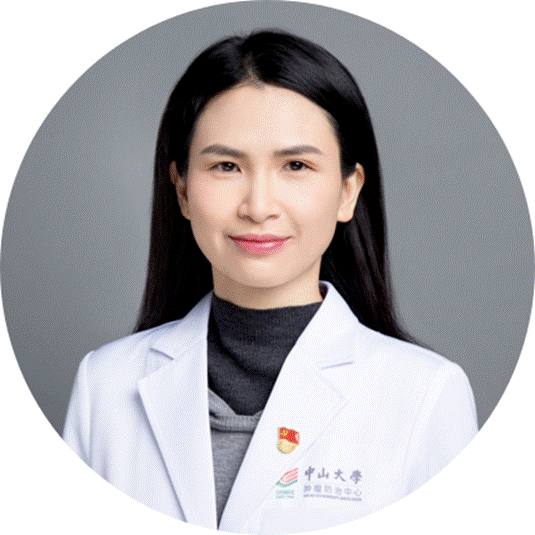
Professor Qingqing Cai
Sun Yat-sen University Cancer Center
Professor Qingqing Cai is a Chief Physician and Doctoral Supervisor at Sun Yat-sen University Cancer Center. She serves as Deputy Director of the Department of Internal Medicine and is the principal investigator (PI) for lymphoma programs at the institution.
She is a Distinguished Professor under the Changjiang Scholars Program of the Ministry of Education. Professor Cai currently holds several key academic leadership positions, including:
- Chair, Lymphoma Committee, Chinese Anti-Cancer Association (Integrative Chinese and Western Medicine Branch)
- Chair, Lymphoma Committee, Guangdong Anti-Cancer Association
- Chair, Lymphoma Committee, Guangdong Precision Medicine Application Society
- Vice Chair, Lymphoma Committee, Chinese Society of Clinical Oncology (CSCO)
- Vice Chair, Lymphoma Committee, China Association of Gerontology and Geriatrics
Professor Cai has served as national leading PI or site PI for multiple registered clinical trials. Over the past five years, she has published more than 20 SCI-indexed papers as corresponding author (including co-corresponding author) in top-tier international journals such as The Lancet Haematology, Blood, Signal Transduction and Targeted Therapy, Clinical Cancer Research, and Leukemia.
She has led five National Natural Science Foundation of China (NSFC) grants, including one Key Program grant and three General Program grants, as well as a Key Research and Development Project funded by the Ministry of Science and Technology. As the first contributor, she was awarded the First Prize of the 2023 Guangdong Provincial Science and Technology Progress Award.

Dr. Qianqian Li
Sun Yat-sen University Cancer Center
Dr. Qianqian Li is a doctoral candidate (Class of 2026) in the Department of Medical Oncology at Sun Yat-sen University Cancer Center. She is enrolled in the academic PhD program, under the supervision of Professor Qingqing Cai.