The 2025 Annual Meeting of the American Society of Hematology (ASH 2025) has recently concluded in Orlando, USA. As the “year-end flagship event” in hematology, this year’s meeting presented a series of major breakthroughs in the field of lymphoma, offering new directions for optimizing clinical management.
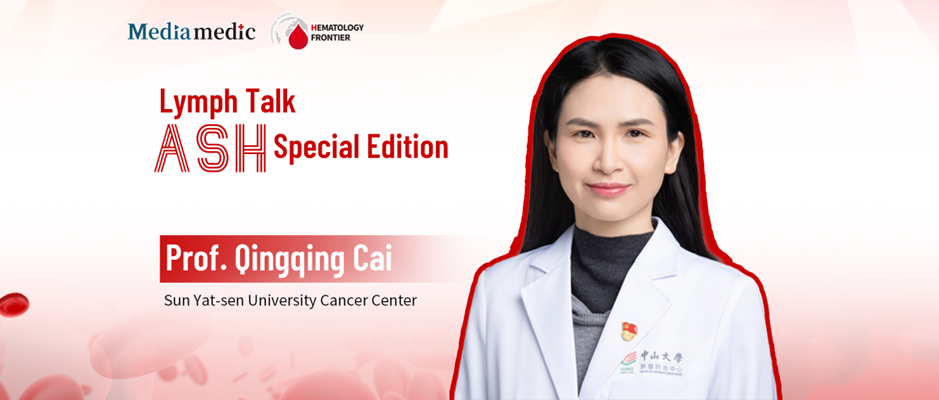
To better disseminate cutting-edge academic progress and empower clinical practice, Oncology Frontier – Hematology Insights has partnered with Professor Qingqing Cai from Sun Yat-sen University Cancer Center to launch the column “Lymphoma In-Depth Conversations · ASH Special.” Each Friday, this series highlights landmark lymphoma studies presented at ASH, interpreting key findings from an authoritative perspective and extracting clinically meaningful evidence from complex datasets, with the goal of providing high-quality academic reference for clinicians and researchers.
In the inaugural installment of the series, Professor Cai focuses on recent advances in first-line therapy for follicular lymphoma (FL), offering an in-depth analysis of two high-impact studies presented at ASH 2025 and sharing insights of both strong evidence-based value and practical clinical relevance.
Abstract 228
Fixed-Duration Subcutaneous Mosunetuzumab With Optional Maintenance as First-Line Therapy for High–Tumor Burden Follicular Lymphoma: Long-Term Follow-Up and Exploratory ctDNA Analysis of the Phase II MorningSun Study John M. Burke et al.
Background
Mosunetuzumab is a CD20×CD3 bispecific antibody. Intravenous mosunetuzumab has been approved in the United States and Europe for patients with relapsed or refractory (R/R) follicular lymphoma after at least two prior lines of therapy. Interim results from the Phase II MorningSun study previously demonstrated that subcutaneous mosunetuzumab, when used as first-line therapy in patients with high–tumor burden (HTB) FL, showed promising efficacy with a manageable safety profile. The current report presents updated efficacy and safety data with 12 months of follow-up, along with exploratory circulating tumor DNA (ctDNA) analyses.
Study Design
Previously untreated FL patients with HTB as defined by GELF criteria, an indication for treatment, and an ECOG performance status of 0–2 were enrolled. Mosunetuzumab was administered subcutaneously with step-up dosing during cycle 1 (5 mg on day 1, 45 mg on days 8 and 15), followed by 45 mg on day 1 of each subsequent 21-day cycle for up to 17 cycles. Patients achieving partial metabolic response or complete metabolic response (CMR) after 17 cycles could elect to receive maintenance therapy with mosunetuzumab (45 mg every 8 weeks for up to 1 year).
The primary endpoint was the 1-year progression-free survival (PFS) rate. Key secondary endpoints included objective response rate (ORR), duration of response (DOR), duration of complete response (DOCR), and safety. Exploratory ctDNA analyses were performed.
Results
As of February 10, 2025, 103 patients had been enrolled. The median age was 65 years (range 24–86), with most patients having Ann Arbor stage III/IV disease and FLIPI scores ≥2. Sixty-nine patients completed all 17 treatment cycles. Among them, 68 were eligible for maintenance therapy, and 46 elected to receive it.
With a median follow-up of 22.3 months, the 1-year PFS rate was 85.5%. The ORR was 87.4%, and 64.1% of patients achieved CMR. The 1-year overall survival rate was 91.9%, while the 1-year DOR and DOCR were 89.6% and 91.1%, respectively. Notably, no disease progression occurred among patients receiving maintenance therapy, whereas one progression event was observed among eligible patients who did not receive maintenance. Exploratory ctDNA analysis in 22 patients who achieved CMR showed that 86.4% were minimal residual disease (MRD)–negative.
The most common adverse events included injection-site reactions, fatigue, and cytokine release syndrome (CRS). Grade ≥3 adverse events occurred in 47.6% of patients, and five grade 5 events were reported. Infections occurred in 77.7% of patients, mostly grade 1–2. Importantly, no CRS events occurred during the maintenance phase.
Conclusion
In previously untreated HTB FL patients, long-term follow-up of the MorningSun study demonstrates that fixed-duration subcutaneous mosunetuzumab with optional maintenance provides robust efficacy, durable responses, manageable safety, and a high rate of MRD negativity.
Professor Qingqing Cai’s Commentary
This updated report from the MorningSun study provides valuable long-term efficacy and safety data supporting fixed-duration subcutaneous mosunetuzumab as a first-line treatment option for HTB FL. The step-up dosing strategy, a maximum of 17 treatment cycles, and optional maintenance for patients achieving metabolic remission represent a pragmatic and well-structured treatment paradigm. After a median follow-up of 22.3 months, the 12-month PFS reached 85.5%, with ORR and CMR rates of 87.4% and 64.1%, respectively, indicating both strong and durable efficacy in newly diagnosed FL.
The exploratory ctDNA findings are particularly noteworthy, with an MRD-negative rate exceeding 85%, suggesting a meaningful depth of response. The safety profile was consistent with prior experience, with most infections being low grade and CRS remaining manageable. The absence of CRS during maintenance therapy further supports the feasibility of this approach. Overall, this study highlights the clinical viability of fixed-duration, chemotherapy-free mosunetuzumab-based therapy in the first-line setting, although longer follow-up and comparative studies will be needed to confirm long-term survival benefits.
Abstract 464
Rituximab and Epcoritamab as First-Line Therapy for High–Tumor Burden Follicular Lymphoma: Results of a Multicenter Phase II Trial Reid Merryman et al.
Background
Immunochemotherapy remains the standard first-line treatment for FL patients with high tumor burden and an indication for therapy. However, CD20×CD3 bispecific antibodies have demonstrated deep responses and the potential to replace chemotherapy in several studies, increasingly challenging the dominance of immunochemotherapy. Epcoritamab is a CD20×CD3 bispecific antibody approved for FL in the ≥3-line setting. This study explored its use in previously untreated FL, with rituximab pre-treatment administered to reduce tumor burden, mitigate CRS risk, and potentially enhance antitumor efficacy.
Study Design
Eligible patients had grade 1–3A FL, were aged ≥18 years, had Ann Arbor stage II–IV disease, met GELF criteria for treatment, and had an ECOG performance status of 0–2. During cycle 1, patients received four weekly doses of rituximab, followed by step-up subcutaneous dosing of epcoritamab. After enrollment of the initial cohort, an additional intermediate dose step was introduced. Epcoritamab was administered for a total of nine cycles, with PET-CT–based response assessments performed after cycles 2, 5, and 9.
Results
Between July 2023 and March 2025, 35 patients were enrolled. Most had advanced-stage disease, over half had high FLIPI scores, and nearly one-third had bulky disease. The best ORR was 97%, with a CMR rate of 91%. Responses occurred rapidly, with 34 of 35 patients achieving metabolic remission by the end of cycle 2. The only non-responder experienced early progression with biopsy-confirmed histologic transformation.
With a median follow-up of 8.6 months, the 9-month PFS rate was 97%. CRS occurred in 43% of patients, predominantly grade 1. Importantly, rituximab pre-treatment combined with a three-step epcoritamab dose escalation significantly reduced CRS incidence compared with a two-step strategy. Infections were mostly low grade and resolved. Serious adverse events were infrequent and manageable.
Exploratory flow cytometry analyses demonstrated near-complete B-cell depletion after rituximab pre-treatment and favorable T-cell polarization, whereas patients with progression showed increased markers of T-cell exhaustion and immunosuppression.
Conclusion
Rituximab combined with epcoritamab as first-line therapy for HTB FL induces rapid, deep, and potentially durable responses, with rituximab pre-treatment appearing to reduce CRS risk.
Professor Qingqing Cai’s Commentary
This multicenter Phase II study demonstrates the strong potential of rituximab plus epcoritamab as a first-line, chemotherapy-free regimen for FL patients with high tumor burden. The rapid onset of response is striking, with nearly all patients achieving metabolic remission after only two cycles and a CMR rate exceeding 90%. Although follow-up remains relatively short, the 9-month PFS of 97% suggests durable disease control in most patients.
From a safety perspective, CRS was mostly low grade, and the addition of rituximab pre-treatment with a three-step dose escalation strategy significantly reduced CRS incidence. The exploratory immune profiling provides mechanistic insight, suggesting that tumor debulking and improved T-cell fitness may enhance bispecific antibody efficacy. Overall, this study supports the feasibility of immunotherapy-only strategies in first-line FL and lays the groundwork for further optimization and larger confirmatory trials, potentially accelerating the shift of bispecific antibodies into frontline treatment.
References
- Burke JM, et al. ASH Abstract 228, 2025.
- Merryman R, et al. ASH Abstract 464, 2025.
Author Information

Qingqing Cai, MD, PhD
Sun Yat-sen University Cancer Center
Professor Cai is a Chief Physician and Doctoral Supervisor, Deputy Director of the Department of Internal Medicine, and principal investigator in lymphoma research. She is a Changjiang Scholar Distinguished Professor and holds multiple national leadership roles in lymphoma-related academic societies. She has led numerous clinical trials and published extensively in top-tier journals including The Lancet Haematology, Blood, Leukemia, and Clinical Cancer Research.
Liyun Qiu, MD

Sun Yat-sen University Cancer Center Doctoral Candidate (Class of 2024) Supervisor: Professor Qingqing Cai