Relapse after allogeneic hematopoietic stem cell transplantation (allo-HSCT) remains one of the major barriers to long-term survival in acute leukemia. With the rapid development of targeted therapies, hypomethylating agents, and immunotherapies such as CAR-T, salvage treatment options have expanded considerably. As a result, more patients are now able to achieve remission again and proceed to subsequent consolidation strategies. In this context, second allogeneic hematopoietic stem cell transplantation (allo-HSCT2) has emerged as an important potentially curative option. However, key clinical questions remain, including patient selection, donor choice, and factors influencing outcomes.
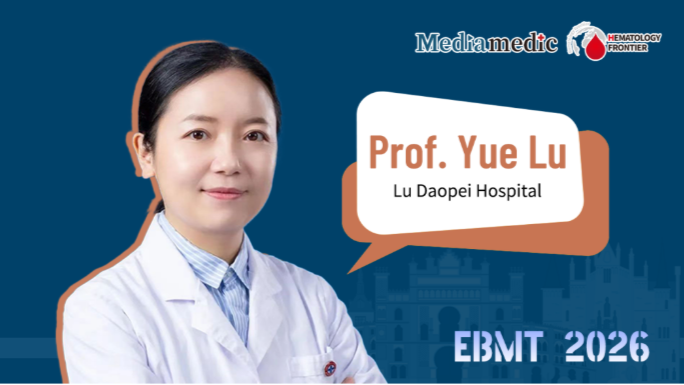
At the 52nd EBMT Annual Meeting held in Madrid, Spain, from March 22 to 25, 2026, a study by Prof. Yue Lu from Lu Daopei Hospital was presented as a poster. Based on real-world data, the study systematically evaluated long-term efficacy and safety of second transplantation using different donor sources in patients with post-transplant relapse of acute leukemia. In this interview, Prof. Lu provides insights into advances in salvage therapy and discusses the key findings of the study, aiming to inform individualized treatment strategies.
Advances in Salvage Therapy After Post-Transplant Relapse
Compared with 5–10 years ago, treatment options for post-transplant relapse in acute leukemia have expanded well beyond conventional chemotherapy. In acute myeloid leukemia (AML), therapies now include BCL-2 inhibitors, hypomethylating agents, and CAR-T–based immunotherapy.
In acute lymphoblastic leukemia (ALL), the landscape has changed even more dramatically. Historically, relapse after transplantation relied largely on chemotherapy, which was associated with low response rates and short durations of remission, leaving many patients without further treatment options. In the current era of immunotherapy, a range of novel approaches has not only improved remission rates but also enabled more durable responses.
Once remission is achieved after relapse, cellular immunotherapy is generally required to maintain disease control. At present, there is no consensus on whether donor lymphocyte infusion (DLI) or second transplantation should be preferred. However, in cases of HLA-loss relapse after the first transplant, DLI is ineffective, and a second transplantation becomes the only viable option.
Recent Advances in Second Allogeneic Transplantation
Most large-scale data on second allo-HSCT for relapsed acute leukemia come from the EBMT registry. Before 2000, outcomes were poor for both AML and ALL, with 5–10-year leukemia-free survival rates rarely exceeding 10% and relapse rates as high as 60%. Limited salvage options meant that many patients were not in remission at the time of second transplantation, and relapse remained the leading cause of death.
In 2024, EBMT reported data from 1,541 AML patients undergoing second transplantation. Compared with the 2000–2004 period, outcomes in 2015–2019 improved substantially: relapse rates decreased from 64% to 50.7%, while non-relapse mortality (NRM) and the incidence of acute and chronic graft-versus-host disease (GVHD) showed no clear trend. Overall survival (OS) improved from 22.5% to 35%, leukemia-free survival (LFS) from 14.5% to 24.5%, and graft-versus-host disease–free relapse-free survival (GRFS) from 10.5% to 17%. These findings provide increasing support for second transplantation as a salvage strategy.
Similarly, data from the EBMT Pediatric Diseases Working Party demonstrated progressive improvement in outcomes over time for children with AML undergoing second transplantation. In a retrospective multicenter study of 345 patients under 18 years of age who relapsed after first HSCT and received a second transplant between 2000 and 2022, outcomes in 2014–2022 were significantly better than those in 2000–2013. LFS improved from 26.3% to 34.3%, OS from 32.8% to 42.9%, relapse incidence decreased from 54.7% to 46.0%, and GRFS improved from 16.1% to 25.2%, while NRM and GVHD rates remained comparable. Across the entire cohort, 3-year outcomes were as follows: LFS 30.2%, OS 37.5%, NRM 19.1%, relapse incidence 50.7%, and GRFS 20.7%.
Patient Selection for Second Transplantation
In 2024, EBMT analyzed 3,356 cases of second transplantation to identify risk factors for non-relapse mortality. Factors associated with increased NRM included older age, poorer performance status, higher disease risk index, early relapse after the first allo-HSCT, use of unrelated or haploidentical donors, and prior GVHD before the second transplant.
Prior GVHD after the first transplant was also a major risk factor for both acute and chronic GVHD after the second transplant. Notably, the only significant predictor of relapse was a high disease risk index (DRI).
Therefore, patient selection should be based on a comprehensive assessment of disease status, NRM risk factors, and the severity of prior GVHD.
Regarding donor selection, there is currently no global consensus on whether the donor should be changed for the second transplant. However, in cases of HLA-loss relapse, switching to a new mismatched haploidentical donor is essential to avoid ineffective transplantation.
Key Findings from the 2026 EBMT Poster
Updated long-term follow-up data from Lu Daopei Hospital included 414 patients with acute leukemia who underwent second transplantation between 2012 and 2024.
The cohort included AML (n = 190), ALL (B-ALL n = 176; T-ALL n = 40), and mixed phenotype acute leukemia (MPAL, n = 8).
At 5 years, overall survival (OS), leukemia-free survival (LFS), cumulative incidence of relapse (CIR), and non-relapse mortality (NRM) were 40.9%, 39.2%, 29.3%, and 41.7%, respectively—outcomes that were notably better than those reported in EBMT studies.
Among disease subtypes, patients with ALL had significantly better 5-year LFS than those with AML or MPAL (46.7% vs. 30.3% vs. 12.5%), primarily due to lower relapse rates (26.0% vs. 41.8% vs. 56.3%). This was largely attributable to a higher proportion of ALL patients achieving complete remission with minimal residual disease negativity prior to second transplantation (90.7% vs. 32.3% vs. 75.5%). Many of these patients achieved remission through CAR-T therapy, highlighting the importance of immunotherapy in enabling more patients to proceed to second transplantation.
Among 206 patients with ALL, those who received CAR-T before the second transplant had a lower relapse rate (19.1% vs. 34.4%) but higher NRM (45.7% vs. 37.0%) compared with those who did not receive CAR-T. Although LFS showed a trend toward improvement (45.6% vs. 36.6%), the difference was not statistically significant. These findings suggest that while CAR-T expands access to second transplantation, strategies to reduce NRM remain an important area for further research.
In patients who underwent haploidentical transplantation in both procedures, using a new mismatched haploidentical donor for the second transplant resulted in a markedly lower relapse rate (20.5% vs. 70.6%) and higher LFS (38.6% vs. 11.4%) compared with reusing the same donor. This suggests that even when HLA-loss status is uncertain, switching to a new mismatched haploidentical donor may help avoid ineffective transplantation.
Summary
Second allogeneic transplantation is an effective salvage strategy for post-transplant relapse. In cases of HLA-loss relapse, prompt second transplantation with a new mismatched haploidentical donor is essential. For classical relapse, treatment decisions should take into account factors such as prior GVHD.
Achieving remission as early as possible after relapse is critical, and targeted and immunotherapy approaches guided by molecular and immunophenotypic features are recommended. Patient selection should consider both disease status and risk factors for non-relapse mortality.
Although there is no consensus on optimal donor selection, current evidence supports prioritizing new mismatched haploidentical donors to reduce the risk of ineffective second transplantation.
References
[1] Schmälter AK, Ngoya M, Galimard JE, et al. Blood Cancer Journal. 2024;14(1):76. [2] Buchbinder N, Michel V, Dalissier A, et al. British Journal of Haematology. 2025;207(6):2496–2506. [3] Penack O, Abouqateb M, Peczynski C, et al. Leukemia. 2024;38(8):1799–1807.
Expert Profile

Yue Lu, MD Lu Daopei Hospital
Prof. Lu serves as a senior attending physician (vice president level) in the Department of Hematopoietic Stem Cell Transplantation at Lu Daopei Hospital. He is a member of the Beijing Society of Hematology and the Hematopoietic Stem Cell Transplantation Group of the Chinese Society of Hematology, as well as a committee member of the Cross-Strait Medical and Health Exchange Association.
She completed clinical training at the Fred Hutchinson Cancer Center in Seattle in October 2016. By the end of 2023, he had performed more than 1,500 allogeneic hematopoietic stem cell transplants.
She has published over 10 SCI-indexed papers in journals including Frontiers in Immunology, British Journal of Haematology, and Bone Marrow Transplantation.