Editor's Note: For a long time, patients with recurrent or metastatic endometrial cancer whose disease progresses after immunotherapy have had extremely limited benefit from chemotherapy, leaving them with few effective options in later lines of treatment. At the 2026 ESMO Congress, the Phase III TroFuse-005 study, presented as a late-breaking abstract (LBA), demonstrated that sacituzumab tirumotecan (Sac-TMT), a China-developed TROP2-targeted antibody-drug conjugate (ADC), significantly improved progression-free survival (PFS) and overall survival (OS) in this patient population.This is the first TROP2 ADC in gynecologic oncology to achieve positive results for both PFS and OS, marking another milestone in the evolution of China’s homegrown innovation from following international advances to taking a leading role. As domestic innovation opens the door to global precision oncology, gynecologic cancer treatment is moving from the chemotherapy era toward the ADC era.
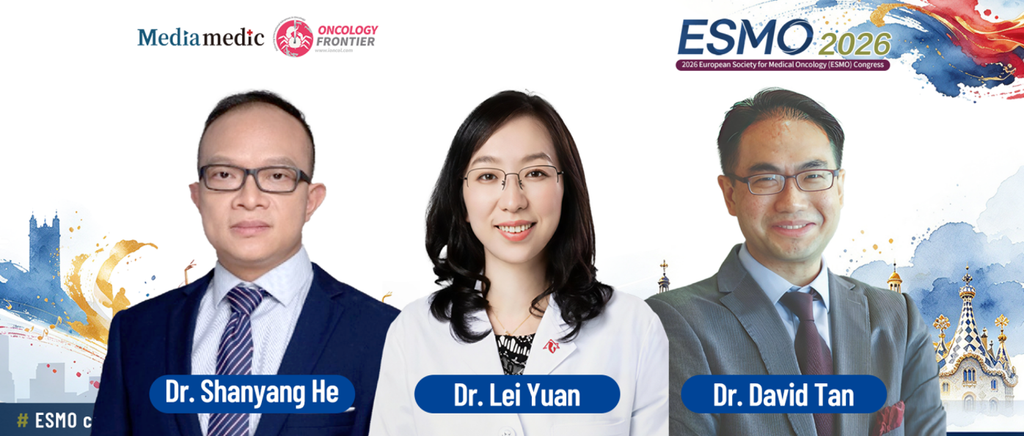
At the ESMO Congress, Oncology Frontier invited Professor Shanyang He of Guangdong Provincial People’s Hospital, Professor Lei Yuan of the Obstetrics and Gynecology Hospital of Fudan University, and Professor David Tan of the National Cancer Centre Singapore to discuss the clinical transformation represented by the dual-positive results of TroFuse-005, treatment management strategies, and the global expansion of China’s innovative treatment approaches.
A New Era Begins: Gynecologic Oncology Enters the ADC Era
Oncology Frontier: There remain substantial unmet clinical needs in gynecologic oncology. Against the backdrop of current clinical practice, how do you view the clinical significance of the successful TroFuse-005 study?
Professor David Tan: Thank you for inviting me to participate in this discussion. Endometrial cancer is currently one of the most common types of gynecologic malignancies, and the number of women diagnosed with this disease is expected to increase over the coming years. For patients with advanced metastatic endometrial cancer, treatment options remain very limited. Most patients initially receive immunotherapy combined with chemotherapy.
There are two main molecular subtypes of endometrial cancer: mismatch repair-deficient (dMMR) and mismatch repair-proficient (pMMR) disease. Patients in both groups may receive immunotherapy combined with chemotherapy, but most will eventually experience disease progression. Once progression occurs, we genuinely have few effective options beyond standard chemotherapy. The objective response rate (ORR) with standard chemotherapy is generally only around 10%–15%, and median PFS is typically just 2–3 months [1].
This is why the TroFuse-005 study [2] is so important. For the first time in endometrial cancer, it investigated whether an ADC targeting TROP2, a protein highly expressed in endometrial cancer, could be used to treat patients whose disease had progressed following standard chemotherapy and immunotherapy.
TroFuse-005 has provided a clear answer. The findings presented at ESMO showed, first, improved disease control. Median PFS in the sacituzumab tirumotecan (Sac-TMT) group was nearly twice that in the chemotherapy group (7.2 vs. 3.9 months), representing a significant 41% reduction in the risk of disease progression or death (HR 0.59, 95% CI 0.50–0.70; P<0.0001). A consistent trend toward benefit was observed across different subgroups.
This improved disease control also translated into a survival benefit. Despite a higher proportion of patients in the chemotherapy group crossing over to subsequent treatment (35% vs. 49%), patients receiving Sac-TMT still achieved longer OS. Median OS reached 19.0 months, nearly 7 months longer than in the chemotherapy group, with a significant 32% reduction in the risk of death (HR 0.68, 95% CI 0.55–0.84; P=0.0001).
The study therefore met both key endpoints, demonstrating significant improvements in PFS and OS with Sac-TMT. It is also the first, and currently the only, ADC to achieve positive results for both PFS and OS in this patient population. By contrast, the survival outcomes in the chemotherapy-only control group were as limited as expected, with a median PFS of just 3.9 months and median OS of 12.1 months.
In terms of tumor response, the ORR with conventional chemotherapy was only 17.3%. Sac-TMT more than doubled this figure, increasing it to 35.1%. Median duration of response (DoR) was also nearly doubled (6.9 vs. 11.1 months). These are precisely the results we had hoped to see, and they provide further support for the early findings from the Phase II Sac-TMT study. Overall, this represents a genuine breakthrough in the management of endometrial cancer that has progressed after chemotherapy.
Oncology Frontier: TroFuse-005 achieved positive results for both PFS and OS. What survival benefits does this dual-positive outcome demonstrate for patients with advanced or recurrent endometrial cancer receiving Sac-TMT?
Professor Lei Yuan: In recent years, immunotherapy has become a new standard of systemic treatment for recurrent endometrial cancer. For patients whose disease progresses after immunotherapy, the benefits of chemotherapy are very limited, with median PFS of only approximately 3 months.
TroFuse-005 was designed to evaluate the efficacy and safety of a novel TROP2-targeted ADC in this patient population. The study enrolled patients with recurrent endometrial cancer who had previously received platinum-based treatment and immune checkpoint inhibitor (ICI) therapy, with no more than three prior lines of treatment. Patients were randomized to receive either Sac-TMT or investigator’s choice of chemotherapy.
As Professor Tan has just described, the study achieved highly encouraging results, meeting both the PFS and OS endpoints. Median PFS increased from 3.9 to 7.2 months, nearly doubling, with an HR of 0.59 and a significant 41% reduction in the risk of disease progression or death. Median OS increased from 12.1 to 19.0 months, with an HR of 0.68 and a significant 32% reduction in the risk of death.
These findings mean that for this difficult-to-treat population—patients whose disease recurs after receiving the established standard of immunotherapy—we now have a new treatment option with a distinct mechanism of action: TROP2-targeted ADC therapy, which provides a confirmed survival benefit beyond chemotherapy. This regimen can significantly delay the need for subsequent treatment and reduce the risk of disease progression, while also substantially prolonging overall survival. This is indeed a very encouraging and groundbreaking advance.
Embracing Change: A Multidimensional Discussion of ADC Management Strategies in Gynecologic Oncology
Oncology Frontier: In the era of radiotherapy and chemotherapy, achieving both high efficacy and low toxicity has often been a difficult balance. Based on TroFuse-005, what tumor-shrinking effects and safety characteristics did the Sac-TMT regimen demonstrate?
Professor Shanyang He: With advances in medicine, precision radiotherapy and chemotherapy have taken on broader meaning. Improvements in precise target delineation and targeted drug selection have not only enhanced treatment efficacy but also substantially reduced toxicity. ADCs provide us with an excellent model of precision therapy.
The China-developed TROP2 ADC Sac-TMT used in TroFuse-005 selectively binds to the TROP2 molecular target, which is highly expressed on tumor cell surfaces, and precisely delivers KL610023, a novel and potent topoisomerase I inhibitor payload. It exerts a triple cell-killing effect.
First, after binding to TROP2, the ADC enters the cell and reaches the lysosome, where it is cleaved in the acidic environment, releasing the cytotoxic payload.
Second, it remains stable in the bloodstream. Once it enters the tumor microenvironment, the acidic conditions facilitate payload release, generating a cytotoxic bystander effect.
Third, the novel KL610023 payload can penetrate cell membranes, further amplifying the bystander effect.
Together, these mechanisms enable precise, potent, and relatively low-toxicity antitumor activity.
As Professor Tan just mentioned, in TroFuse-005 [2], the ORR in the Sac-TMT group was more than twice that in the chemotherapy group (35.1% vs. 17.3%), demonstrating a substantial improvement in efficacy. At the same time, Sac-TMT showed a favorable safety and tolerability profile. Although the overall incidence of Grade 3 or higher treatment-related adverse events (TRAEs) was broadly comparable to chemotherapy (54.4% vs. 41.4%), the rates of serious adverse events (12.0% vs. 13.6%) and adverse events leading to treatment discontinuation (3.1% vs. 4.9%) were lower with Sac-TMT.
Similar to chemotherapy, hematological toxicity was the main adverse effect associated with Sac-TMT. However, the incidence of Grade 3 or higher neutropenia (5.7% vs. 6.3%) and leukopenia (1.6% vs. 6.0%) was lower in the Sac-TMT group than in the chemotherapy group. Among nonhematological toxicities, oral mucositis (0%) and dry eye (0.3%) were adverse events of particular interest with Sac-TMT, although Grade 3 or higher events were extremely rare.
Thanks to the manageable toxicity and encouraging antitumor efficacy of Sac-TMT, patients’ overall health status and quality of life were well maintained throughout follow-up. These findings demonstrate that Sac-TMT can provide an effective antitumor treatment option with a manageable safety profile, helping alleviate patients’ fear of chemotherapy and providing the safety assurance needed to complete treatment successfully.
Oncology Frontier: With the positive results of TroFuse-005 now available, how might clinical practice change in the future? How should clinicians make optimal use of Sac-TMT as a valuable treatment option?
Professor Lei Yuan: We know that TroFuse-005 is the first global Phase III clinical trial of an ADC in gynecologic oncology to achieve positive results for both PFS and OS. For patients with endometrial cancer, particularly those with difficult-to-treat disease recurring after immunotherapy has become the standard of care, these findings will inevitably influence future clinical guidelines.
I believe authoritative guidelines in China and internationally will be updated based on the high-quality clinical evidence generated by this Phase III study. With guideline recommendations in place, patients will have access to more treatment options and opportunities to achieve greater survival benefits.
Looking Ahead: China’s Innovative Treatment Approaches Help Shape the Global Landscape of Gynecologic Oncology
Oncology Frontier: In recent years, studies of Sac-TMT in gynecologic cancers have been reported at major oncology conferences, including ASCO, ESMO, and SGO. What potential applications does Sac-TMT offer in this field?
Professor Shanyang He: Sac-TMT has already achieved breakthrough progress in gynecologic oncology.
In cervical cancer, for example, the Phase II SKB264-II-06 study presented at the 2026 SGO Annual Meeting showed an ORR of 51% among patients with recurrent or metastatic cervical cancer who had received one or two prior lines of treatment. The ORR reached 54% in the subgroup previously treated with immunotherapy. Median PFS was 7.3 months, and median OS reached 18.9 months [3].
In ovarian cancer, the SKB264-II-06 study showed that Sac-TMT combined with pembrolizumab as maintenance treatment for patients with platinum-sensitive, BRCA wild-type recurrent ovarian cancer achieved a median PFS of 20.9 months and a 12-month OS rate of 92%, with a manageable safety profile [4].
Across gynecologic malignancies, Sac-TMT has demonstrated potent antitumor activity in clinical studies, reflecting the broad potential of TROP2-targeted treatment strategies. This is consistent with the precision medicine concept of treating different diseases through a shared molecular target, even when they originate in different organs. In the future, this approach may help optimize clinical pathways across gynecologic oncology and improve overall treatment standards.
Professor Lei Yuan: Multiple national and global Phase III registration studies of Sac-TMT are already underway or planned across gynecologic oncology and other tumor types, including endometrial cancer, cervical cancer, ovarian cancer, breast cancer, lung cancer, and gastric cancer.
Key Phase III studies in gynecologic oncology include:
- TroFuse-020: Second-line treatment of cervical cancer, comparing Sac-TMT monotherapy with treatment of physician’s choice (TPC).
- TroFuse-036/GOG-3123: First-line maintenance treatment for cervical cancer, evaluating Sac-TMT combined with pembrolizumab, with or without bevacizumab.
- TroFuse-022: Maintenance treatment for platinum-sensitive recurrent ovarian cancer.
- TroFuse-021: First-line maintenance treatment for newly diagnosed HRD-negative ovarian cancer.
- TroFuse-033: First-line maintenance treatment with Sac-TMT combined with immunotherapy for pMMR endometrial cancer.
I believe that as results from these clinical studies become available, they will provide more high-quality clinical evidence to support the application of TROP2 ADCs in gynecologic oncology. We are also eagerly anticipating the data from these combination regimens, which may provide further support for guideline updates and changes in clinical practice.
Oncology Frontier: As a novel TROP2-targeted ADC developed in China, Sac-TMT has already changed or is expected to change clinical practice globally across multiple tumor types. How do you view the international expansion of China’s innovative treatment approaches?
Professor Shanyang He: The success of TroFuse-005 could be regarded as marking the beginning of a new era for ADC-based treatment in global gynecologic oncology, driven by innovation from China.
As a novel TROP2-targeted ADC developed in China, Sac-TMT has achieved a favorable balance between efficacy and safety. Across multiple solid tumor types, from Phase I/II through Phase III studies, Sac-TMT has consistently demonstrated stable and reproducible signals of benefit, with notable advantages in terms of high efficacy and manageable toxicity.
Sac-TMT has already received approval in China for indications in breast cancer and lung cancer. We hope that it will also obtain approval for gynecologic malignancies as soon as possible, particularly endometrial cancer, for which the high-quality evidence from the Phase III TroFuse-005 study is now available. This could further transform clinical practice both in China and internationally.
Professor David Tan: I think this is an excellent sign, reflecting the rapid development of China’s anticancer drug research and development capabilities. Clearly, this is just one of many technologies developed in China and licensed to Western companies that will soon enter clinical application.
In gynecologic oncology, several ADCs are currently being evaluated. The overseas development rights for Sac-TMT have been licensed to Merck, and the company has done an excellent job developing this drug. We are also using it, and its application is now being explored in first-line treatment, for example, in the TroFuse-033 study.
Since we have already observed encouraging efficacy in recurrent endometrial cancer, an important question is whether using the drug earlier in the disease course, at an earlier point in patients’ treatment journey, could produce even better outcomes.
I believe this is only the beginning. We expect more pharmaceutical research and development companies in China to bring their innovative drugs to the global market, and this will not necessarily require partnerships with international pharmaceutical companies. As Chinese pharmaceutical companies and their technologies gain the trust of the global oncology community, I believe we will see more studies of this kind emerging from China.
This is an excellent sign for the future development of Chinese technology and innovation.

Professor Shanyang He

Professor Lei Yuan

Professor David Tan