Total neoadjuvant therapy (TNT) for locally advanced rectal cancer has become a major focus of research in recent years. A central unresolved question has been whether improvements in pathological complete response (pCR) rates can translate into meaningful survival benefits. At the same time, developing individualized neoadjuvant strategies for patients with different molecular subtypes based on biomarkers remains an urgent clinical priority.At the 2026 European Society for Medical Oncology (ESMO) Congress, the gastrointestinal oncology multidisciplinary team (MDT) led by Professors Tao Zhang and Kaixiong Tao from Union Hospital, Tongji Medical College, Huazhong University of Science and Technology, presented two important studies.
The first, the Phase III UNION trial (Abstract No. 3530O), presented as a Proffered Paper, confirmed that short-course radiotherapy combined with immunochemotherapy significantly improved three-year event-free survival (EFS) in patients with locally advanced rectal cancer.
The second, a poster presentation (Abstract No. 3537P), focused on patients with RAS/BRAF wild-type disease and explored an innovative TNT regimen consisting of short-course radiotherapy followed by an anti-EGFR monoclonal antibody, an anti-PD-1 antibody, and CAPOX chemotherapy. The results demonstrated promising tumor response potential in patients with high-risk characteristics.
Together, these studies—one providing confirmatory evidence and the other exploring a precision treatment strategy for a molecularly defined subgroup—offer important insights into evolving neoadjuvant approaches for locally advanced rectal cancer.
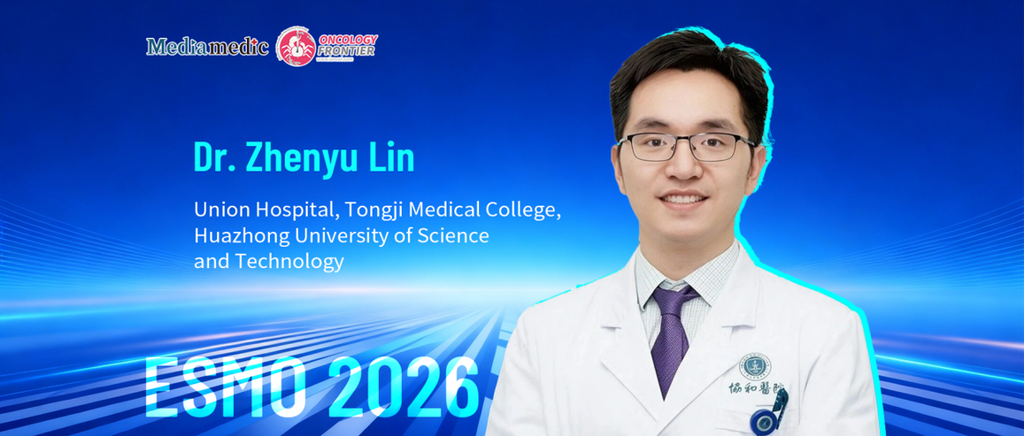
This article summarizes the findings of both studies and features expert commentary from Professor Zhenyu Lin of Union Hospital, Tongji Medical College, Huazhong University of Science and Technology, a key member of the research team. He discusses the clinical significance of the findings, remaining challenges, and future research directions, providing valuable perspectives for selecting TNT strategies and designing subsequent studies in locally advanced rectal cancer.
Study Overview
Study 1
Title: Neoadjuvant Short-Course Radiotherapy Followed by Camrelizumab and Chemotherapy in Locally Advanced Rectal Cancer (LARC): The Phase III UNION Trial
Abstract No.: 3530O
Background
Despite the use of neoadjuvant chemoradiotherapy, recurrence and distant metastasis remain common in patients with locally advanced rectal cancer (LARC).
For the majority of patients whose tumors are proficient in mismatch repair or microsatellite stable (pMMR/MSS), effective immunotherapy strategies remain extremely limited.
The UNION study is the first Phase III clinical trial to evaluate radiotherapy combined with immunotherapy and chemotherapy as a neoadjuvant treatment strategy for LARC. This report presents the results of the prespecified event-free survival (EFS) analysis.
Methods
Patients with rectal adenocarcinoma staged as cT3–4 or node-positive, with tumors located ≤10 cm from the anal verge, were randomized in a 1:1 ratio.
The experimental group received short-course radiotherapy (SCRT; 25 Gy in five fractions), while the standard-treatment group received long-course chemoradiotherapy (50.4 Gy in 28 fractions) with concurrent capecitabine at 825 mg/m² twice daily.
Both groups subsequently received two cycles of neoadjuvant CAPOX (capecitabine plus oxaliplatin) and six cycles of adjuvant CAPOX.
In the experimental group, camrelizumab (200 mg on Day 1) was administered in combination with CAPOX beginning with the initiation of chemotherapy and continued throughout the neoadjuvant and adjuvant phases, for a maximum of 17 cycles.
The primary endpoint was the pCR rate assessed by a blinded independent review committee (BIRC). Key secondary endpoints with prespecified alpha allocation included investigator-assessed EFS and overall survival (OS).
Results
Between July 2021 and March 2023, a total of 231 patients underwent randomization: 113 in the experimental group and 118 in the standard-treatment group.
As of October 1, 2025, the median follow-up durations were 36.8 months (95% CI: 34.8–37.8) and 35.6 months (95% CI: 34.3–36.9), respectively.
The three-year EFS rate was significantly higher in the experimental group than in the standard-treatment group:
- Experimental group: 91.3% (95% CI: 83.9–95.4)
- Standard-treatment group: 77.4% (95% CI: 67.9–84.4)
- Hazard ratio (HR): 0.33 (95% CI: 0.15–0.71)
- P value: 0.0029
The BIRC-assessed EFS results also supported the benefit observed in the experimental group.
Across the entire treatment period, the incidence of grade ≥3 treatment-related adverse events was 51.3% (59/115) in the experimental group and 48.2% (54/112) in the standard-treatment group.
Conclusion
UNION is the first Phase III clinical trial to demonstrate that an immunotherapy-based regimen can significantly improve EFS in patients with LARC.
This neoadjuvant treatment strategy has the potential to become a new standard of care.
Study 2
Title: Neoadjuvant Short-Course Radiotherapy Followed by HLX07, Serplulimab, and CAPOX in RAS/BRAF Wild-Type Locally Advanced Rectal Cancer: A Multicenter, Single-Arm Phase II Study
Abstract No.: 3537P
Background
Short-course radiotherapy (SCRT) followed by chemotherapy is a cornerstone of total neoadjuvant therapy (TNT) for locally advanced rectal cancer.
Adding a PD-1 inhibitor to this approach has already demonstrated encouraging antitumor activity.
Anti-EGFR therapy combined with chemotherapy is a standard treatment strategy for RAS/BRAF wild-type metastatic colorectal cancer. However, the value of introducing this combination earlier in the neoadjuvant setting remains unclear.
The investigators hypothesized that combining short-course radiotherapy, anti-EGFR therapy, PD-1 inhibition, and chemotherapy could produce synergistic effects and thereby maximize neoadjuvant treatment efficacy.
Accordingly, the team evaluated this innovative treatment strategy in patients with RAS/BRAF wild-type LARC.
Methods
Patients with RAS/BRAF wild-type LARC received short-course radiotherapy (25 Gy in five fractions), followed by six three-week cycles of HLX07 at the recommended Phase II dose (RP2D), serplulimab (300 mg intravenously on Day 1), and CAPOX chemotherapy.
The CAPOX regimen consisted of:
- Oxaliplatin: 130 mg/m² intravenously on Day 1
- Capecitabine: 1,000 mg/m² orally twice daily on Days 1–14
Surgery was scheduled one week after completion of neoadjuvant treatment.
The primary endpoint was complete response (CR), defined as a composite endpoint comprising pathological complete response (pCR) and clinical complete response (cCR).
Results
A total of 24 patients with RAS/BRAF wild-type locally advanced rectal cancer were enrolled.
Among them, 10 patients (41.7%) had circumferential resection margin (CRM) involvement, while 14 patients (58.3%) had extramural vascular invasion (EMVI), indicating a relatively high-risk population.
At a median follow-up of 12 months (range: 7–16 months), 12 patients achieved CR, corresponding to a CR rate of 50.0% (12/24).
Among the 17 patients who underwent surgery, nine (52.9%, 9/17) achieved tumor regression grade 0 (TRG0; pCR), while two (11.8%, 2/17) achieved TRG1.
Of the seven patients who did not undergo surgery, three (42.9%, 3/7) achieved cCR.
Adverse events were generally manageable, with hematologic toxicities being the most frequently reported.
Conclusion
This innovative, biomarker-selected TNT regimen represents a promising approach to overcoming current efficacy limitations in patients with RAS/BRAF wild-type LARC.
By leveraging the potential mechanistic synergy of short-course radiotherapy, dual-targeted treatment, immune checkpoint blockade, and chemotherapy, the regimen achieved a CR rate of 50.0% in a population with relatively high-risk baseline characteristics, while maintaining a manageable safety profile.
These findings suggest that the strategy may be highly promising for maximizing tumor downstaging and facilitating organ preservation.
Expert Commentary
Professor Zhenyu Lin:
In the field of locally advanced rectal cancer, during the era of conventional chemoradiotherapy, neoadjuvant chemoradiotherapy and TNT strategies were shown to improve pCR rates. However, whether these improvements could translate into survival benefits has remained controversial. Specifically, it has been unclear whether higher pCR rates could ultimately lead to improved survival.
At this year’s ESMO Congress, the gastrointestinal oncology MDT at Union Hospital, Tongji Medical College, Huazhong University of Science and Technology, led by Professors Tao Zhang and Kaixiong Tao, presented the three-year EFS follow-up results from the Phase III UNION study.
The follow-up data presented at ESMO showed that the three-year EFS rate was 77.4% in the control group, compared with 91.3% in the experimental group, with an HR of 0.33, meeting the prespecified statistical endpoint.
These three-year follow-up results indicate that, in the immunotherapy era, radiotherapy combined with immunotherapy can not only improve pCR rates but also translate into improved survival outcomes.
If this survival benefit is sustained, the findings of this study could fundamentally change the treatment paradigm for locally advanced rectal cancer.
The UNION study demonstrated that short-course radiotherapy followed by two cycles of chemotherapy could increase the pCR rate to nearly 40%.
Recently, several similar studies conducted in China have explored radiotherapy combined with TNT, achieving pCR rates of approximately 50%.
It is foreseeable that immunotherapy will play an important role in the treatment of locally advanced rectal cancer.
However, identifying the patient populations most likely to benefit remains a challenge. Based on the subgroup analyses available to date, no ideal biomarker has yet been identified.
Subgroup data suggest a trend toward greater benefit among patients with higher combined positive scores (CPS), but this observation requires further investigation.
Furthermore, in recent years, studies conducted in China involving patients with MSS locally advanced rectal cancer have largely adopted an approach of adding more therapeutic components to combination regimens.
At present, however, the exploration of these increasingly intensive combination strategies appears to be approaching a plateau.
In my view, simply adding more treatments cannot continue indefinitely. The future priority must be the precise identification of patients most likely to benefit.
As mentioned earlier, identifying biomarkers suitable for patient selection through subgroup analyses and research into immune-related biomarkers will be a major focus of our future efforts. The ultimate goal is to achieve more precise patient stratification.
Turning to the other Phase II study presented by our team at this year’s ESMO Congress, colorectal cancer treatment has already entered the era of precision medicine.
In the first-line treatment of advanced disease, research continues to explore therapeutic strategies targeting RAS, BRAF, HER2, KRAS G12C, and other molecular alterations.
This raises an important question: Should neoadjuvant treatment also move toward greater precision?
Personally, I believe precision treatment is undoubtedly the direction of future development. However, current molecular stratification strategies are not yet sufficiently mature, and more robust clinical evidence is still needed.
Building on the encouraging research findings already achieved in advanced colorectal cancer, our team explored a neoadjuvant regimen consisting of short-course radiotherapy followed by an anti-EGFR monoclonal antibody combined with chemotherapy and immunotherapy in patients with RAS/BRAF wild-type locally advanced rectal cancer.
The results of this single-arm study suggest that adding an anti-EGFR monoclonal antibody may promote tumor regression and improve pCR rates, with particularly encouraging activity in patients with high-risk characteristics.
Nevertheless, whether anti-EGFR monoclonal antibodies can truly provide a definitive survival benefit for patients with RAS wild-type locally advanced rectal cancer remains to be validated in future randomized controlled trials.