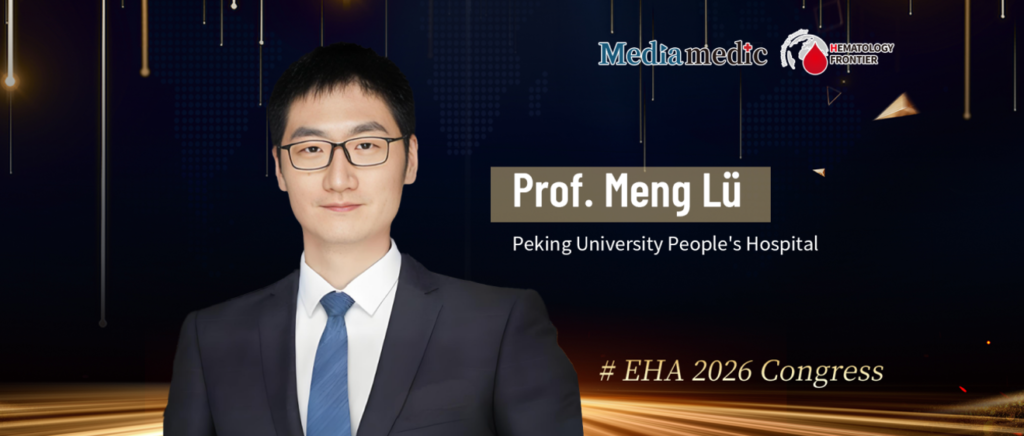
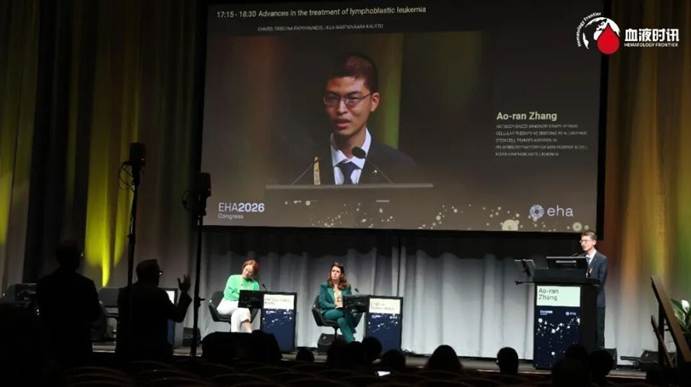
In the era of rapidly evolving immunotherapy, determining the optimal bridging strategy to hematopoietic stem cell transplantation (HSCT) for patients with relapsed/refractory (R/R) B-cell acute lymphoblastic leukemia (B-ALL) remains a major clinical challenge. At EHA 2026, Prof. Meng Lü and colleagues from Peking University People's Hospital presented an important oral study based on a large patient cohort, comparing the efficacy of CAR-T therapy and antibody-based immunotherapy as bridging treatments before transplantation and identifying key factors influencing post-transplant outcomes.At the meeting, Oncology Frontier–Hematology Frontier interviewed Prof. Lü to discuss the study’s findings and their implications for risk-adapted transplant strategies in R/R B-ALL.
CAR-T May Be the Preferred Bridging Strategy for Active R/R B-ALL
Oncology Frontier–Hematology Frontier: Your study demonstrated that among patients with active R/R B-ALL, CAR-T therapy followed by transplantation resulted in significantly superior 3-year overall survival (OS), disease-free survival (DFS), and graft-versus-host disease-free/relapse-free survival (GRFS) compared with antibody-based immunotherapy. Do these findings support CAR-T as the preferred bridging strategy for this population?
Prof. Meng Lü: In the current immunotherapy era, identifying the optimal treatment approach is a major clinical priority. Through stratified analyses, we found that patients with relapsed/refractory leukemia and those with measurable residual disease (MRD)-positive leukemia represent biologically distinct populations with different therapeutic needs.
For patients with active relapsed/refractory disease, CD19 CAR-T therapy demonstrated a superior ability to eradicate residual leukemia and achieve deeper remissions. Follow-up data after HSCT showed that compared with antibody-based therapies, CAR-T treatment produced not only deeper responses but also more durable remissions, ultimately translating into improved post-transplant outcomes.
In contrast, among patients who were MRD-positive but had relatively low disease burden, both cellular therapies and antibody-based immunotherapies effectively eliminated residual disease and enabled patients to proceed to transplantation. In this subgroup, no significant differences in survival outcomes were observed between the two treatment approaches.
Although definitive conclusions will ultimately require evidence from randomized controlled trials, our study represents the largest cohort reported globally to date, including nearly 300 patients, and provides valuable guidance for risk-adapted treatment selection in this setting.
The Importance of Early MRD Clearance and Timely Transplantation
Oncology Frontier–Hematology Frontier: The study showed that among MRD-positive B-ALL patients, transplant outcomes were broadly similar following CAR-T therapy or antibody-based immunotherapy, but both strategies significantly outperformed outcomes observed in patients who underwent multiple lines of salvage treatment before transplantation. What are the implications of these findings for treatment pathway design?
Prof. Meng Lü: This was a large single-center retrospective study, and many enrolled patients had already failed frontline treatment and subsequently required multiple salvage therapies. These findings highlight the importance of employing the most effective treatment strategies as early as possible to achieve MRD negativity and proceed promptly to HSCT, rather than delaying transplantation until after repeated treatment failures.
Even when transplantation can eventually be performed after multiple salvage regimens, outcomes are often substantially worse than those achieved with earlier transplantation.
Some investigators have suggested that in the era of immunotherapy and cellular therapy, the role of HSCT may become obsolete. We do not agree with this view. Clinical experience clearly demonstrates that patients undergoing salvage transplantation after multiple failed immunotherapy regimens generally experience inferior outcomes.
Therefore, we believe the optimal current strategy is to proceed to HSCT as soon as remission has been achieved with frontline immunotherapy or cellular therapy.
MRD Negativity Remains a Critical Goal
Oncology Frontier–Hematology Frontier: Your study identified pre-transplant MRD negativity as one of the strongest predictors of long-term survival after transplantation. Should achieving deeper MRD clearance become the central goal of bridging therapy? What future directions are worth exploring in MRD-guided precision treatment?
Prof. Meng Lü: It is important to note that although patients with higher residual disease burden experienced poorer outcomes after transplantation, these groups were not directly comparable at baseline. Persistent MRD positivity following multiple salvage therapies is largely a consequence of biologically resistant disease rather than the primary cause of poor prognosis.
The most clinically meaningful comparison would be between MRD-positive patients who undergo transplantation and those who do not. Although our study did not directly address this question, available clinical evidence strongly suggests that survival approaches zero for patients with persistent MRD positivity who do not receive transplantation, whereas HSCT still offers a realistic chance of long-term survival for many of these individuals.
This underscores the fact that HSCT remains the only effective salvage option currently available for heavily pretreated, treatment-resistant patients.
At the same time, persistent MRD positivity after multiple lines of therapy remains a clear adverse prognostic factor. This highlights the urgent need to develop novel immunotherapeutic and cellular therapy targets capable of increasing MRD conversion rates.
For example, at this year’s European Society for Blood and Marrow Transplantation (EBMT) meeting, we presented data on a novel nanobody-based CD19/CD22 dual-target CAR-T therapy that achieved remarkably high MRD clearance rates. Although dual-target CAR-T therapy was not included in the current study, such innovative approaches may ultimately provide MRD-positive patients with the best opportunity to achieve optimal disease control before transplantation.
Conclusion
This large cohort study provides important evidence supporting a stratified treatment approach for R/R B-ALL. For patients with active relapsed/refractory disease, CAR-T therapy appears to offer superior disease control and improved post-transplant survival compared with antibody-based immunotherapy. For patients with lower disease burden and MRD positivity, both approaches appear effective as bridging strategies.
Most importantly, the findings reinforce a central principle in modern B-ALL management: achieving deep remission and MRD clearance as early as possible, followed by timely HSCT, remains critical for maximizing long-term survival.
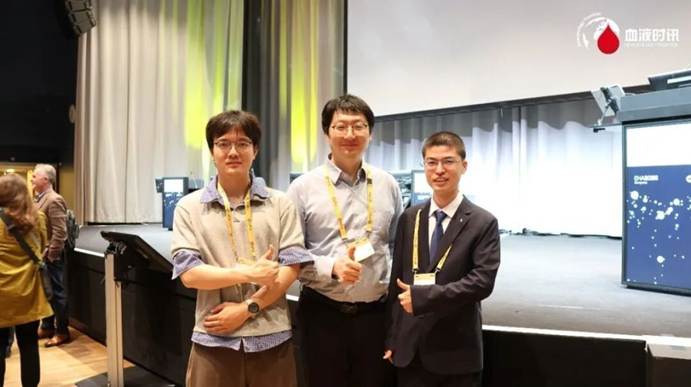
Expert Biography

Prof. Meng Lü
Peking University People’s Hospital
- Chief Physician, Associate Professor, PhD Supervisor
- Beijing Nova Program Distinguished Young Scientist
- Deputy Director, Clinical Trial Center, Peking University People’s Hospital
- Executive Director, Research Ward Program
- Deputy Director, Department of Hematology, Peking University
- Deputy Director, Office of the National Clinical Research Center for Hematologic Diseases
- Vice Chair, Cell and Gene Therapy Committee, China Association of Promoting Pharmaceutical Innovation
- Visiting Scholar, Memorial Sloan Kettering Cancer Center, USA
- Chair, Transplantation Session, ASH Annual Meeting (2022–2024)
- Global Young Ambassador, EBMT
- Recipient of the “National Outstanding Young Physician” Award and “Top Ten Future Stars in Healthcare” Recognition in Beijing
- Research focus: cellular therapy, immunotherapy, targeted therapy, and translational research in hematologic malignancies
- Principal investigator of multiple National Natural Science Foundation and national key research projects
- Author and corresponding author of publications in Signal Transduction and Targeted Therapy (STTT), Journal of Hematology & Oncology, Cellular & Molecular Immunology, Clinical Cancer Research, and other leading journals