The 2026 European Hematology Association (EHA 2026) Congress was held in Stockholm, Sweden, from June 11–14, 2026. Dr. Yajing Zhang and colleagues from Beijing GoBroad Boren Hospital presented three studies at this year's meeting, focusing on two critical questions in the management of relapsed/refractory hematologic malignancies.The first concerns whether a patient’s immune system still possesses sufficient “immune fitness” to support the efficacy of immunotherapy. The second addresses whether tumor clones, under the selective pressure of multiple lines of treatment, have undergone new genomic evolution that exposes actionable molecular vulnerabilities.
For patients with relapsed/refractory hematologic malignancies, treatment failure cannot simply be attributed to “drug resistance” or an “aggressive tumor.” Following multiple rounds of therapy, profound changes occur on two levels simultaneously. On one hand, tumor cells may acquire new resistance mechanisms through clonal evolution. On the other hand, the host immune system may become aged, exhausted, and functionally impaired due to prolonged disease burden and repeated treatment exposure.
Therefore, future treatment decisions for relapsed/refractory patients should not only answer the question, “What should the next therapy be?” More importantly, they should address: Why did previous treatments fail? Is the patient still suitable for a particular immunotherapy? Are there molecular pathways that can be precisely targeted? These are the key questions that Dr. Zhang’s research team sought to address through their EHA 2026 studies.
01
From Single Outcome Assessment to “Immune Fitness”: High-Dimensional Flow Cytometry Reveals the Peripheral Immune Ecosystem of Relapsed/Refractory Hematologic Malignancies
Immunotherapies such as CAR-T cells and bispecific antibodies have dramatically transformed the treatment landscape of lymphoma and multiple myeloma. However, real-world experience shows that a proportion of patients continue to experience inadequate responses, short-lived remissions, or disease progression despite receiving multiple immunotherapeutic approaches.
Historically, clinical and research efforts have focused primarily on tumor-intrinsic factors, such as antigen loss, target downregulation, or the emergence of resistant clones. Yet the success of immunotherapy depends not only on tumor biology, but also on whether the patient’s immune system retains sufficient functional reserve.
Using high-dimensional multiparameter flow cytometry, Dr. Zhang’s team systematically characterized the peripheral immune systems of patients with relapsed/refractory aggressive B-cell lymphoma and relapsed/refractory multiple myeloma. Rather than examining individual immune-cell populations in isolation, the study evaluated multiple dimensions of immune status, including T-cell memory differentiation, exhaustion profiles, regulatory T cells (Tregs), B-cell reserves, NK-cell functional subsets, and monocyte inflammatory states.
The overarching goal was to determine whether the patient’s overall immune ecosystem remained capable of supporting subsequent immunotherapeutic interventions.
This concept can be summarized by a central term: peripheral immune fitness.
Immune fitness is not simply reflected by normal white blood cell or lymphocyte counts. Instead, it asks deeper questions: Have T cells become excessively aged or exhausted? Is the naïve T-cell reserve still adequate? Do NK cells retain effective cytotoxic function? Are monocytes trapped in a state of chronic yet ineffective inflammatory activation?
The answers to these questions may directly influence CAR-T manufacturing quality, bispecific antibody efficacy, infection risk, immune reconstitution, and future treatment sequencing.
Relapsed/Refractory Aggressive B-cell Lymphoma: Immune Desertification, T-cell Exhaustion, and Signals of Systemic Relapse
Among patients with relapsed/refractory aggressive B-cell lymphoma, particularly diffuse large B-cell lymphoma (DLBCL), the study revealed that many patients exhibited substantial structural disruption of their peripheral immune systems, beyond simply having high tumor burden or multiple prior therapies.
Most patients demonstrated features consistent with an “immune desert” and immune aging phenotype. These characteristics included profound B-cell depletion, inversion of the CD4/CD8 ratio, reduction of naïve T-cell reserves, accumulation of terminally differentiated effector memory CD8+ T cells, and increased expression of exhaustion markers such as PD-1 and TIM-3.
The data showed that 78% of patients experienced marked B-cell depletion. In some individuals, PD-1+ CD3+ T cells accounted for as much as 48.13% of the T-cell compartment, while PD-1+TIM-3+ double-positive exhausted T cells reached 18.81%.
Notably, the investigators identified a subset of patients displaying an immune profile resembling “active leukemic relapse.” These patients exhibited substantial expansion of monoclonal B cells in peripheral blood accompanied by severe T-cell depletion. Such findings suggest that, in some cases, disease progression may have extended beyond localized lesions and evolved into a more aggressive systemic process.
In addition, some patients demonstrated expansion of CD56^high^CD16^- NK cells and shifts toward inflammatory monocyte populations, suggesting compensatory activation of innate immunity that nevertheless may be insufficient to generate effective antitumor responses.
These findings indicate that treatment failure in relapsed/refractory aggressive B-cell lymphoma cannot be explained solely by tumor-cell biology. Exhaustion of the peripheral immune ecosystem itself may be a major determinant of whether subsequent immunotherapies retain clinical efficacy.
Relapsed/Refractory Multiple Myeloma: Systemic Immune Aging, NK-cell Remodeling, and Expansion of Inflammatory Monocytes
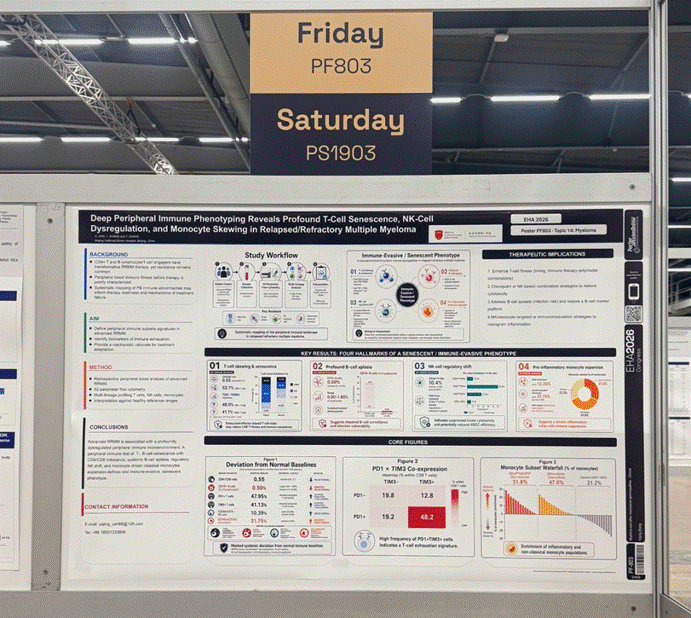
Among patients with relapsed/refractory multiple myeloma and plasma cell leukemia, the study similarly identified profound disruption of the immune ecosystem, although the immune landscape differed from that observed in aggressive B-cell lymphoma.
A defining feature of these patients was widespread immune aging accompanied by alterations in innate immune function.
The T-cell compartment demonstrated inversion of the CD4/CD8 ratio, expansion of CD8+ T cells, accumulation of effector memory and TEMRA populations, and increased expression of exhaustion markers such as PD-1 and TIM-3.
The median CD4/CD8 ratio was 0.55. PD-1-positive T cells reached a maximum of 47.95%, TIM-3-positive T cells reached 41.13%, and Treg cells accounted for up to 37.7% of CD4+ T cells in some patients.
Simultaneously, marked B-cell depletion was observed, suggesting that prolonged disease progression, repeated treatment exposure, and chronic immunosuppression collectively compromise humoral immune reserves.
The NK-cell compartment showed not merely quantitative loss but qualitative remodeling. Cytotoxic CD56^dim^CD16+ NK cells were relatively reduced, whereas immature or regulatory CD56^high^CD16^- NK-cell populations were expanded, indicating potential impairment of innate immune cytotoxicity.
Furthermore, expansion of inflammatory monocytes suggested a state of chronic immune activation. Importantly, such activation does not necessarily translate into effective antitumor immunity and may instead contribute to immune escape, treatment resistance, and increased susceptibility to infection.
These findings suggest that relapsed/refractory multiple myeloma should not be viewed simply as uncontrolled plasma-cell proliferation. Rather, it represents a complex disease state characterized by systemic immune aging, immune exhaustion, and innate immune dysfunction.
A Common Message Across Two Distinct Diseases
Although lymphoma and myeloma differ substantially in their cellular origins, biology, and treatment paradigms, both studies point toward the same fundamental conclusion: in the relapsed/refractory setting, the patient’s immune system itself becomes a major determinant of treatment success or failure.
For future approaches involving CAR-T therapy, bispecific antibodies, universal cell therapies, bridging strategies, and immune-restorative interventions, it may be insufficient to evaluate only tumor antigen expression. Equal attention must be paid to whether the patient retains adequate immune reserve.
High-dimensional peripheral immune profiling may therefore become an important pretreatment stratification tool, helping optimize treatment sequencing, guide immune-reconstitution strategies, and support the development of next-generation combination therapies.
02
From Target Expression to Clonal Evolution: Ultra-Deep NGS Reveals Actionable Genomic Vulnerabilities in Relapsed/Refractory Multiple Myeloma
If high-dimensional immune profiling addresses the question of whether the patient’s immune system remains capable of mounting an effective response, ultra-deep next-generation sequencing (NGS) addresses another critical question: why do tumor clones become increasingly difficult to eradicate?
Patients with relapsed/refractory multiple myeloma, particularly those with extramedullary disease or progression following immunotherapy, often exhibit more aggressive clinical behavior, more complex resistance mechanisms, and fewer remaining treatment options.
Under the selective pressure of multiple therapies, myeloma clones continue to evolve, progressively acquiring genomic abnormalities that promote proliferation, immune escape, and multidrug resistance.
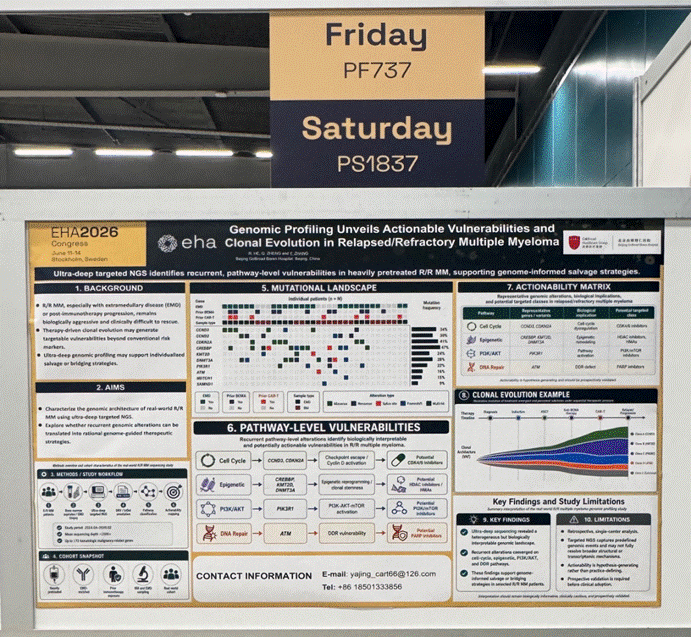
Using ultra-deep targeted NGS, Dr. Zhang’s team analyzed bone marrow and extramedullary tumor samples from real-world patients with relapsed/refractory multiple myeloma. The sequencing panel covered up to 172 genes associated with hematologic malignancies, with an average sequencing depth exceeding 1,500×. Single nucleotide variants, small insertions/deletions, and other somatic alterations were functionally annotated and evaluated for potential therapeutic relevance.
The results revealed a highly heterogeneous genomic landscape characterized by abnormalities concentrated within pathways regulating cell-cycle control, epigenetic modification, PI3K/AKT signaling, and DNA damage repair.
For example, mutations involving the CCND3 PEST domain and loss-of-function alterations in CDKN2A suggested that dysregulated cell-cycle control may be a major driver of persistent clonal expansion in certain patients.
Among patients with extramedullary disease, enrichment of mutations affecting epigenetic regulators—including CREBBP, KMT2D, and DNMT3A—suggested that epigenetic reprogramming may contribute to the emergence of highly aggressive clones.
Additional abnormalities involving PIK3R1, ATM, NOTCH1, and SAMHD1 indicated potential activation of signaling pathways, defects in DNA repair, and adaptive changes supporting clonal survival.
Importantly, the study does not simply attribute treatment failure to therapeutic inefficacy. Instead, it demonstrates that under sustained treatment pressure, tumor cells may acquire new survival advantages through dysregulated cell-cycle progression, epigenetic remodeling, signaling-pathway rewiring, and alterations in DNA damage repair mechanisms.
From a translational perspective, these findings provide a mechanistic basis for individualized treatment strategies after exhaustion of standard therapeutic options. Drug classes such as CDK4/6 inhibitors, HDAC inhibitors, PI3K/mTOR pathway inhibitors, and PARP inhibitors may warrant further investigation within selected molecular subgroups.
More importantly, the purpose of ultra-deep NGS extends beyond simply identifying mutations. It aims to help clinicians understand disease-evolution trajectories and design more rational bridging, salvage, and combination strategies before and after immunotherapy.
03
Dual-Dimensional Precision Stratification: Moving Beyond “What Drug Comes Next?” to “Why This Treatment Strategy?”
The management of relapsed/refractory hematologic malignancies is gradually evolving from empirically driven treatment selection toward mechanism-based precision medicine.
The studies presented by Dr. Zhang’s team at EHA 2026 establish two complementary dimensions of patient stratification.
The first dimension uses high-dimensional immune profiling to evaluate peripheral immune fitness and determine whether patients retain the biological capacity to benefit from immunotherapy.
The second dimension utilizes ultra-deep NGS to identify clonal evolution and actionable molecular vulnerabilities, thereby informing bridging therapies, salvage approaches, and combination strategies.
Together, these two dimensions suggest that treatment decisions for relapsed/refractory patients should move beyond the simple question of selecting the next regimen.
Instead, clinicians should ask three key questions:
First, has the tumor undergone new clonal evolution?
Second, does the patient’s immune system still retain the capacity to respond to therapy?
Third, are there molecular or immunologic vulnerabilities that can be therapeutically exploited?
Only by understanding both the biological evolution of the tumor and the current state of the patient’s immune system can clinicians design truly rational treatment pathways for relapsed/refractory disease.
Dr. Zhang summarized the team’s perspective:
“Treatment failure in relapsed/refractory hematologic malignancies cannot be explained solely by changes within tumor cells. Whether the patient’s immune system retains sufficient immune fitness, and whether tumor clones have undergone new genomic evolution, are equally important determinants of the success of subsequent immunotherapies and precision treatment approaches. Through high-dimensional immune profiling and ultra-deep genomic characterization, we hope to move relapsed/refractory patients beyond empirical treatment selection toward mechanism-driven precision stratification and treatment-pathway design.”
Conclusion
Relapsed/refractory hematologic malignancies represent highly complex and dynamically evolving disease states. Treatment failure is rarely attributable to a single factor. Rather, it results from the combined effects of tumor clonal evolution, host immune exhaustion, treatment-driven selection pressures, and microenvironmental remodeling.
Through analyses of both peripheral immune ecosystems and genomic evolution, Dr. Zhang’s EHA 2026 studies provide a new framework for understanding relapsed/refractory lymphoma and multiple myeloma. Clinicians must consider not only tumor targets and mutations, but also the patient’s immune reserves and immune fitness.
As high-dimensional immune monitoring, ultra-deep sequencing, single-cell technologies, and real-world clinical datasets continue to converge, the treatment of relapsed/refractory hematologic malignancies may shift from repeated therapeutic trial-and-error toward truly mechanism-based treatment design, ultimately providing patients with more precise, coherent, and effective therapeutic opportunities.
Expert Profile

Dr. Yajing Zhang
Director, Oncology & Immunology Innovation Medicine Center
Beijing GoBroad Boren Hospital
GoBroad Institute of Hematology Research, Beijing
- Chief Physician
- MD, PhD, and Postdoctoral Researcher
- Master’s Supervisor, China Pharmaceutical University
- Beijing Science and Technology Rising Star
Dr. Zhang has long focused on the clinical application and translational development of cellular and immunotherapies in hematologic malignancies and autoimmune diseases. She combines extensive clinical experience with a strong research portfolio.
As principal investigator, she has led six national and provincial-level research projects, including grants from the National Natural Science Foundation of China. As first author, she has published multiple papers in leading international journals including Blood, Leukemia, Journal of Experimental Medicine (JEM), and Signal Transduction and Targeted Therapy, with a cumulative impact factor exceeding 140.
Her work has been presented at numerous international hematology and immunology conferences. She has received several prestigious awards, including the 2023 JEM Outstanding Paper Award, the Guangdong Science and Technology Innovation Outstanding Paper Award, and the PLA General Hospital Science and Technology Progress Award.
Dr. Zhang also serves as a standing committee member or committee member of several national academic organizations, including the Cell and Biotherapy Committee of the Chinese Research Hospital Association, the Multiple Myeloma Committee of the Chinese Society of Clinical Oncology (CSCO), and the Core Expert Group for Hematologic Malignancy Rehabilitation of the China Cancer Foundation.