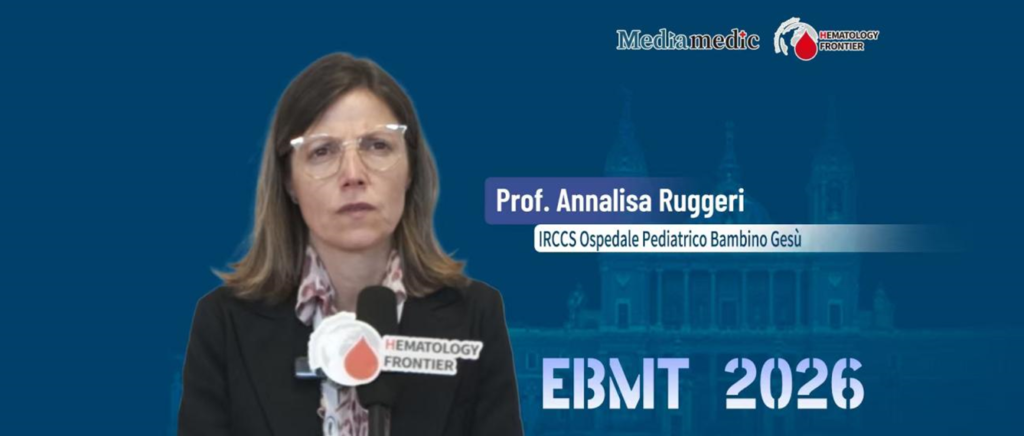
Cord blood transplantation (CBT), an important modality within hematopoietic stem cell transplantation, has faced increasing competition in recent years from alternative donor strategies such as haploidentical transplantation. As a result, the field is undergoing a period of reassessment and transformation. Nevertheless, CBT retains irreplaceable value in selected patient populations, while its potential applications in cell and gene therapy as well as regenerative medicine continue to expand.As a leading authority in transplantation and cellular therapy, the European Society for Blood and Marrow Transplantation (EBMT) plays a critical role in advancing global standards of care through structured education, professional training, and certification programs. Drawing on her clinical experience and work within EBMT, Professor Annalisa Ruggeri from Italy discussed the clinical relevance, future directions, and the importance of standardized education in CBT, offering valuable insights for the continued evolution of the field.
Professor Annalisa Ruggeri:
“Cord blood transplantation is currently navigating a challenging period, largely due to competition from alternative donor sources. In particular, the increasing feasibility of transplantation using HLA-mismatched related donors—namely haploidentical transplantation with post-transplant cyclophosphamide—has emerged as a widely adopted and effective option.
Nevertheless, cord blood transplantation remains highly relevant in specific clinical settings, such as pediatric patients and individuals with inherited disorders, where minimizing graft-versus-host disease (GVHD) is critical to preserving long-term quality of life.
The focus of my presentation was on revitalizing cord blood transplantation. This perspective is driven by recent advances in ex vivo expansion technologies. For example, the use of UM171 has been shown to significantly accelerate neutrophil engraftment and platelet recovery, thereby reducing non-relapse mortality. These advances have opened new opportunities for broader clinical application.
Cord blood transplantation also represents an important option for patients with minimal residual disease (MRD)-positive acute leukemia, who are at particularly high risk of relapse. In this setting, we have demonstrated that relapse due to HLA loss is remarkably rare following CBT, offering a meaningful opportunity for durable disease control.
In addition, CBT provides a unique platform for cell and gene therapy. Several important clinical trials are currently underway, including studies demonstrating the safe use of cord blood–derived natural killer (NK) CAR cells—pioneered by researchers at MD Anderson Cancer Center—as well as applications in regenerative medicine, such as tissue repair using cord-derived cellular platforms. I believe there remains significant potential to further explore CBT in these emerging fields.
EBMT also offers important tools to standardize and validate education across the field. This year marks the second edition of the EBMT examination, which I strongly recommend in my role as an education representative of the Society. I encourage early-career transplant physicians and nurses to participate in the online preparatory modules and subsequently take the EBMT examination.
This process not only validates knowledge but also facilitates the exchange of experience across countries within the EBMT network. Education remains one of our central priorities. EBMT provides a wide range of webinars, clinical case discussions, and initiatives such as the ‘paper of the month,’ creating a shared learning platform for the global transplant community.”
Conclusion
Despite increasing competition from alternative transplantation strategies, cord blood transplantation continues to hold unique clinical value, particularly in selected patient populations. Advances in expansion technologies have further enhanced its therapeutic potential, while its emerging role in cell and gene therapy and regenerative medicine opens new frontiers for innovation.
Through its comprehensive educational framework, standardized training, and certification programs, EBMT provides a global platform for knowledge exchange and professional development, helping to harmonize clinical practice and ensure patient safety worldwide.
These efforts not only strengthen the foundation of cord blood transplantation and related disciplines but also exemplify the principles of global collaboration, continuous professional development, and patient-centered care. Together, they will continue to drive innovation and progress in hematopoietic transplantation, offering valuable lessons for the standardization and advancement of other areas of medicine.