Editor’s Note: During the 2026 National Breast Cancer Conference, Professor Michael Gnant, President of the St. Gallen International Breast Cancer Conference (SGBCC), traveled across continents to participate in the event, further deepening collaboration between SGBCC and the Breast Cancer Committee of the Chinese Society of Clinical Oncology (CSCO BC).From Chinese experts joining the SGBCC panel leadership, to Chinese exchange programs within SGBCC; from the “SGBCC China Tour” to the “Voice of China” sessions at the SGBCC congress, collaboration between SGBCC and CSCO BC has continued to expand in both scale and depth, gradually evolving into an influential academic partnership on the global stage.
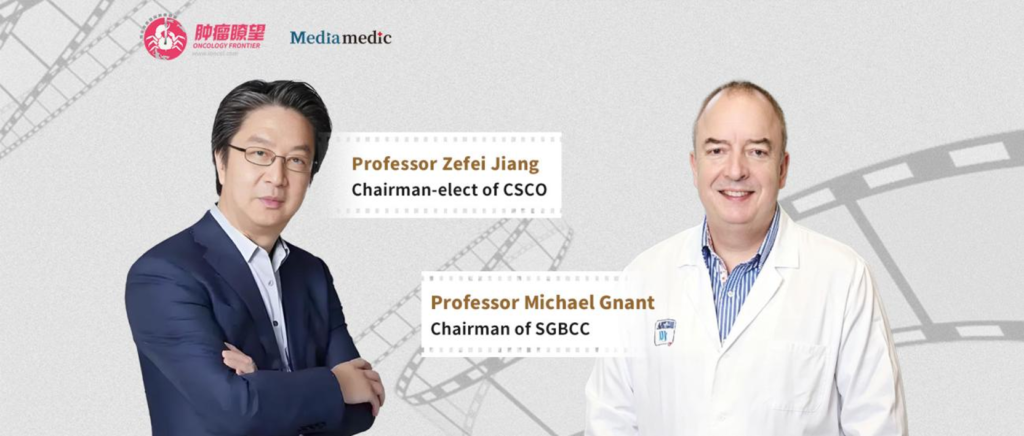
During the conference, Professor Zefei Jiang—President-Elect of CSCO and founding leader of CSCO BC—and Professor Michael Gnant joined Oncology Frontier to reflect on the establishment and growth of their respective organizations, discuss the impact of the CSCO Breast Cancer Guidelines, and share their vision for the future of collaboration between SGBCC and CSCO BC.
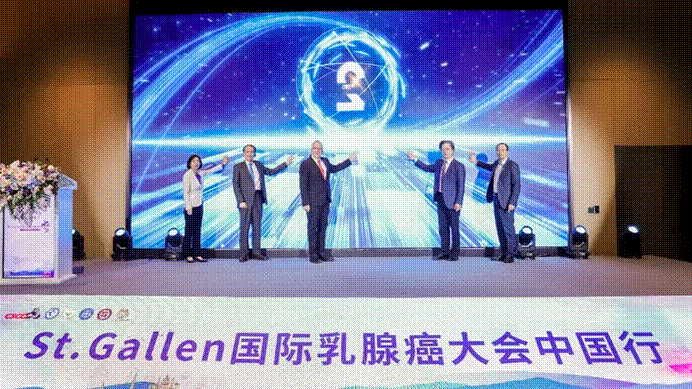
Launch Ceremony of the 2024 SGBCC China Tour
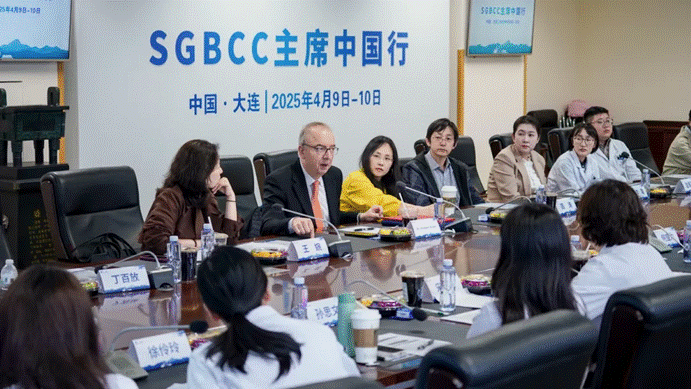
The 2025 “SGBCC President’s China Tour” Academic Program Was Successfully Held at the Second Affiliated Hospital of Dalian Medical University
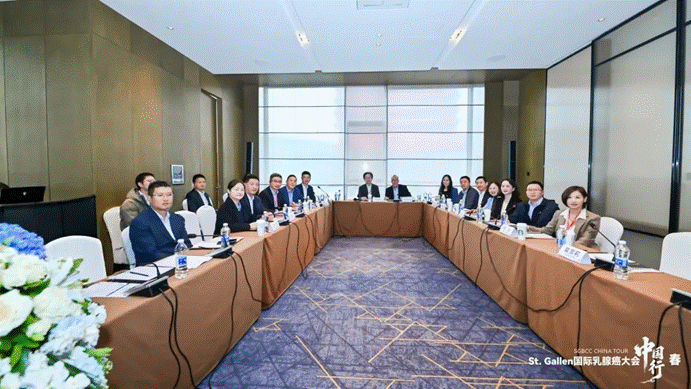
Bridging East and West: Opening a New Chapter Together
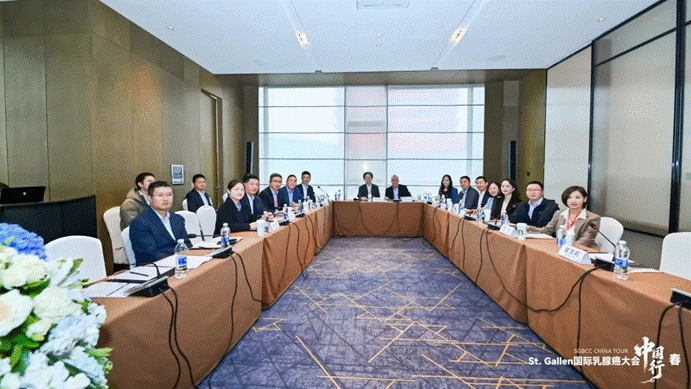
The First Spring Stop of the 2026 “St. Gallen International Breast Cancer Conference China Tour” Was Held in Wuhan
For many years, CSCO has maintained close exchanges with international organizations including SGBCC, ASCO, and ESMO, actively promoting Chinese researchers, Chinese clinical studies, and Chinese guidelines onto the global stage.
In recent years, collaboration between CSCO BC and SGBCC has become increasingly frequent and substantive. What began as limited interactions among individual experts has evolved into deeply integrated, team-based collaborative programs.
These initiatives have included:
- Active participation of Chinese experts within the SGBCC leadership panel
- Visits by SGBCC experts to China
- The “SGBCC China Tour”
- The establishment of the “Voice of China” sessions at the SGBCC congress
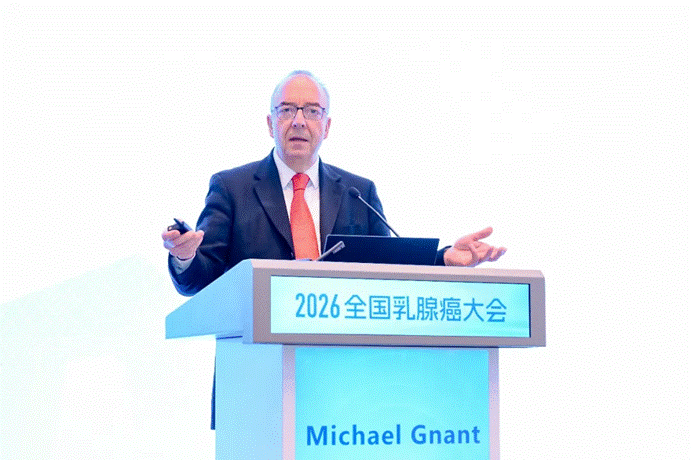
Professor Michael Gnant Delivering a Lecture at CSCO BC 2026
Professor Michael Gnant noted that through these collaborations, he and his CSCO BC colleagues have visited more than half of China’s provinces, engaging in academic exchanges with numerous institutions, hospitals, and universities.
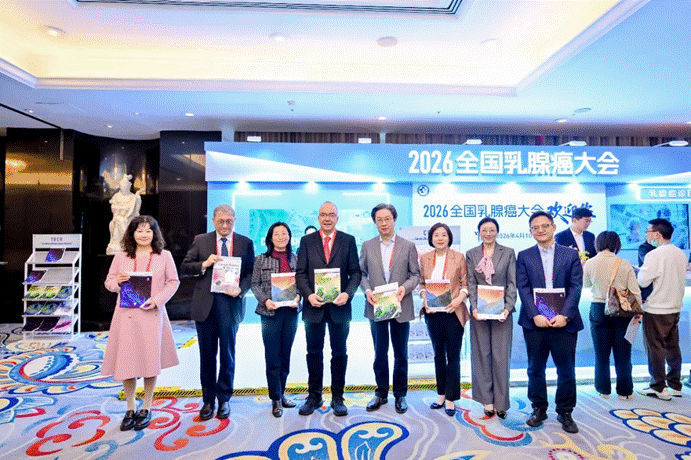
Professor Michael Gnant, Professor Zefei Jiang, and Colleagues at CSCO BC 2026
Looking ahead, Professor Michael Gnant outlined three major future directions for collaboration with CSCO BC:
1. Continued Expansion of “Voice of China” at SGBCC
The first priority is to further expand the “Voice of China” platform within SGBCC, creating broader opportunities for Chinese physicians and researchers to present their work to the international community.
2. Launch of the “CSCO BC–SGBCC Asia Congress”
Professor Michael Gnant also proposed organizing a pan-Asian “CSCO BC–SGBCC Asia Congress” around April 2027, with the goal of extending the success of Sino-European collaboration to a broader regional scale.
3. Development of a Young Physician Mentorship Program
With the support of CSCO BC, SGBCC also plans to establish a mentorship-oriented educational initiative for young Chinese physicians.
The first Young Chinese Physician Elite Forum is planned for the summer of 2026 and will focus on:
- Academic discipline development
- Scientific presentation design
- Clinical trial protocol development
- Slide preparation
- Scientific writing
The goal is to help cultivate the next generation of breast cancer leaders.
Professor Zefei Jiang expressed strong optimism regarding these collaborative directions and shared Professor Michael Gnant’s enthusiasm for future international clinical research partnerships.
Professor Michael Gnant emphasized that China’s enormous patient population and rapidly advancing research capabilities are highly attractive to the global oncology community. He noted that Chinese investigators have already become major international leaders in breast cancer research and predicted that the partnership between SGBCC and CSCO BC would become “a long-lasting and wonderful collaboration.”
Shared Visions, United Against Breast Cancer
Both the St. Gallen International Breast Cancer Conference (SGBCC) and the Breast Cancer Committee of the Chinese Society of Clinical Oncology (CSCO BC) are internationally recognized organizations dedicated to advancing breast cancer care.
During the interview, Professors Michael Gnant and Zefei Jiang reflected together on the histories of their organizations and how years of collaboration have gradually fostered a new era of East-West integration in the fight against breast cancer.
Professor Michael Gnant recalled the origins of SGBCC more than 40 years ago in St. Gallen, Switzerland, where a group of physician colleagues sought to establish standardized approaches for early breast cancer treatment through a small academic meeting.
Since then, the conference has been held every two years and steadily expanded in influence and scale. By 2015, the city of St. Gallen could no longer accommodate the growing congress, leading to the relocation of SGBCC to Vienna, Austria, where it continues today as one of the world’s most influential breast cancer meetings.
Professor Zefei Jiang noted that the development of CSCO BC followed a remarkably similar trajectory.
He explained that CSCO BC was founded by a group of dedicated experts who shared the vision of:
- Building Chinese clinical guidelines through clinical research
- Promoting standardized treatment practices
- Bringing Chinese breast cancer research to the international stage
Under the guidance of the broader CSCO organization, CSCO BC has undergone rapid growth over the past decade and has become one of the most influential academic organizations in Chinese breast oncology.
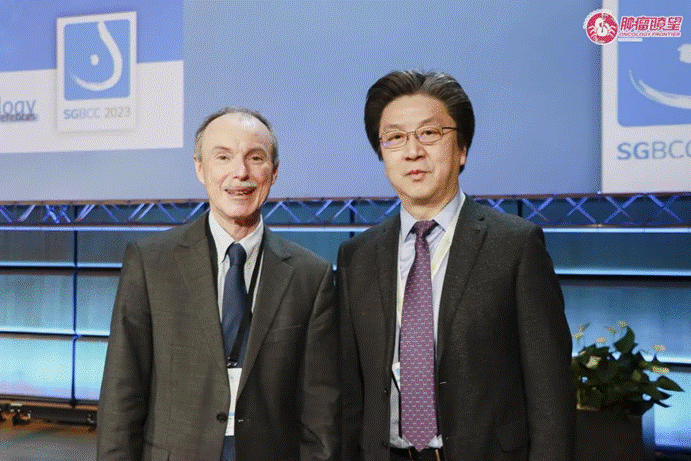
Professor Zefei Jiang and Former SGBCC President Professor Beat Thürlimann at the 2019 Conference
Reflecting on the 2025 SGBCC congress, Professor Michael Gnant spoke enthusiastically about gathering with 3,500 physicians from more than 100 countries worldwide.
He highlighted that the latest SGBCC International Consensus was developed through voting by approximately 80 top international experts, including CSCO BC founder Professor Zefei Jiang and current CSCO BC Chair Professor Yongmei Yin.
The “Voice of China” session held during the same meeting marked the first official China-focused session in SGBCC history and represented an important milestone.
Professor Michael Gnant subsequently participated in both the 2025 and 2026 CSCO BC conferences, further strengthening ties between the two organizations.
He also emphasized that as the international influence of Chinese clinical research continues to rise, deeper Chinese participation within SGBCC will undoubtedly continue to grow.
A Decade of Guidelines: From China to the World
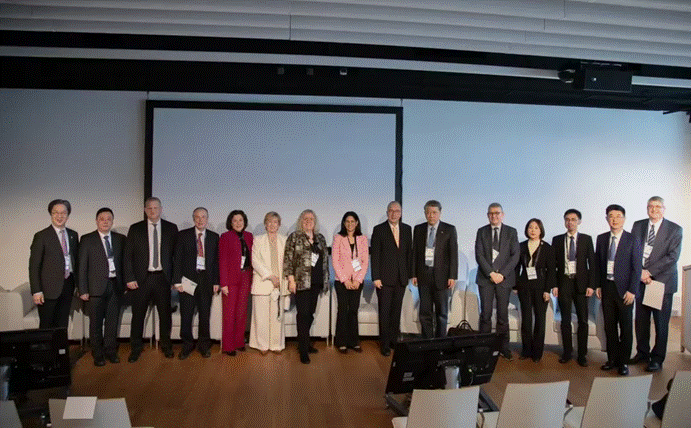
Group Photo of the 2025 SGBCC “Voice of China” Session
Over the past decade, the CSCO BC Guidelines have been continuously updated annually, gradually evolving into a comprehensive guidance system that now includes:
- Patient education editions
- English-language editions
- AI-assisted versions
These guidelines have become authoritative references for breast cancer diagnosis and treatment in China.
Professor Zefei Jiang explained that the development philosophy behind the CSCO BC Guidelines is built upon three core principles:
- International scientific advances
- Accessibility within China
- Consensus among Chinese experts
As a result, the guidelines incorporate both cutting-edge international evidence and practical considerations specific to Chinese clinical practice.
Regarding innovative therapies, the CSCO BC Guidelines actively integrate international studies in which Chinese investigators have played key roles, as well as original drugs independently developed in China.
Professor Zefei Jiang cited trastuzumab deruxtecan (T-DXd) as an example, emphasizing China’s substantial contribution to related international studies. As clinical data emerged and indications were approved, the CSCO BC Guidelines rapidly incorporated T-DXd to provide Chinese patients with access to leading-edge treatment strategies.
Today, with educational guideline programs expanding into neighboring countries, Chinese breast cancer guidelines are increasingly gaining international recognition.
Professor Michael Gnant pointed out that breast cancer biology and treatment environments vary significantly across different regions of the world. Therefore, the true value of evidence-based medicine lies in appropriately adapting scientific evidence to local patient populations and healthcare systems.
He praised the remarkable efficiency of the CSCO BC Guidelines, noting that discussions may begin in January, drafts finalized by February, and updates still adjusted in real time according to newly approved therapies, indications, and reimbursement policies.
After learning about the rapid update cycle and dynamic adaptation process of the guidelines, Professor Michael Gnant commented that the CSCO BC Guidelines have done an outstanding job of rapidly establishing treatment standards tailored specifically to Chinese patients.
He also expressed hope that future global collaboration among breast cancer experts would continue to deepen in order to build truly patient-centered international consensus recommendations.
Conclusion
Over the past decade, CSCO BC has grown into a globally influential academic organization that plays a major role in advancing breast cancer diagnosis and treatment in China and beyond.
Through innovation in drug development, clinical research, and guideline construction, CSCO BC has significantly contributed both to improving breast cancer care in China and to advancing international breast cancer research.
Against this backdrop, collaboration between SGBCC and CSCO BC has expanded across multiple dimensions, including:
- Young physician education
- International academic exchange
- Scientific research collaboration
Looking ahead, the partnership between SGBCC and CSCO BC promises to inject new momentum into global breast cancer development and help establish a new international center of excellence for breast cancer research and care through East-West collaboration.