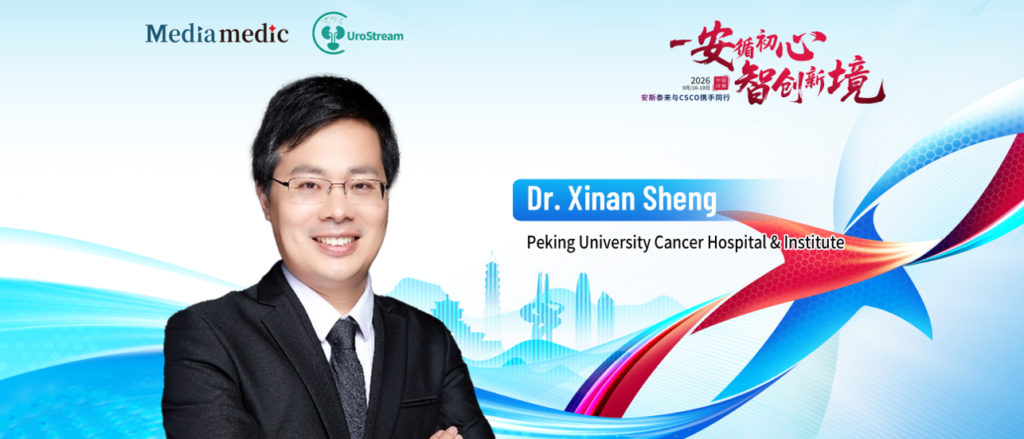
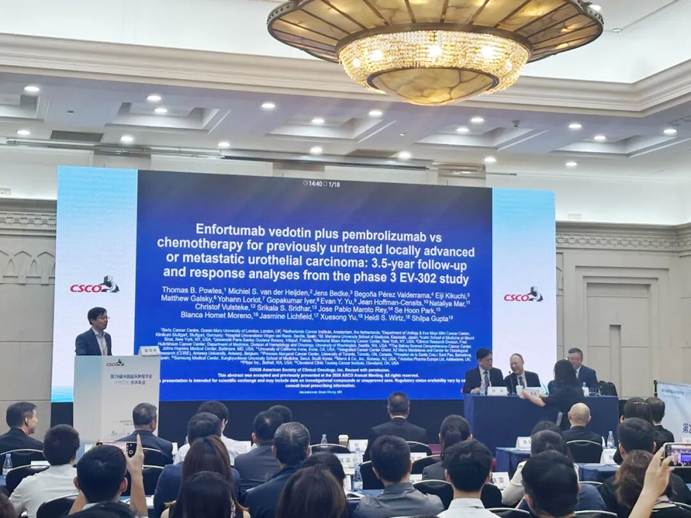
Editor's Note: Platinum-based chemotherapy has historically been the standard first-line treatment for locally advanced or metastatic urothelial carcinoma (la/mUC), but long-term survival outcomes have remained poor. There is an urgent clinical need for first-line regimens that offer high efficacy and sustained disease control. The EV-302 trial directly compared enfortumab vedotin plus pembrolizumab with standard platinum-based chemotherapy. Earlier interim analyses demonstrated the significant superiority of the combination over chemotherapy, reshaping international treatment guidelines.The updated results presented at ASCO 2026, with a median follow-up of 3.5 years, provide the longest follow-up to date of first-line treatment with the enfortumab vedotin combination, offering further evidence of its long-term efficacy. At the CSCO meeting, Oncology Frontier – UroStream invited Professor Xinan Sheng of Peking University Cancer Hospital to discuss three key aspects of these findings: long-term survival, depth of response, and long-term treatment management.
Oncology Frontier – UroStream: What further certainty does the 3.5-year follow-up of the EV-302 trial provide for first-line treatment of la/mUC? What is the most important takeaway from these long-term survival data?
Professor Xinan Sheng: The EV-302 trial is a landmark clinical study that has transformed the first-line treatment landscape for la/mUC. Since its results were first reported, first-line treatment has moved beyond chemotherapy alone into an era of immunotherapy combined with antibody-drug conjugates (ADCs).
The data cutoff for this analysis was October 6, 2025. The enfortumab vedotin plus pembrolizumab (EV+P) group included 442 patients, while the chemotherapy group included 444 patients. Median overall survival (OS) with the enfortumab vedotin combination was more than twice that with chemotherapy (33.6 months vs. 15.9 months), corresponding to a 47% reduction in the overall risk of death. The 3.5-year survival rates were 44% and 24.6%, respectively.
More informative than the median values is the shape of the survival curves. The tail of the survival curve for the enfortumab vedotin combination shows a sustained trend toward benefit, providing further evidence that long-term disease control is achievable for some patients. Patients who achieved a complete response (CR) had relatively high long-term survival rates, suggesting a close association between deep responses and long-term survival benefits.
These findings are quite remarkable to us because, to date, few clinical studies in la/mUC have reported long-term follow-up data. The main reason is that overall survival for patients with la/mUC was limited in the chemotherapy era, with median OS in the first-line setting typically only around 12–18 months. In contrast, the EV-302 trial significantly prolonged patient survival, making 3.5 years of long-term follow-up possible.
For clinicians, as treatment options continue to expand, our focus is shifting from initial treatment efficacy to long-term follow-up. This brings many clinical considerations into focus, such as patients’ treatment tolerability, how tumors change during treatment, what signals may indicate disease rebound, and what factors may predict sustained treatment benefit. Long-term follow-up therefore provides us with a wealth of valuable information to guide clinical practice.
With the 3.5-year follow-up of EV-302, we can see that the treatment group’s survival curve continues to demonstrate a long-term tail, resembling the tail effect observed with immunotherapy. The survival benefit among patients who achieved CR is particularly pronounced, suggesting that deep response may be an important clinical marker of long-term benefit.
Meanwhile, no new safety signals emerged during the extended follow-up, and the known adverse event profile remained consistent with previous reports. This further supports the feasibility of long-term treatment with this regimen.
Oncology Frontier – UroStream: One finding in this analysis has attracted considerable attention: among patients who achieved a complete response (CR), a substantial proportion did not achieve CR from the outset but instead converted from a partial response (PR). What implications does this have for clinical treatment goals and response assessment?
Professor Xinan Sheng: As oncologists, when discussing cancer treatment, we often focus on tumor control and shrinkage. However, when it comes to achieving complete tumor disappearance, we still have reservations about what current treatment approaches can accomplish.
Nevertheless, the EV-302 trial showed that 29.1% of patients in the treatment group achieved complete tumor disappearance. This means that nearly one-third of patients treated with the enfortumab vedotin combination experienced complete tumor clearance. This is truly remarkable for us as clinicians and demonstrates that cancer treatment has reached a new level.
The EV-302 trial also showed that complete response is not necessarily achieved all at once; rather, it can be a gradual process. Many patients first experience tumor shrinkage and achieve PR, before subsequently converting to CR. The study showed that the median time to CR was only 4.3 months, while patients who converted from PR to CR did so in approximately 2.1 months. In other words, many patients can achieve a deep response within around six months.
In the past, we were concerned that faster tumor shrinkage might also mean a greater likelihood of disease rebound. However, the long-term follow-up data from EV-302 showed that patients maintained relatively high survival rates at 3.5 years, regardless of whether they achieved CR rapidly or converted gradually from PR to CR. This suggests that once a deep response is achieved, patients may experience more durable treatment benefits. These findings further strengthen our confidence in deep responses and long-term disease control.
Oncology Frontier – UroStream: How can clinicians help patients continue receiving effective treatment and translate treatment efficacy into long-term benefits?
Professor Xinan Sheng: The EV-302 trial has transformed the treatment landscape for la/mUC and represents a landmark advance in clinical research. With the release of the 3.5-year long-term follow-up data, greater attention has been drawn to an important question: the median progression-free survival (mPFS) in the study was 12.5 months, while the median duration of treatment (DOT) was 9.6 months, shorter than the mPFS. Does safety and tolerability affect patients’ ability to remain on treatment over the long term?
There is no denying that some patients experience adverse events during treatment that require dose adjustments or treatment interruptions. This is also consistent with the real-world experience of ADCs after their introduction into clinical practice. For example, some patients may develop skin toxicity, immune-related adverse events, or other types of adverse events. However, it is important to emphasize that most of these adverse events can be effectively controlled through standardized monitoring, proactive management, and optimization of treatment strategies.
In clinical practice, we can adopt individualized management strategies based on each patient’s circumstances. For example, dose adjustments may improve tolerability. For patients with significant immune-related adverse events, treatment can be temporarily suspended as appropriate, followed by enfortumab vedotin monotherapy or continued immunotherapy maintenance after discontinuation of enfortumab vedotin.
Through appropriate adverse event management, we can maintain patient safety while sustaining treatment efficacy and further translating it into long-term survival benefits.
The adoption of a new treatment approach is inherently a process of continuous learning and experience accumulation, progressing from initial exploration and understanding to increasing familiarity and, ultimately, more precise and standardized application.
The 3.5-year long-term follow-up data from the EV-302 trial not only further validate the regimen’s long-term efficacy but also provide important guidance for clinicians in real-world practice, particularly in managing safety, optimizing treatment strategies, and improving long-term patient outcomes.
Conclusion
The 3.5-year follow-up of the EV-302 trial further confirms the sustained long-term benefits of the enfortumab vedotin combination as first-line treatment for la/mUC.
The study also suggests that some patients may achieve deeper responses over the course of continued treatment. Therefore, as long as patients continue to derive benefit and safety remains manageable, standardized treatment, dynamic assessment, adverse event management, and timely resumption of therapy when appropriate may help minimize unnecessary treatment interruptions and create favorable conditions for achieving deep responses and long-term disease control.
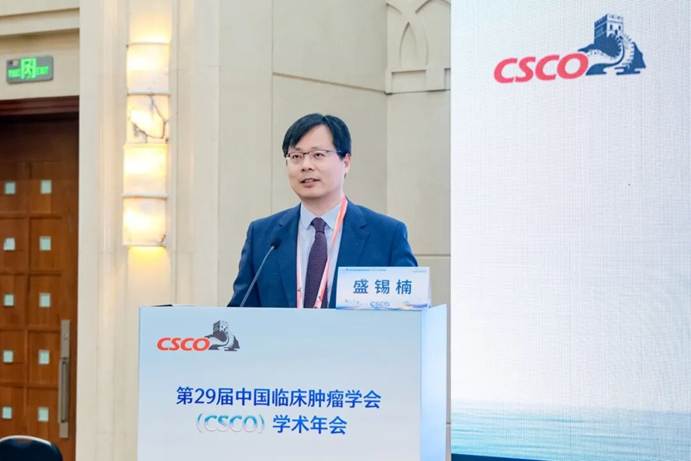
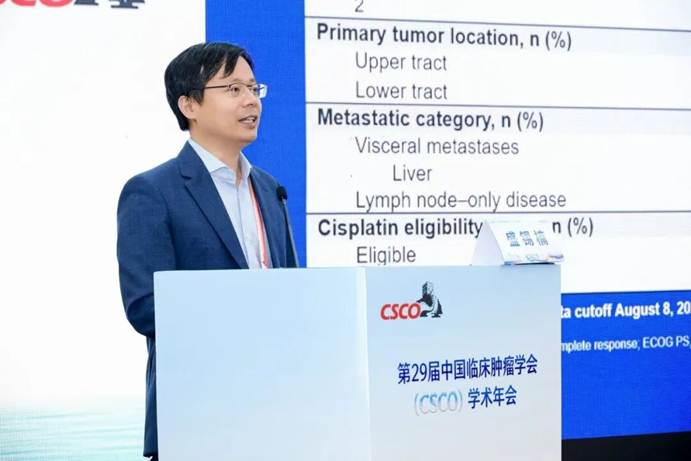
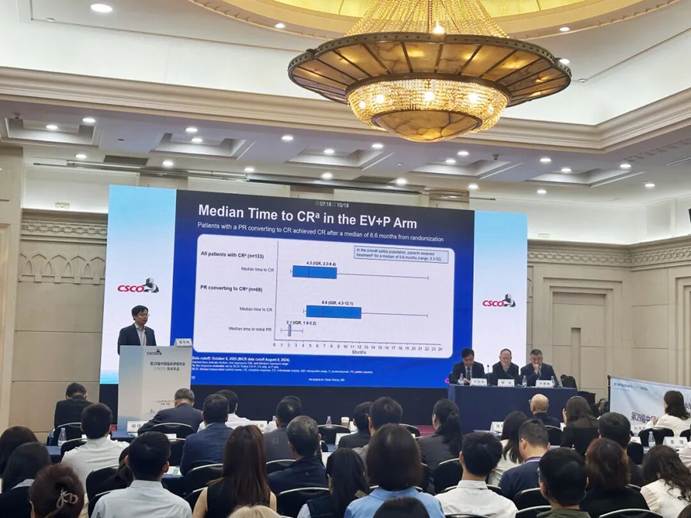

Professor Xinan Sheng