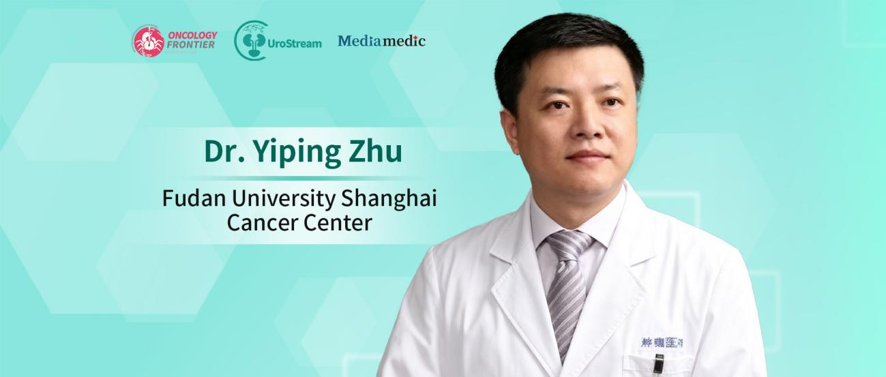
Editor's Note: The 2026 Pujiang Urologic Oncology Academic Conference was held in Shanghai. In recent years, the rapid development of antibody-drug conjugates (ADCs) and immunotherapy has reshaped the first-line treatment landscape for locally advanced or metastatic urothelial carcinoma (LA/mUC), while closer coordination among systemic therapy, surgery, and long-term follow-up has become increasingly important. Although emerging evidence has provided patients with more treatment options, challenges remain in pretreatment assessment, adverse event management, response evaluation, and long-term follow-up, with the ultimate goal of translating advances from clinical research into sustained real-world benefits. During the conference, Oncology Frontier · UroStream invited Professor Yiping Zhu from Fudan University Shanghai Cancer Center to share his perspectives on first-line treatment innovation, perioperative systemic therapy, the evolving role of surgery, and advances in molecular monitoring.01
ADC Plus Immunotherapy: Rapidly Reshaping the First-Line Treatment Landscape of Urothelial Carcinoma
In recent years, ADCs combined with immunotherapy have rapidly transformed the first-line treatment landscape of urothelial carcinoma. How do you view this therapeutic evolution? With new treatment options entering clinical practice, what are the most important practical issues that still need to be addressed?
Professor Yiping Zhu: In recent years, ADC-based combinations with immunotherapy, represented by enfortumab vedotin (EV)-containing regimens, have changed a treatment landscape in which platinum-based chemotherapy had long served as the mainstay of first-line therapy for LA/mUC. Supported by high-level evidence, EV-containing regimens have become an important first-line standard treatment option. However, the introduction of new therapies does not mean that all clinical challenges have been resolved. Appropriate patient selection, standardized treatment administration, adverse event management, and long-term follow-up remain key priorities.
In clinical practice in China, there are currently three major unmet needs:
1. Treatment selection must continue to balance patient suitability and accessibility. Although first-line treatment options are becoming increasingly diverse, factors such as patients’ baseline condition, eligibility for cisplatin, treatment accessibility, and individual preferences continue to influence clinical decision-making. Ensuring that standard regimens are appropriately and consistently applied to suitable patients remains an important challenge.
2. There is still no unified standard for bladder preservation. As systemic therapies achieve deeper responses, interest in bladder preservation is increasing. However, there is still no consensus regarding how to identify patients most likely to benefit, how to define clinical complete response (cCR), or how well cCR predicts pathological complete response (pCR) and long-term survival.
3. Postoperative recurrence monitoring needs further improvement. By the time recurrence is detected using conventional imaging, some patients may already have developed lymph-node or distant metastases. Existing studies suggest that circulating tumor DNA (ctDNA) may help identify patients at high risk of postoperative recurrence, but standardized testing and clinical application criteria remain to be established. At present, ctDNA testing is not yet a routine standard tool in clinical practice, and its application remains an area of ongoing research and clinical translation.
02
From Surgery Alone to Multidisciplinary Management: New Considerations for Urologic Surgeons
With the progress of ADC-based combinations with immunotherapy, bladder cancer treatment is shifting from a surgery-centered approach toward comprehensive multidisciplinary management. What new considerations does this bring to urologic surgery?
Professor Yiping Zhu: EV-containing regimens first established high-level evidence in the first-line treatment of LA/mUC, driving updates to first-line treatment standards. Building on this progress, the phase III EV-303 and EV-304 trials respectively focused on patients with muscle-invasive bladder cancer (MIBC) who were ineligible or eligible for cisplatin, exploring the role of EV-based regimens in the perioperative setting.
In my view, the significance of these two studies lies not only in expanding the evidence base for perioperative systemic therapy, but also in promoting the integration of systemic treatment into the complete curative treatment pathway. From staging and risk assessment to neoadjuvant systemic therapy, response evaluation, transition to surgery, postoperative risk management, and long-term follow-up, all stages need to be more closely connected. This is also prompting surgeons to move beyond focusing on a single operation and become involved in the patient’s entire treatment journey.
For surgeons, the first priority is to determine how systemic therapy and surgery can be appropriately coordinated. Perioperative treatment is not simply a matter of adding systemic therapy to surgery. Accurate staging and risk assessment should be completed before treatment; response and tolerability should be dynamically evaluated during treatment; and radical surgery should be performed at the appropriate time.
At present, clinical complete response (cCR) cannot simply be equated with pathological complete response, nor can radical surgery be omitted solely on the basis of imaging, cystoscopy, or any single diagnostic test. Bladder preservation, delayed surgery, and treatment de-escalation may be explored, but these approaches must be based on strict patient selection, standardized assessment, and prospective clinical research.
Second, multidisciplinary collaboration will become increasingly important. Urologic surgeons need to work closely with medical oncologists, radiation oncologists, pathologists, radiologists, and nursing teams in treatment decision-making, response assessment, adverse event management, surgical coordination, and postoperative follow-up. In the future, the surgeon’s role will extend beyond performing an operation to encompass the entire process of systemic treatment, local treatment, and postoperative risk management.
Of course, we must also remain aware of the boundaries of the current evidence. The relevant findings need to be interpreted in the context of the specific enrolled populations, study designs, and follow-up duration. Clinical practice should continue to follow approved indications and current diagnostic and treatment standards.
03
ctDNA and utDNA: Toward More Precise Molecular Monitoring and Postoperative Risk Stratification
Liquid biopsy technologies such as ctDNA and urinary tumor DNA (utDNA) have shown potential in monitoring minimal residual disease (MRD). How might they influence response prediction and postoperative follow-up? How should clinicians make more precise decisions based on dynamic molecular findings?
Professor Yiping Zhu: Liquid biopsy has become an important area of bladder cancer research in recent years. ctDNA primarily reflects tumor-associated molecular information circulating in the blood and may help assess systemic minimal residual disease and the risk of distant recurrence. utDNA is obtained from urine, making sample collection relatively convenient, and may provide complementary information regarding residual or recurrent lesions within the urinary tract. The two approaches capture different dimensions of disease and may ultimately complement each other.
Compared with a single measurement, I am more interested in dynamic changes in molecular signals. A decline or conversion to negativity after systemic therapy may indicate a reduction in tumor burden. Conversely, persistent positivity or an increase in molecular signals should prompt reassessment in conjunction with imaging, cystoscopy, pathology, and clinical findings. At present, we cannot determine disease progression or modify treatment solely on the basis of a single molecular test.
For patients whose imaging or cystoscopy suggests cCR while molecular testing continues to indicate residual risk, multidimensional assessment and multidisciplinary team (MDT) discussion become particularly important. We should neither discontinue systemic treatment that is still providing benefit solely because of a localized clinical response or a single test result, nor omit necessary surgery or other standard treatments based solely on molecular testing.
The IMvigor011 study further explored the value of ctDNA in postoperative risk stratification and decisions regarding adjuvant therapy. Nevertheless, liquid biopsy cannot currently independently determine treatment without consideration of pathology, imaging, and clinical characteristics. Differences in testing platforms, thresholds, sampling time points, and interpretation criteria also require further standardization. More prospective studies are needed to determine how ctDNA and utDNA can best be used together.
04
Looking Ahead: Building a Continuous and Integrated Bladder Cancer Management Pathway
As the first-line treatment landscape continues to evolve and perioperative research and molecular monitoring advance, what areas should receive particular attention in the future management of bladder cancer?
Professor Yiping Zhu: In my view, the priority for future whole-course bladder cancer management is to implement standard treatments appropriately in clinical practice while ensuring seamless coordination across different stages of disease.
First, in LA/mUC, we need to further promote the standardized use of first-line treatment. In addition to selecting the appropriate regimen, clinicians should conduct baseline risk assessment, recognize adverse events early, make appropriate dose adjustments, perform periodic response evaluations, and ensure long-term follow-up. For patients who continue to benefit from treatment and can tolerate it, effective therapy should not be discontinued prematurely simply because an early response has been achieved or a manageable adverse event has occurred.
Second, perioperative systemic treatment pathways need to be further optimized. EV-303 and EV-304 have provided new evidence for patients with different levels of cisplatin eligibility. However, questions remain regarding which patients are most suitable, the optimal duration of preoperative and postoperative treatment, how treatment should be coordinated with surgery, how patients who achieve pCR should subsequently be managed, and how long-term follow-up should be conducted.
From the perspective of whole-course management, the key lesson from these two studies is not simply the addition of another treatment step. Rather, patient selection, response assessment, surgical coordination, postoperative strategy, and long-term follow-up should form a continuous management loop.
Third, sequential treatment strategies after progression require further attention. As EV-containing combinations become an important first-line standard for LA/mUC, treatment sequencing after subsequent progression, selection of different targets or ADC payloads, cross-resistance, and management of cumulative toxicities will become important areas for future research.
Fourth, molecular monitoring should be integrated with patients’ real-world needs. Technologies such as ctDNA and utDNA may provide complementary information for response assessment and risk stratification, but their results must be interpreted together with imaging, pathology, and clinical characteristics. Whole-course management should also address organ function, quality of life, treatment burden, and long-term follow-up. Only by considering efficacy, safety, and patient needs together can we achieve truly patient-centered individualized treatment.
Summary
Professor Yiping Zhu emphasized that EV-containing combinations have already transformed the first-line treatment landscape of LA/mUC, but establishing a new standard of care is only the beginning. Appropriate patient assessment, standardized treatment administration, adverse event management, response evaluation, and long-term follow-up are essential for translating evidence-based benefits into meaningful long-term outcomes for patients.
EV-303 and EV-304 have further expanded the evidence base for perioperative systemic therapy and highlighted the importance of seamless integration among patient selection, preoperative treatment, surgery, postoperative risk management, and long-term monitoring. Going forward, perioperative systemic therapy, molecular monitoring, and individualized risk stratification will require continued investigation within the framework of approved indications and established treatment standards. Through effective MDT collaboration, these advances can be more effectively translated into clinical benefits for patients with bladder cancer in China.
Statement on Approved Indications in China
Padcev (enfortumab vedotin for injection) is approved in China for the following indications:
In combination with pembrolizumab for adult patients with locally advanced or metastatic urothelial carcinoma.
For adult patients with locally advanced or metastatic urothelial carcinoma who have previously received platinum-containing chemotherapy and programmed cell death protein 1 (PD-1) or programmed cell death ligand 1 (PD-L1) inhibitor therapy.

Professor Yiping Zhu
MAT-CN-PAD-2026-00232
Preparation date: 2026/8/23
For medical and healthcare professionals only.