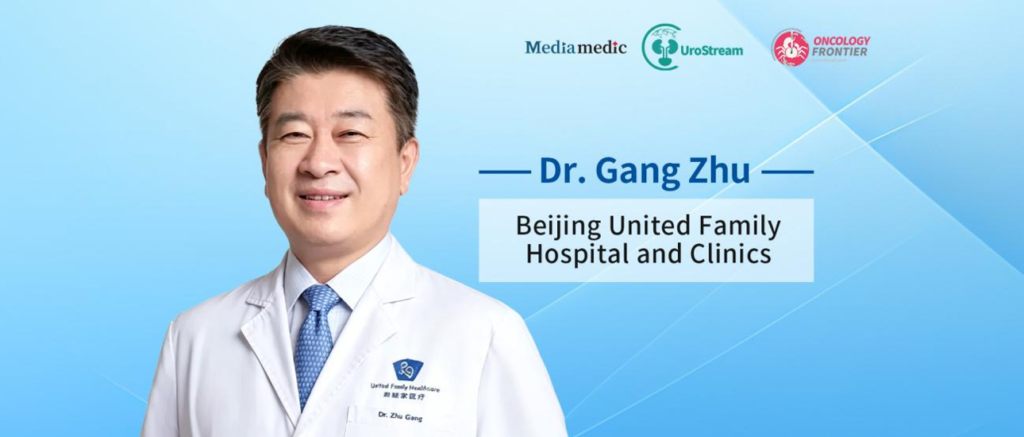
Editor’s Note: The 2026 Annual Meeting of the Chinese Anti-Cancer Association (CACA) Urological Oncology Committee was held in Tianjin. The meeting brought together experts to discuss standardized diagnosis and treatment of urological cancers, multidisciplinary collaboration, and full-course cancer management. As diagnostic and therapeutic technologies continue to advance, how to truly integrate prevention, screening, diagnosis, treatment, and rehabilitation, while improving long-term patient outcomes through multidisciplinary collaboration, remains an important challenge in clinical practice. During the meeting, Oncology Frontier · UroStream invited Professor Gang Zhu of Beijing United Family Hospital for an interview. He shared his perspectives on the gaps in full-course management of urological cancers, the collaborative model of comprehensive cancer centers, and his vision for the development of the field.Strengthening the “Two Ends”: Advancing Prevention, Screening, and Integrated Rehabilitation
The Chinese Anti-Cancer Association advocates full-course cancer management encompassing “prevention–screening–diagnosis–treatment–rehabilitation.” In the field of urological cancers, which areas do you believe remain relatively underdeveloped and require the greatest strengthening?
Professor Gang Zhu: From the perspective of the current development of full-course cancer management in China, substantial progress has been made in diagnosis and treatment, with some areas reaching internationally advanced levels. In certain surgical fields, Chinese clinicians are even developing innovative approaches based on accumulated domestic experience. In comparison, the areas that most urgently need to be strengthened are concentrated at the two ends of the full-care continuum: prevention and screening at the front end, and rehabilitation at the back end. Only by truly connecting these components with diagnosis and treatment can the concept of integrated oncology be effectively translated into clinical practice.
At the prevention level, the risk of developing many cancers can be reduced by controlling modifiable risk factors, making public education particularly important. Smoking, for example, is not only clearly associated with lung cancer but is also an important risk factor for urothelial cancers such as bladder cancer. We need to continuously raise public awareness of modifiable risk factors, promote smoking cessation, and advocate healthier lifestyles so that preventable cancers can be controlled as early as possible.
In cancer screening and early diagnosis, early detection, early diagnosis, and early treatment remain core strategies for improving cure rates and prolonging long-term survival. Through evidence-based health education, we should encourage the public to develop an active approach to health management. At the same time, appropriate health examinations and standardized risk assessments should be conducted under professional medical guidance, taking into account individual factors such as age and family history of cancer. Taking prostate cancer as an example, serum prostate-specific antigen (PSA) testing can provide an important reference for early screening. However, subsequent assessment of the nature of a lesion should still be based on individual risk stratification and conducted according to standardized diagnostic and treatment pathways.
Rehabilitation also deserves greater attention. In the past, after completing surgery, patients often returned home soon afterward, with limited systematic support and guidance during the postoperative recovery period. In reality, rehabilitation medicine, psychological support, nutritional management, traditional Chinese medicine, and nursing can all play an important role in this process, providing patients with comprehensive support. Such multidisciplinary collaboration can not only accelerate physical recovery after treatment but also help patients return to normal life earlier and effectively improve functional problems such as urinary dysfunction.
Therefore, in the overall design of hospital specialties and oncology care pathways, rehabilitation services should be moved forward from an additional service after treatment to an integral component of full-course cancer management. This means that hospital administrators and department leaders need to move beyond traditional models of care and systematically integrate rehabilitation, psychological support, nutritional intervention, traditional Chinese medicine, and professional nursing into a unified clinical pathway. In this way, patients can continue to receive coordinated and accessible support after completing diagnosis and planned treatment, truly achieving continuous health management from the initial consultation through rehabilitation and from the hospital into the community.
Implementing the Full Care Continuum: Organizing Multidisciplinary Collaboration Through Working Groups
You mentioned that Beijing United Family Hospital is exploring full-course patient management, while multidisciplinary care for urological cancers has already established a foundation. Could you share how a comprehensive cancer center organizes multidisciplinary collaboration and integrates care throughout the patient journey?
Professor Gang Zhu: In February this year, the Beijing United Family Comprehensive Cancer Center was officially established. During the center’s planning and development, we were deeply inspired by the Chinese Anti-Cancer Association’s philosophy that “integration is the key to winning the battle against cancer,” and we incorporated this concept throughout the center’s overall design. From the very beginning, we therefore established a full-course cancer management system based on the continuum of “prevention–screening–diagnosis–treatment–rehabilitation.” Our focus extends beyond cancer diagnosis and treatment to encompass prevention and early screening before treatment, as well as rehabilitation support and long-term care after treatment, with the goal of providing patients with continuous, comprehensive, and high-quality medical services.
In terms of organization, we have established multiple oncology working groups covering major disease areas, including urological cancers, gastrointestinal cancers, and thyroid cancers. At the same time, we have established an integrated oncology rehabilitation working group and a palliative care working group. The core value of this working-group model lies in bringing professionals from different disciplines together around patients’ actual needs and ensuring that every stage of diagnosis, treatment, and care is supported by an appropriate team. Through multidisciplinary collaboration, previously fragmented medical services can be effectively connected to form a continuous and comprehensive pathway of diagnosis, treatment, and care, thereby improving both service efficiency and the patient experience.
Integrated rehabilitation cannot be undertaken independently by a single department; it requires coordinated efforts across multiple disciplines. We hope that rehabilitation medicine, psychology, traditional Chinese medicine, nutrition, and nursing teams can all participate and provide targeted support according to patients’ needs at different stages of recovery, thereby translating the concept of rehabilitation into practical clinical care. For patients with urological cancers, this multidisciplinary collaboration can support not only physical recovery after surgery but also functional restoration, psychological adjustment, nutritional support, and long-term improvement in quality of life, ensuring that patients receive comprehensive and continuous care.
When some patients enter the terminal stage of their disease, palliative care is likewise an indispensable component of full-course management. It neither accelerates the dying process nor deliberately prolongs the end of life. Instead, through systematic symptom management, attentive psychological support, and ongoing family support, it creates a dignified and peaceful environment of care that addresses both the physical and emotional needs of patients. During this stage, medical teams work together with patients and their families to focus on alleviating suffering and preserving quality of life, while providing emotional companionship and support to help patients and their loved ones experience warmth and compassion during the final stage of life.
The incorporation of integrated rehabilitation and palliative care into the comprehensive cancer center represents a meaningful shift in the medical model—from focusing solely on disease treatment toward holistic, full-course patient care. It also reflects modern medicine’s respect for and commitment to patients throughout the entire course of life.
A Shared Goal: Helping Patients Live Longer and Live Better
What are your greatest expectations for this annual meeting? And what message would you like to share with the conference?
Professor Gang Zhu: I hope that colleagues in urology, medical oncology, radiation oncology, and all other cancer-related disciplines will further strengthen collaboration and work together to address patients’ simplest yet most important wishes: to live longer and live better.
“Living longer” requires us to continuously explore more effective diagnostic and treatment approaches and achieve better tumor control. “Living better,” meanwhile, requires us to prioritize organ and functional preservation throughout treatment and continuously improve patients’ quality of life through integrated rehabilitation, enabling them to return to everyday life and enjoy it to the fullest. Under the leadership of the Chinese Anti-Cancer Association, the CACA Urological Oncology Committee will continue to actively promote collaboration across disciplines and bring together multidisciplinary expertise to work toward this shared goal.
Conclusion
From the perspective of full-course cancer management, Professor Gang Zhu emphasized that while diagnosis and treatment of urological cancers have continued to advance, prevention, screening, and rehabilitation still require further strengthening. Using multidisciplinary working groups as a platform to integrate disease-specific specialties with rehabilitation, psychological care, nutrition, traditional Chinese medicine, nursing, and palliative care represents an important practical approach to implementing the concept of integrated oncology.
Ultimately, the goal is not only to improve cancer control but also to strengthen organ and functional preservation and rehabilitation support—helping patients live longer and live better.
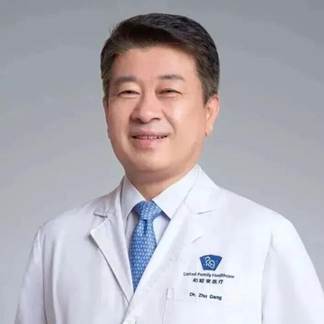
Professor Gang Zhu