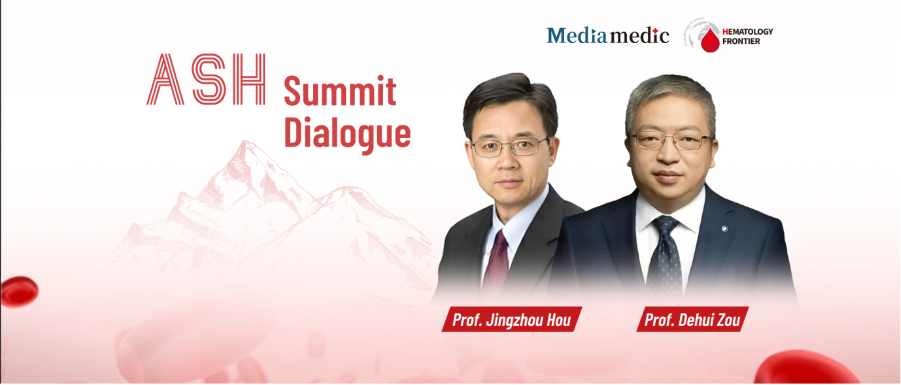
Lymphoma diagnosis and treatment are entering a phase of accelerated evolution, with breakthrough therapies and innovative research continuously reshaping clinical practice. From December 6 to 9, 2025, the 67th Annual Meeting of the American Society of Hematology (ASH) was grandly held in Orlando. At this year’s congress, multidimensional and in-depth innovations emerged across both aggressive lymphoma precision therapy and long-term disease management for indolent lymphomas. To further promote international academic exchange and collaboration, Hematology Frontier invited two leading lymphoma experts on site—Professor Jing-Zhou Hou, President of the Chinese American Hematologist and Oncologist Network (CAHON) and Professor at the University of Pittsburgh Medical Center, and Professor Dehui Zou from the Institute of Hematology & Blood Diseases Hospital, Chinese Academy of Medical Sciences—for an in-depth dialogue on landmark advances in lymphoma and shared clinical experiences between China and the United States, aiming to provide cutting-edge academic insights and practical references for clinicians and researchers in China.
Hematology Frontier
In your oral presentation at ASH, a novel CD19×CD3 bispecific antibody demonstrated a high complete response rate and durable minimal residual disease (MRD) negativity in patients with relapsed/refractory follicular lymphoma (FL), including those previously treated with CD19 CAR-T or CD20 bispecific antibodies. What implications do these findings have for future FL treatment strategies and clinical practice?
Professor Jing-Zhou Hou: Thank you, Professor Zou. I’m very pleased to discuss the latest advances in lymphoma with you. This was a Phase I clinical study of the CD19×CD3 bispecific T-cell engager (TCE) surovatamig, originally developed by a small biotech company. Four years ago, after promising early results, the program was acquired by AstraZeneca and expanded into a global multicenter study involving Asia (including China and Japan), Europe, North America, and Australia.
At this ASH meeting, I presented the 3-year follow-up data in relapsed/refractory follicular lymphoma, updating results first reported at last year’s ASH. Bispecific antibodies represent a novel therapeutic modality that complements CAR-T therapy and are particularly suitable for indolent lymphomas such as FL and marginal zone lymphoma. Given the relatively slow disease course of indolent lymphomas, the necessity of CAR-T remains under evaluation, whereas CAR-T is clearly favored for high-risk aggressive lymphomas such as DLBCL.
The data showed an overall response rate of 100% and a complete response rate of 85% in relapsed/refractory FL. Notably, all eight patients previously treated with CAR-T or bispecific antibodies achieved CR without relapse. Eleven patients completed 24 cycles (two years) of treatment and remain in CR after discontinuation.
Overall, early clinical data suggest high response rates, durable MRD negativity, and excellent safety. Although follow-up is approximately three years, longer observation is required to confirm durability. These findings support CD19/CD3 as a highly promising target in indolent lymphoma, and similar agents from other companies are anticipated to become globally available therapies benefiting more patients.
Professor Dehui Zou:
Thank you, Professor Hou. I am familiar with this agent and have participated as a principal investigator in its frontline FL trial. In the dose-expansion phase, I enrolled three patients, all of whom remain on treatment with sustained complete remission. As you mentioned, the safety profile is excellent, with very low toxicity. I believe upcoming Phase III trials will further define its role in lymphoma treatment and optimize therapeutic pathways.
Hematology Frontier
At ASH, your team also presented multiple studies on CAR-T therapy in relapsed/refractory large B-cell lymphoma (LBCL), including efficacy prediction, combination with high-dose chemotherapy/autologous stem cell transplant (ASCT), and bridging strategies. Could you provide an overview of these findings and their clinical value?
Professor Dehui Zou:[Saut de retour à la ligne] My research focuses primarily on aggressive lymphomas, particularly LBCL, as well as autologous transplantation and cellular therapies. At this ASH meeting, we presented several studies addressing key challenges in CAR-T therapy, including predictive modeling and therapeutic optimization.
First, regarding efficacy prediction, we conducted a metabolomics-based study to predict CAR-T treatment response prior to therapy. Previously, our group reported the use of PET-CT combined with circulating tumor DNA (ctDNA) dynamics at days 14 and 28 post-CAR-T to predict long-term outcomes. However, these are post-treatment assessments. The current study aimed to enable pre-treatment prediction. Peripheral blood samples collected before CAR-T infusion underwent untargeted metabolomic analysis, and machine learning was used to build predictive models.
Preliminary results demonstrated good predictive performance in both training and validation cohorts. We plan to expand the sample size, validate prospectively, and simplify the metabolic markers to improve clinical feasibility. This model may help clinicians identify patients less likely to benefit from CAR-T monotherapy and consider early intervention or combination strategies.
In addition, we explored combination strategies to optimize CAR-T efficacy. Based on prior experience, ASCT combined with CAR-T may improve outcomes in selected high-risk patients. While earlier work involved investigational CAR-T products, this study analyzed two commercially approved CAR-T products in China (approved in 2021) and confirmed the benefit of ASCT plus CAR-T in a real-world cohort.
We also developed a CD20×CD3 bispecific antibody–based bridging and salvage strategy, followed by CD19 CAR-T or ASCT plus CAR-T. This approach significantly reduced tumor burden before definitive therapy, enabling patients to enter CAR-T or transplant in better condition, reducing toxicity while enhancing efficacy. In this cohort, the rate of partial response or better reached 100%, with CR exceeding 80%. At a median follow-up of 12 months, all patients remained in remission.
These findings are preliminary and require validation in larger cohorts, but they highlight promising avenues to further improve outcomes in aggressive lymphoma.
Professor Jing-Zhou Hou:
DLBCL, especially high-risk relapsed/refractory disease, remains a major clinical challenge. Although three commercial CD19 CAR-T products are approved in the U.S., complete response rates remain around 50%. Thus, optimizing CAR-T strategies is critical.
Predicting CAR-T efficacy remains difficult. Professor Zou’s work shows encouraging early signals, and further validation may allow early identification of patients unlikely to benefit from CAR-T alone, enabling intensified or alternative strategies.
Sequential combination strategies are also promising, particularly involving T-cell engagers. Importantly, target selection matters—using bispecific antibodies targeting the same antigen as CAR-T may compromise CAR-T efficacy due to antigen loss or receptor competition. For high-risk DLBCL, alternative target combinations should be considered.
Overall, Professor Zou’s studies address key clinical challenges and demonstrate the growing international impact of Chinese research, as reflected by the increasing number of oral presentations at ASH and ASCO.
Hematology Frontier
As an expert in indolent lymphomas such as FL and CLL/SLL, could you share U.S. experience regarding diagnostic strategies, treatment selection, and disease management? What practices may be informative for Chinese clinicians?
Professor Jing-Zhou Hou: My work focuses on lymphoma and chronic lymphocytic leukemia (CLL). In the U.S., first-line treatment for DLBCL remains R-CHOP, while CAR-T has largely replaced transplantation for relapsed/refractory disease.
For follicular lymphoma, treatment options remain heterogeneous. Traditional regimens such as R-CHOP or bendamustine-rituximab often produce partial responses with limited durability. Newer regimens, including lenalidomide-rituximab, improve outcomes but are not curative.
CAR-T and bispecific antibodies have shown high response rates in indolent lymphomas, but relapse still occurs over time. Unlike DLBCL, where relapse risk drops markedly after one year of remission, indolent lymphomas may relapse even after prolonged CR. However, functional cure—defined as 10 years without treatment—may be achievable for some patients. Bispecific antibodies offer off-the-shelf availability, lower toxicity, improved quality of life, and potential cost advantages. CAR-T and bispecifics are complementary, and their sequential or combined use warrants further study.
In CLL, treatment focuses on CD20 antibodies, BTK inhibitors, and BCL-2 inhibitors. Combination regimens improve MRD clearance and response rates but increase early toxicity. Finite-duration therapy reduces long-term toxicity and cost, though relapse may still occur. CAR-T and bispecifics are under investigation, with the goal of achieving functional cure.
Hematology Frontier
What successful experiences from your center in optimizing efficacy, managing toxicity, and designing combination strategies for aggressive lymphomas could be shared with international peers?
Professor Dehui Zou: For aggressive lymphomas such as DLBCL, first-line cure rates with R-CHOP remain around 50–60%. Advances in molecular diagnostics and early response assessment now allow more precise risk stratification.
At our center, we focus on young patients with intermediate- to high-risk disease. Evidence suggests that intensified immunochemotherapy such as R-EPOCH improves outcomes in selected patients. Our prospective cohort applies risk-adapted intensification and integrates PET-CT and ctDNA after cycles 2 and 4 to identify primary refractory patients early and introduce bispecific antibodies or CAR-T in a “1.5-line” setting. Preliminary results are encouraging.
Hematology Frontier
What are the major differences between China and the U.S. in lymphoma research and treatment, and how can both countries leverage each other’s strengths to drive innovation?
Professor Jing-Zhou Hou: Over the past decade, the gap between China and the U.S. has narrowed significantly. In some areas—such as bispecific antibodies and dual-target CAR-T—China has demonstrated leadership. The U.S. has strengths in trial design, quality control, and late-phase clinical development, while China excels in early-phase innovation and rapid translation. The key challenge is strengthening large-scale Phase II/III trials to achieve global recognition.
Professor Dehui Zou: China’s biotech innovation has accelerated rapidly with strong policy support, particularly in bispecific antibodies, ADCs, and CAR-T therapy. However, gaps remain in mechanistic research and large-scale trial standardization. Through international collaboration and shared expertise, these challenges can be overcome, strengthening China’s global competitiveness.
Expert Profiles

Professor Jing-Zhou Hou President, Chinese American Hematologist and Oncologist Network (CAHON) University of Pittsburgh Medical Center (UPMC) Hillman Cancer Center

Professor Dehui Zou Institute of Hematology & Blood Diseases Hospital Chinese Academy of Medical Sciences