Cellular immunotherapy has achieved revolutionary breakthroughs in hematologic malignancies and brought new survival opportunities to patients with relapsed or refractory disease. Autologous CAR-T cells have shown remarkable efficacy in lymphoma, acute lymphoblastic leukemia and other conditions, but challenges remain, including lengthy manufacturing time, high cost, and limited efficacy in sanctuary sites such as the central nervous system (CNS). At the 67th American Society of Hematology (ASH) Annual Meeting, a number of landmark studies in cellular immunotherapy drew wide attention. Among them, two representative works—one on memory-like NK cells in multiple myeloma (MM), and another on CAR-engineered invariant natural killer T (iNKT) cells for leptomeningeal leukemia—offer fresh perspectives for overcoming current clinical bottlenecks.
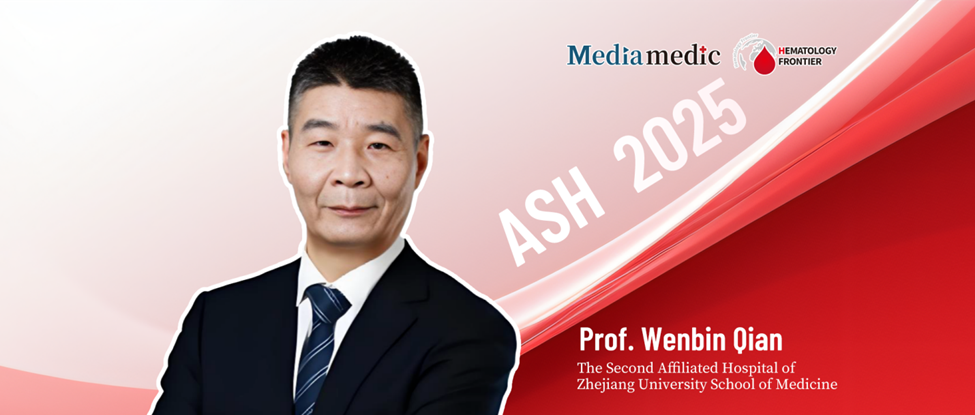
Oncology Frontier – Hematology Frontier invited Professor Wenbin Qian from the Second Affiliated Hospital, Zhejiang University School of Medicine, to provide in-depth analysis and discuss how these advances may inform future clinical translation.
Study 261: Deep Profiling of BHV-1100–Armored Memory-Like NK Cells Infused Post-ASCT in MRD-Positive Multiple Myeloma
Author: Grace Birch, Dana-Farber Cancer Institute, Boston, MA, USA
Study summary
Achieving minimal residual disease (MRD)–negative complete response is a key predictor of favorable prognosis in multiple myeloma. Autologous stem cell transplantation (ASCT) is a widely accepted consolidation strategy. BHV-1100 is an antibody-recruiting molecule (ARM) that engages CD38 on myeloma cells and CD16 on NK cells via IgG, thereby promoting antibody-dependent cellular cytotoxicity (ADCC) without triggering NK cell fratricide.
Cytokine-induced memory-like (CIML) NK cells have shown therapeutic potential in myeloid malignancies, but their role in MM has not been fully explored.
This prospective, open-label, single-arm phase I study (NCT04634435) evaluated the safety and immunologic effects of infusing autologous CIML NK cells pre-coated with BHV-1100 in MRD-positive MM patients after ASCT, either in first or second remission. NK cells were collected by non-mobilized leukapheresis and activated overnight with IL-12/15/18, then coated with BHV-1100 and infused at least 24 hours after melphalan conditioning and before stem cell reinfusion.
Seven patients (six men, one woman; median age 57 years) were enrolled, all receiving ASCT in first remission. Two patients received Dara-RVD (daratumumab + lenalidomide + bortezomib + dexamethasone) as induction, and five received RVD. Building on earlier data showing robust expansion and cytotoxicity of infused NK cells, this study added deep immune profiling using 10x single-cell RNA sequencing on peripheral blood, Olink serum proteomics, and multiparameter immunofluorescence imaging (MIFI) plus flow cytometry on bone marrow samples.
For the first five patients, CIML NK cell manufacturing was successful in all cases, with doses of 5–10×10⁶ cells/kg. Two patients previously treated with daratumumab did not reach the target NK dose (1.63×10⁶ and 4.3×10⁶ cells/kg, respectively). Before ASCT, five patients were in MRD-positive stringent complete response (sCR) and two in very good partial response (VGPR). All patients improved their depth of response; two achieved MRD-negative complete response 30 days after ASCT. At last follow-up, one patient died from sepsis while in MRD-negative sCR; the remaining six were alive.
In the first five patients, peripheral blood NK cells expanded 3.5-fold by day +14 post-transplant, rising from 12% to 42.32% of lymphocytes, with expansion persisting to day +60 (15%). In the two daratumumab-pretreated patients, NK cells increased from <2% of lymphocytes at screening to 6%. NK cells upregulated genes associated with activation and cytotoxicity, including granzyme B (GZMB), perforin (PRF1), granulysin (GNLY) and RANTES (patients 1–4). Compared with baseline, day +60 NK cells showed significant upregulation of genes involved in immune activation, leukocyte activation and cytokine production (P=0.000001), indicating functional enhancement of the NK compartment. On day +28, compared with day +60, NK cells showed enrichment of interferon-α and interferon-γ signaling pathways (P=0.001 and 0.0042, respectively), with increased expression of interferon-stimulated genes such as IFITM3, CST3 and XCL2, suggesting early interferon-driven activation after infusion.
MIFI of bone marrow biopsies showed that GrzB⁺CD56⁺CD3⁻ cells (NK cells) rose significantly from 4.8% to 15% of CD56⁺ cells by day +28 (P=0.03). Total CD3⁺ cells decreased from 6.7% to 3.67% (P=0.0173), but GrzB⁺CD3⁺ T cells increased from 15.54% to 38.45% (P=0.0173), indicating activation of both NK and T cells in the marrow.
Bone marrow flow cytometry showed that BAFF⁺ B cells (45.58% vs 3.1%, P=0.004), CD6⁺ B cells (65% vs 31%, P=0.033) and CD166⁺ B cells (71.62% vs 40.2%, P=0.03) all decreased markedly at day +28 versus screening. T-cell subsets showed non-significant trends, including effector-memory CD8⁺ T cells (6% to 16%) and effector-memory conventional T cells (18.5% to 28.5%).
Serum protein profiling revealed elevated FLT3 ligand (FLT3LG, 2832.59 pg/mL), hepatocyte growth factor (HGF, 1352.52 pg/mL) and IL-18 (732.1 pg/mL) from day +7 to day +28, aligning with peak NK expansion and neutrophil engraftment. At day +28, VEGFA (872.1 pg/mL), CXCL11 (1058.9 pg/mL) and TNFSF12 (710.2 pg/mL) increased and remained elevated through day +60, indicating ongoing immune activation without cytokine release syndrome (CRS). IL-6 and IFN-γ did not rise; IL-10 showed only a brief increase at day +14.
Overall, this first-in-human, deeply profiled study of BHV-1100–coated autologous CIML NK cells in MM patients undergoing ASCT demonstrates robust NK expansion, bone marrow homing and cytotoxic function with a favorable cytokine profile. These findings support ARM-enhanced CIML NK cell infusion as a potentially valuable “immune bridge” strategy after ASCT in MM and warrant further investigation.
Commentary by Professor Wenbin Qian
Autologous CAR-T has dramatically improved outcomes in lymphoma, ALL and myeloma, especially for relapsed/refractory disease. However, intrinsic limitations—autologous manufacturing, long vein-to-vein time, high cost, and variable T-cell quality—restrict broader use. Non–CAR-T cellular immunotherapies are therefore receiving increasing attention as complementary or alternative strategies.
NK cells are a key component of innate immune surveillance. Their excellent safety profile makes them attractive candidates for tumor immunotherapy, yet conventional NK cells are typically short-lived in vivo. The discovery of cytokine-induced memory-like NK cells (CIML NK) with extended persistence, stronger cytotoxicity and reduced exhaustion is a major advance. Internationally, many NK-cell–based clinical trials are ongoing, but clinical data specifically on CIML NK cells remain scarce.
This is a high-quality, highly informative early translational study. It successfully applies a CIML NK strategy to a real-world MM setting post-ASCT and, through comprehensive immune monitoring, delineates a distinctive biological signature: powerful, durable and relatively safe NK activation with marrow homing. Despite the inherent limitations of a phase I trial—small sample size, absence of a control arm—the data strongly support further development.
Importantly, the concept of “post-ASCT immune consolidation” using memory-like NK cells is not only promising for MM but may serve as a model for other hematologic malignancies: using engineered innate cells as a bridge to deeper remission and longer survival after standard intensive therapy.
Study 262: VLA-4–Dependent Endothelial Adhesion Underlies Superior CAR-iNKT Efficacy Against Leptomeningeal Leukemia
Author: Ilia Leontari, Centre for Haematology, Department of Immunology and Inflammation, Imperial College London, UK
Study summary
Invariant natural killer T (iNKT) cells are a rare innate-like lymphocyte population linking innate and adaptive immunity. Their invariant T-cell receptor recognizes lipid antigens presented by the non-polymorphic MHC class I–like molecule CD1d. iNKT cells have been shown to protect against acute graft-versus-host disease (aGVHD) and are considered a promising “off-the-shelf” CAR platform.
Preclinical evidence suggests that CAR-engineered iNKT (CAR-iNKT) cells may outperform CAR-T cells in treating hematologic malignancies such as B-ALL. Prior transcriptomic analyses by the authors showed higher expression of integrin α4β1 (VLA-4) subunits ITGA4 (α4) and ITGB1 (β1) in iNKT cells than in T cells from the same donor. VLA-4 binds VCAM-1 on endothelial cells and plays a critical role in immune cell adhesion to the vascular endothelium, an essential prerequisite for traversing the blood–brain barrier (BBB), migrating across the choroid plexus epithelium and entering the CNS via the cerebrospinal fluid.
Given the high incidence of leptomeningeal disease in B-ALL, the authors hypothesized that CAR-iNKT cells, owing to their enhanced VLA-4–mediated adhesion, would home more efficiently to leptomeningeal spaces than CAR-T cells and thereby better control meningeal leukemia.
They first compared VLA-4 expression in resting and CD3/CD28-activated T cells and iNKT cells from healthy donors. In resting cells, 86.99% of iNKT cells coexpressed both VLA-4 subunits at high levels, versus only 29.85% of T cells (n=10, P<0.0001). Flow cytometry confirmed that iNKT cells bound soluble VCAM-1 more strongly than T cells (n=5, P<0.01), indicating higher levels of conformationally active VLA-4.
Next, using a CD19–CD133 bispecific CAR directed against B-ALL and a BCMA CAR targeting MM, they compared VLA-4 expression and function in CAR-iNKT versus CAR-T cells. In co-culture assays, CAR-iNKT cells exhibited significantly higher cytotoxicity against CD19/CD133⁺ SEM cells and BCMA⁺ MM1.S cells than donor-matched CAR-T cells, whereas untransduced T and iNKT cells showed only minimal non-specific killing. While β1 expression was comparable between CAR-T and CAR-iNKT cells, only about 30% of CAR-T cells expressed α4 at levels similar to CAR-iNKT cells (n=5, P<0.01).
To define the functional role of VLA-4, the investigators evaluated adhesion under static and shear stress conditions to immobilized soluble VCAM-1, VCAM-1–expressing HUVECs and BBB-derived hCMEC/D3 endothelial cells, in the presence of the α4-blocking antibody natalizumab or its IgG4 isotype control. Both CAR-modified and unmodified iNKT cells adhered significantly better than their T-cell counterparts under static conditions. Under flow, CAR-iNKT cells showed the strongest overall adhesion (n=5, P<0.001), followed by unmodified iNKT cells (n=5, P<0.01), and these differences persisted even at the highest shear rates tested. Natalizumab substantially reduced adhesion but inhibited iNKT cells to a lesser extent, consistent with their higher expression of conformationally active VLA-4. These findings demonstrate that iNKT cells possess an intrinsically stronger, VLA-4–dependent endothelial adhesion capacity than T cells.
In vivo, using an NSG xenograft model with luciferase-expressing SEM B-ALL cells, treatment was initiated on day 17, when leptomeningeal leukemia was clearly detectable. Compared with an equal dose of CAR-T cells, 1×10⁷ CD19/CD133 CAR-iNKT cells more rapidly and profoundly reduced leukemia burden in bone marrow and spleen and, notably, almost completely cleared leptomeningeal disease within 24 hours, with even more pronounced effects at 48 hours.
In summary, CAR-iNKT cells are intrinsically superior to CAR-T cells for treating high-burden leptomeningeal leukemia in preclinical models. This advantage is at least partly due to their enhanced VLA-4–mediated adhesion to BBB endothelium and greater retention within leptomeningeal spaces. These findings have broader implications for cellular immunotherapy of CNS-involving hematologic malignancies and solid tumors.
Commentary by Professor Wenbin Qian
Beyond CAR-T, universal cell therapies such as CAR-NK are rapidly emerging. Our own clinical studies of CD19-CAR-NK cells in B-cell lymphoma and systemic lupus erythematosus have greatly strengthened our confidence in this direction.
This ASH abstract (No. 262) starts from a fundamental biological difference to address a very practical clinical problem: the limited efficacy of CAR-T therapy in CNS leukemia. Its core conceptual advance is to show, mechanistically and experimentally, that iNKT cells intrinsically express high levels of functional VLA-4 integrin, giving them a natural advantage in crossing the BBB. This directly explains why CAR-iNKT cells may outperform CAR-T cells in CNS disease.
Moreover, iNKT cells combine two highly attractive properties: “off-the-shelf” potential and superior homing/infiltration. Their invariant TCR and low GVHD risk make them excellent seed cells for universal products, addressing key limitations of autologous CAR-T—lengthy manufacture, high cost, and poor cell quality in some patients. At the same time, this study clearly demonstrates that CAR-iNKT cells have stronger endothelial adhesion and superior leptomeningeal clearance in both in vitro and in vivo models. This opens a new therapeutic avenue not only for leptomeningeal leukemia but also for leptomeningeal metastases from solid tumors, such as breast and lung cancer.
Taken together, these two important studies greatly expand the imagination space of the field and enrich our future “cellular therapy toolbox.” In the long run, clinicians may be able to choose the most appropriate “living drug” for each patient, based on tumor type, anatomical site, prior treatments and overall condition—whether that is CAR-T, CIML NK, CAR-iNKT or other engineered immune cells. The next critical step will be to move these approaches into larger clinical trials and address key challenges in manufacturing and industrialization so their true clinical value can be realized.
From the rich and diverse cellular immunotherapy data presented at this year’s ASH, it is clear that we are at an exciting inflection point: cellular immunotherapy is evolving from “a single revolutionary treatment” into “a diversified therapeutic platform.”
Expert Profile

Professor Wenbin Qian
Second Affiliated Hospital, Zhejiang University School of Medicine
Professor Qian is Chief Physician and doctoral supervisor, Head of the Department of Hematology and Director of the Biotherapy Center at the Second Affiliated Hospital of Zhejiang University School of Medicine. He serves as Chief Scientist of a National Key Project under the Science and Technology Innovation 2030 program.
He is a member of the Hematology Branch of the Chinese Medical Association, a standing member of the CSCO Lymphoma Expert Committee, a member of the Hematology Physicians Branch of the Chinese Medical Doctor Association, and a standing member of multiple committees under the Chinese Anti-Cancer Association, including the Hematologic Malignancies and Lymphoma Committees. He is also Vice Chair of the Lymphoma Committee of the China Association of Gerontology and Geriatrics, and Chair of the Hematology Branch of the Zhejiang Medical Association.
As first or corresponding author, he has published more than 90 papers in high-impact journals including Nature Cancer, Cell Discovery, eClinicalMedicine, Clinical Cancer Research, Leukemia, Haematologica, Blood Cancer Journal, Cancer Communications, Journal of Hematology & Oncology, Signal Transduction and Targeted Therapy, Cellular & Molecular Immunology, Journal for ImmunoTherapy of Cancer, and The Lancet Haematology.
He co-edited the expert consensus “Clinical Management Guidelines for CAR-T–Related Toxicities in NHL” and “Multidisciplinary Management Expert Consensus for CAR-T Therapy in Lymphoma” (Tsinghua University Press, 2021) as co-chief editor, and served as deputy editor-in-chief of the monographs CAR-T Cell Immunotherapy (People’s Medical Publishing House, 2021) and Case-Based Interpretation of Tumor Cell Therapy (Shanghai Scientific and Technical Publishers, 2024).
Professor Qian currently leads a national “Science and Technology Innovation 2030” major project, a National Natural Science Foundation key project, an original exploration project, five general grants, and several Zhejiang provincial key R&D programs. He has been a principal investigator or key contributor on two National Science and Technology Progress Second Prizes and nearly ten provincial Science and Technology Progress First and Second Prizes.