Allogeneic hematopoietic stem cell transplantation (allo-HSCT) remains the only curative treatment for transfusion-dependent thalassemia (TDT). However, transplant outcomes are influenced by donor type, transplant-related complications, and patient-specific factors, leaving room for further optimization.
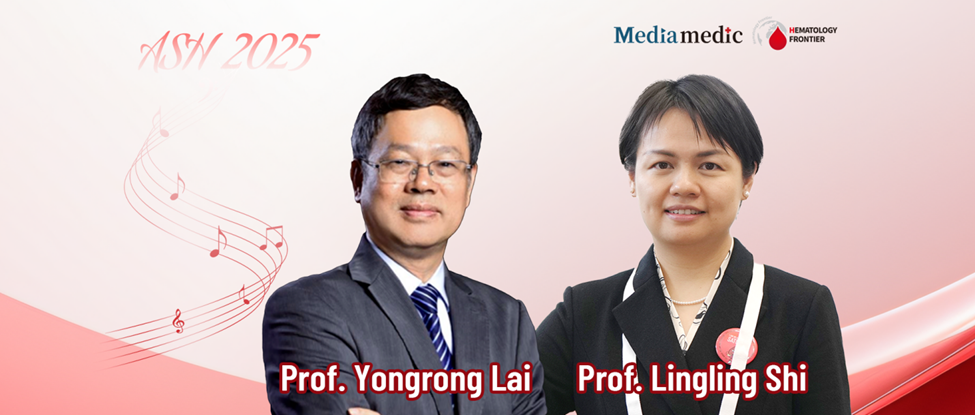
At the 2025 American Society of Hematology (ASH) Annual Meeting, a study led by Yongrong Lai from The First Affiliated Hospital of Guangxi Medical University was selected for an oral presentation, delivered onsite by Lingling Shi.
Based on a large cohort of more than 1,000 patients with TDT, the study systematically evaluated the efficacy of the GX-07-TM conditioning regimen in allo-HSCT, identified prognostic factors, and developed the world’s first post-transplant survival prediction model specifically for TDT patients. Hematology Frontier invited Professor Shi to provide an in-depth interpretation of this landmark study.
Hematology Frontier:
Your team presented a large-scale study at ASH evaluating the GX-07-TM conditioning regimen in transfusion-dependent thalassemia. Could you first introduce the core features of this regimen and summarize the key experience gained from performing more than 1,000 transplants at your center?
Professor Lingling Shi: It was a great honor to present our large-scale clinical study on the GX-07-TM conditioning regimen for severe thalassemia at ASH. The core characteristics of this regimen are intensive myeloablation combined with strong immunosuppression. Specifically, busulfan (Bu) is administered at 0.8–1.0 mg/kg for four consecutive days, followed by immunosuppressive therapy with fludarabine and cyclophosphamide. This strategy effectively reduces graft failure and significantly improves outcomes for patients with thalassemia.
At our center, we have performed over 1,000 hematopoietic stem cell transplants for thalassemia, and the GX-07-TM regimen has become the foundation of our transplant strategy. Through continuous evaluation of transplant outcomes and clinical experience, we have further optimized our approach.
Currently, a multicenter, prospective clinical trial, led by Professor Yongrong Lai and Professor Rongrong Liu, is underway to assess the role of anti-CD25 monoclonal antibodies in the prevention of acute graft-versus-host disease (aGVHD). Preliminary results are encouraging, although not yet published. These efforts reflect our long-term commitment to improving transplant outcomes for thalassemia.
Hematology Frontier:
Your data show excellent overall survival (OS) and thalassemia-free survival (TFS) with GX-07-TM, regardless of whether matched sibling donors or alternative donors were used. How do you view the role of alternative donors (MUD/HID) in TDT transplantation, and which donor factors do you prioritize in clinical practice?
Professor Lingling Shi: Historically, matched sibling donors were the preferred option for allo-HSCT in thalassemia. Alternative donors—such as matched unrelated donors (MUD) and haploidentical donors (HID)—were associated with higher rates of graft-versus-host disease (GVHD), which negatively affected outcomes.
With continued optimization of conditioning regimens and GVHD prophylaxis, particularly the introduction of anti-CD25 monoclonal antibodies in MUD and HID transplantation, we have achieved markedly improved GVHD control. Since 2020, outcomes with haploidentical donors at our center have become comparable to those with matched sibling donors.
Therefore, in experienced transplant centers, alternative donors—including HID and MUD—are reasonable options when matched sibling donors are unavailable. In donor selection, donor age and sex are critical, and we generally prioritize young male donors.
Hematology Frontier:
Your team developed the world’s first prediction model for post-transplant TFS in TDT patients, identifying age, pneumonia, aGVHD, and cord blood transplantation as key risk factors. How might this model assist frontline clinicians in risk stratification, treatment decisions, and precision follow-up?
Professor Lingling Shi: Because our model incorporates transplant-related outcome variables, it cannot be used solely for baseline risk stratification before transplantation. Its primary value lies in integrating dynamic clinical information during and after transplantation to provide a comprehensive prognostic assessment.
This allows for early identification and timely intervention when complications such as pneumonia or GVHD occur, thereby reducing the risk of disease deterioration. Overall, the model is most applicable to risk assessment and clinical decision-making during the peri- and post-transplant periods, rather than pre-transplant prediction alone.
Hematology Frontier:
Survival outcomes have improved significantly since 2020, likely reflecting advances in transplant management, complication prevention, and supportive care. Which clinical improvements do you believe are most worthy of broader implementation, and what are the future research directions for the GX-07-TM regimen?
Professor Lingling Shi: As mentioned earlier, since 2020 we have optimized both conditioning regimens and GVHD prophylaxis for alternative donor transplantation, particularly by incorporating anti-CD25 monoclonal antibodies. These integrated improvements have led to substantial gains in transplant outcomes for thalassemia patients.
Previous studies have shown that patients older than 16 years experience inferior transplant outcomes. For this population, we have enhanced transfusion support and endothelial protection during conditioning and initiated early iron chelation therapy in patients with heavy iron overload, which has contributed to improved prognosis.
Optimization of conditioning strategies and GVHD prevention in older patients represents a clinically valuable approach that merits further investigation. Multicenter prospective studies addressing these issues are currently ongoing. In addition, post-transplant immune reconstitution remains an important area for future research.
Expert Profile

Yongrong Lai, MD, PhD
Professor | Doctoral Supervisor The First Affiliated Hospital of Guangxi Medical University
- Former Director, Department of Hematology
- Standing Committee Member, Chinese Society of Hematology (CSH)
- Standing Committee Member, Chinese Medical Doctor Association—Hematology Branch
- Chair, Guangxi Society of Hematology
- Principal Investigator of 5 National Natural Science Foundation of China grants and 1 Ministry of Education project
- Recipient of 6 Guangxi Science and Technology Progress Awards First Prize ×2 | Second Prize ×1 | Third Prize ×3
- Author of 100+ scientific publications