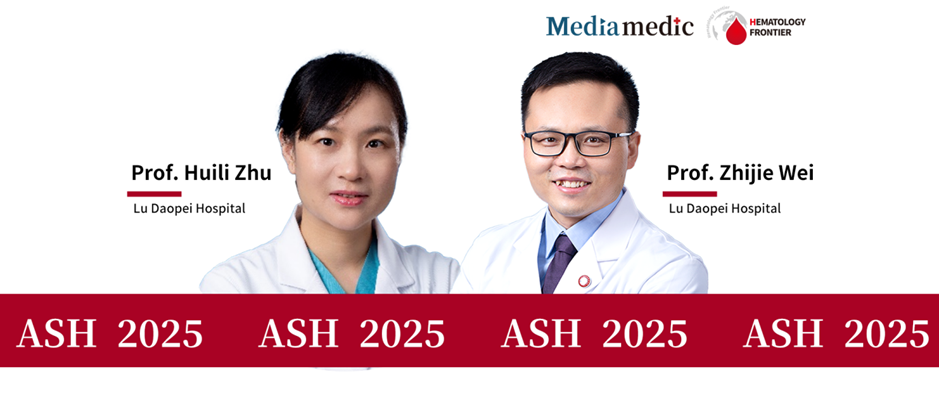
From December 6–9, 2025, the 67th American Society of Hematology (ASH) Annual Meeting was held in Orlando, bringing together hematology experts worldwide to share cutting-edge research and major clinical breakthroughs. This year, a study led by Dr. Zhijie Wei from Lu Daopei Hospital was selected for poster presentation, evaluating the efficacy and safety of letermovir prophylaxis in preventing cytomegalovirus (CMV) infection after haploidentical hematopoietic stem cell transplantation (Haplo-HSCT) in children with acute leukemia. We invited first author Dr. Huili Zhu to discuss the study.Title: Efficacy and safety analysis of letermovir for the prevention of CMV infection after haploidentical hematopoietic stem cell transplantation in children with acute leukemia
Chinese Title : 儿童急性白血病单倍体移植后应用来特莫韦预防CMV感染的疗效和安全性分析
Study Background
Allogeneic HSCT remains the only curative therapy for children with acute leukemia. CMV infection is common after allo-HSCT, with an incidence of 38.5%–91.2%. Children who are CMV-seropositive before transplant face an even higher risk of CMV reactivation or infection after transplant, significantly impacting survival. This study analyzed whether letermovir prophylaxis can reduce CMV infection after haploidentical HSCT in pediatric leukemia patients.
Study Methods
A total of 53 pediatric leukemia patients who underwent haploidentical HSCT at Hebei Yanda Lu Daopei Hospital between October 1, 2022 and October 31, 2024 were enrolled and randomly assigned to either the letermovir prophylaxis group or the control group. All patients received myeloablative conditioning. Donor graft sources included G-CSF–mobilized bone marrow plus peripheral blood stem cells in 50 cases, G-CSF–mobilized peripheral blood only in 3 cases, and umbilical cord blood infusion on day +3 in select cases. Based on whether letermovir was given prophylactically after transplant, patients were divided into a letermovir group and a control group. Median follow-up was 19.77 months (range 1.73–27.2 months).
Study Results
In the control group (30 patients), the median age was 7 years, including 19 cases of ALL and 11 cases of AML. In the letermovir group (23 patients), the median age was 9 years, with 9 cases of ALL, 12 cases of AML, and 2 cases of mixed phenotype acute leukemia. Letermovir was initiated at a median of day +1 (range +1 to +3) and administered for a median of 100 days (range 28–100 days).
The 100-day post-HSCT CMV infection rate in the letermovir group was lower than that of the control group (26.09% vs 43.33%, P=0.151). EBV infection rate was also lower (8.07% vs 13.04%, P=0.580). The incidence of aGVHD was significantly reduced in the letermovir group (39.13% vs 73.33%, P=0.009), and grade II–IV aGVHD was markedly decreased (8.70% vs 46.67%, P=0.003).
Two patients relapsed during follow-up; both achieved complete remission again after treatment. Two patients died from infections. The estimated three-year survival rate (equivalent to disease-free survival) was 80.0%, slightly higher than the control group (80.0% vs 76.67%, P=0.34). The estimated three-year relapse rate was lower (9.57% vs 22.03%, P=0.292).
Study Conclusion
For children with acute leukemia undergoing haploidentical HSCT, prophylactic letermovir effectively reduces CMV infection without increasing EBV infection risk or raising the incidence of grade II–IV aGVHD. It also appears to improve three-year survival, supporting its value in post-transplant management.
Expert Profile

Zhijie Wei, MD
Lu Daopei Hospital Director, HSCT Ward 7, Associate Chief Physician Member, Chinese Anti-Cancer Association Langfang Branch Committee Member, Hematopoietic Stem Cell Transplantation Professional Committee Sixteen years of transplant experience with more than 1,000 transplants completed; youngest transplant recipient 9 months old, oldest 70 years old.
First Author Profile

Huili Zhu, MD
Lu Daopei Hospital Associate Chief Physician, Department of Hematopoietic Stem Cell Transplantation
Dr. Zhu received her master’s degree in Pediatric Hematology from Shengjing Hospital of China Medical University in 2010. She has worked in pediatric hematology and pediatric HSCT for more than 13 years across Beijing Daopei Hospital, Hebei Yanda Lu Daopei Hospital, and Beijing Lu Daopei Hospital. She specializes in HSCT for pediatric acute leukemia (particularly refractory/relapsed cases), aplastic anemia including Fanconi anemia and dyskeratosis congenita, and myelodysplastic syndromes, and manages complex post-transplant complications. She has published articles in leading pediatric hematology journals and has presented posters at EBMT and EHA meetings.