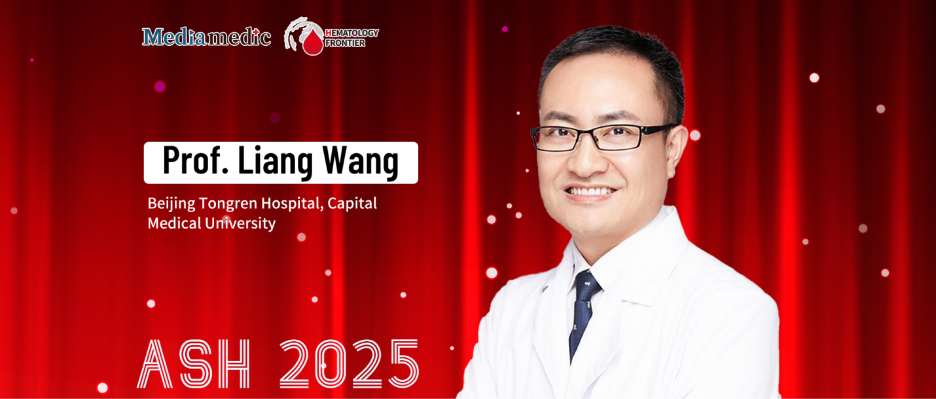
Despite the remarkable progress achieved with single-target CAR-T therapy in the treatment of relapsed/refractory large B-cell lymphoma (R/R LBCL), a proportion of patients still experience suboptimal responses or relapse after treatment. At the 67th Annual Meeting of the American Society of Hematology (ASH), a study led by Professor Wang Liang from Beijing Tongren Hospital, Capital Medical University, was selected for an oral presentation, reporting impressive results from a phase II clinical trial of dual-target CD19/CD22 CAR-T cell therapy in R/R LBCL. The findings attracted wide attention. Hematology Frontier invited Professor Wang Liang for an in-depth discussion of the innovative aspects of this study, offering valuable insights for future optimization of R/R LBCL treatment strategies and research directions. Hematology Frontier: Professor Wang, your team’s phase II study of CD19/CD22 dual-target CAR-T achieved a 100% ORR with a favorable safety profile. Could you explain the rationale for selecting a dual-target strategy (CD19 plus CD22)? What key clinical bottleneck does this approach aim to overcome in the treatment landscape of R/R LBCL?
Professor Wang Liang: For patients with relapsed/refractory large B-cell lymphoma, the efficacy of single-target CD19 CAR-T therapy remains limited. According to data from the ZUMA-1 study, only about one-third of patients achieve long-term durable remission, while the remaining two-thirds either fail to respond or relapse shortly after initial response. The mechanisms underlying treatment failure and relapse are complex, including antigen loss and insufficient in vivo persistence of CAR-T cells.
To address the critical issue of antigen escape, we adopted a dual-target strategy simultaneously targeting CD19 and CD22. CD22 was selected because it shows broad and stable expression across B-cell lymphoma lineages. In contrast, CD20 has been widely targeted by monoclonal antibodies such as rituximab and glofitamab, which may exert selective pressure on CD20 expression, potentially limiting its effectiveness as a subsequent CAR-T target. By co-targeting CD19 and CD22, we aimed to better cover tumor heterogeneity and improve the overall efficiency of CAR-T therapy, thereby achieving deeper and more durable responses.
Based on this rationale, we conducted a phase II clinical trial to evaluate the efficacy of CD19/CD22 dual-target CAR-T therapy in patients with R/R LBCL.
Hematology Frontier: Compared with currently used CD19 single-target CAR-T therapies, what unique advantages does the CAR2219 construct demonstrate in terms of structural design, T-cell expansion kinetics, and persistence? Are these innovations directly related to the high response rates observed in this study?
Professor Wang Liang: The CAR-T product used in this study employs a tandem CD19/CD22 dual-target structure, which allows CAR-T cells to be activated by binding to either antigen. If both antigens are recognized simultaneously, CAR-T expansion may be further enhanced. This feature has been validated in preclinical experiments.
Another distinctive aspect of our study design is the allowance for both bridging therapy and maintenance therapy. Bridging therapy was intended to control disease in patients with high tumor burden, enabling them to safely wait for CAR-T cell manufacturing and infusion. Maintenance therapy, on the other hand, was designed to prolong the in vivo persistence of CAR-T cells. We observed that PD-1 antibody–based maintenance therapy could promote the differentiation of CAR-T cells from an effector phenotype toward a central memory phenotype, thereby generating a “vaccine-like” immune memory effect. Upon tumor recurrence, these memory CAR-T cells can rapidly expand and eliminate minimal residual disease, ultimately improving long-term remission rates.
Hematology Frontier: In this study, the incidence of cytokine release syndrome (CRS) was 74%, with no grade ≥3 events, and most patients received subsequent maintenance therapy. In your view, how did safety management and post-CAR maintenance strategies contribute to improved outcomes? Does this suggest that LBCL treatment may be entering a new era of “CAR-T plus maintenance”?
Professor Wang Liang: Currently, several innovative CAR-T products are being developed in China, including single-target therapies (such as CD19, CD20, or CD22), dual-target approaches (such as CD19/CD20 or CD19/CD22), and even triple-target constructs (CD19/CD20/CD22). Overall, these next-generation CAR-T therapies are associated with fewer adverse events compared with earlier approved products, reflecting ongoing technological advances. The CD19/CD22 dual-target CAR-T used in our study also incorporates an EGFR tag. Previous studies have shown that, in the event of severe uncontrollable adverse reactions, CAR-T cells can be rapidly eliminated using EGFR-targeted antibodies, providing an additional safety safeguard.
As mentioned earlier, another key feature of this study is that nearly all patients received maintenance therapy. After CAR-T efficacy assessment on day 28, patients without clear disease progression routinely received PD-1 antibody monotherapy or PD-1–based combination regimens as maintenance. Accumulating evidence from both domestic and international studies suggests that PD-1–based maintenance therapy can significantly prolong the duration of CAR-T responses and enhance CAR-T cell persistence, while promoting differentiation toward a central memory phenotype. Although the definitive value of maintenance therapy still requires confirmation through prospective randomized trials, CAR-T combined with maintenance therapy is very likely to become an important future trend.
Although excellent short-term efficacy was achieved in this heavily pretreated R/R population, long-term follow-up showed a median progression-free survival of just over one year, indicating room for further improvement. Future efforts should focus on optimizing patient selection and moving CAR-T therapy earlier in the disease course. For example, in high-risk patients, CAR-T could be used to eradicate minimal residual disease after achieving remission with first-line therapy. For patients with IPI scores ≥3, double-expressor or double-hit lymphoma, or TP53 mutations, CAR-T could be introduced early if the response to the first two cycles of chemotherapy is suboptimal, with the goal of achieving deeper remission and maximizing long-term benefit.
Hematology Frontier: As the trial continues, what directions will future research focus on, such as enhancing CR durability, refining patient selection, combining with novel agents, or validating results in larger multicenter cohorts? How do you envision the future positioning of CAR2219 in the treatment of R/R LBCL?
Professor Wang Liang: Although the CD19/CD22 dual-target CAR-T product (CAR2219) demonstrated encouraging clinical efficacy in this study, particularly in terms of short-term responses, it should not be regarded as the ultimate solution for relapsed/refractory large B-cell lymphoma. Instead, it should be viewed as a critical component within a broader therapeutic continuum, requiring rational combination with other modalities.
At present, bispecific antibodies such as glofitamab have already been approved and are scheduled for inclusion in China’s national reimbursement list from January 1, 2026, which will substantially reduce the financial burden for patients receiving second-line or later therapies and improve accessibility. This creates an opportunity to further explore combination strategies involving CAR2219 and bispecific antibodies.
For patients with high tumor burden, bispecific antibodies could be used first for cytoreduction, followed by CAR2219 to eradicate residual disease. After completion of CAR-T therapy, bispecific antibodies could again be employed for consolidation and maintenance. Through such integrated strategies, our ultimate goal is to convert complete responses into durable complete responses. Only when CR is sustained for one to two years can long-term cure rates potentially exceed 90%. This combined treatment paradigm may represent an important future direction.
Of course, the phase II study still has a relatively small sample size. Larger cohorts and rigorously designed prospective randomized controlled trials will be required to comprehensively evaluate the ultimate efficacy and clinical value of CAR2219.
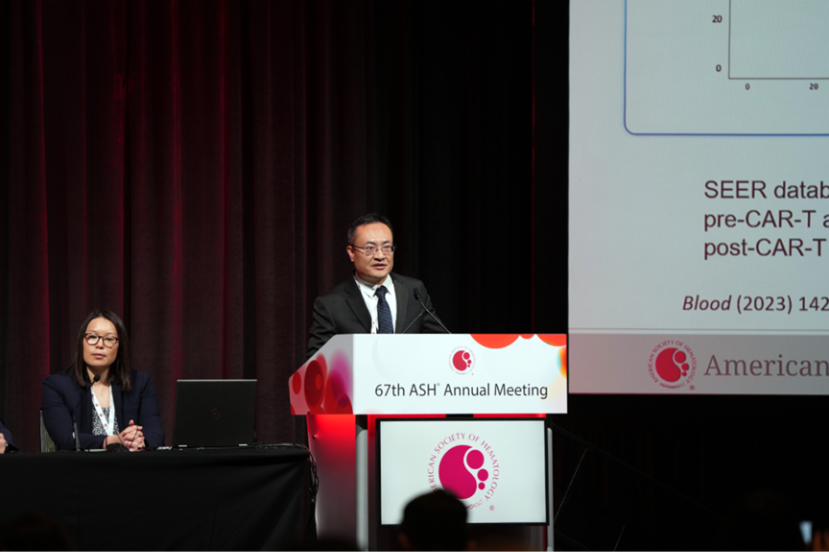
Expert Profile

Professor Wang Liang Beijing Tongren Hospital, Capital Medical University
Director, Department of Hematology Chief Physician, Professor, PhD Supervisor
Member, Sixth Committee of the Hematology Physicians Branch, Chinese Medical Doctor Association Member, Lymphocytic Diseases Group, Chinese Society of Hematology Chair, Committee of Cellular Immunotherapy, China Association for Promotion of Health Science and Technology Head, China Ocular Lymphoma Collaboration Group (COLCG) Incoming Chair, Lymphoma Immunotherapy Committee, Beijing Cancer Prevention and Treatment Society Member, Beijing Society of Hematology Section Editor, Oncology Column, BMC Medicine (Q1 journal) Associate Editor, Cancer Medicine
Specializes in the diagnosis and treatment of lymphoma and other hematologic malignancies. Principal investigator of six national-level projects and author of more than 60 SCI-indexed publications.