At this year’s Annual Meeting of the American Society of Hematology (ASH), the team led by Professor Huang Haiwen from the First Affiliated Hospital of Soochow University reported multiple important studies. Two of these drew particular attention: one focusing on sequential strategies combining CAR-T therapy and autologous stem cell transplantation (ASCT) in relapsed/refractory B-cell lymphoma, and the other on treatment optimization for elderly or frail patients with newly diagnosed diffuse large B-cell lymphoma (DLBCL). These studies provide meaningful evidence for clinical practice. At the meeting, Oncology Frontier – Hematology Frontier invited Professor Huang Haiwen to provide an in-depth interpretation of the key data and clinical implications, with the aim of offering new perspectives for lymphoma management.
Oncology Frontier – Hematology Frontier: Your team presented several studies at ASH. One real-world study, even after 1:1 propensity score matching, still demonstrated significantly greater benefit with CAR-T plus ASCT compared with CAR-T alone. How do you interpret these results? In real-world practice, which patient selection factors should be emphasized for this combined approach?
Professor Huang Haiwen: The strategy of combining CAR-T cell therapy with autologous hematopoietic stem cell transplantation in patients with relapsed or refractory B-cell lymphoma has already accumulated some exploratory clinical experience. Currently, several large centers in China have applied this combined approach in fit R/R patients, aiming to further enhance efficacy through synergistic effects. However, most previous reports were single-arm studies or small-sample explorations. Our study adopted a 1:1 head-to-head matched design with a relatively large sample size, with more than 60 cases in each group and over 120 patients enrolled in total, which gives the results strong reference value.
The current matched analysis shows that adding CAR-T therapy on top of ASCT can significantly improve overall efficacy, increasing the overall response rate by approximately 20%–30%. Therefore, for patients with relapsed or refractory B-cell lymphoma—especially those receiving high-cost commercial CAR-T products—this combined strategy can further enhance treatment outcomes. This is highly meaningful for both clinicians and patients and provides valuable guidance for clinical decision-making. At present, this combined approach has already been adopted and implemented in routine practice at most domestic centers.
Oncology Frontier – Hematology Frontier: In another study, the Pola-AR2 regimen achieved favorable overall response and complete response rates in elderly and frail patients with DLBCL. How was this drug combination designed, and which key clinical challenges does it aim to address?
Professor Huang Haiwen: For newly diagnosed elderly or frail patients with DLBCL, achieving a balance between efficacy and safety has long been a major clinical concern. An ideal regimen should deliver sufficient efficacy while minimizing treatment-related toxicity. Previous studies have shown that BTK inhibitors combined with lenalidomide and rituximab can achieve efficacy comparable to R-CHOP in elderly patients. In addition, studies incorporating polatuzumab vedotin into R-CHOP have demonstrated that adding an antibody–drug conjugate to immunochemotherapy can further improve outcomes.
Based on this background, our team explored whether these “chemo-free” strategies could be integrated. Specifically, we combined a BTK inhibitor, lenalidomide, and rituximab with the antibody–drug conjugate polatuzumab vedotin, aiming to construct a regimen that enhances efficacy while minimizing treatment-related toxicity. Acalabrutinib was selected as the BTK inhibitor because, as a newer-generation agent, it is theoretically associated with a more favorable safety profile, which was an important consideration in the regimen design.
Our results show that in newly diagnosed elderly, high-risk patients, this four-drug Pola-AR2 regimen achieves encouraging efficacy, outperforming previously reported BTK inhibitor plus lenalidomide and rituximab regimens, while maintaining overall tolerability. In particular, it represents a feasible option for patients with poor performance status.
Oncology Frontier – Hematology Frontier: These two studies point to two important directions in DLBCL treatment: providing effective, low-toxicity targeted immunotherapy combinations for frontline-ineligible patients, and exploring intensified combination strategies for refractory disease. Looking ahead, how do you see these approaches reshaping the overall lymphoma treatment landscape, and where will your team focus future research?
Professor Huang Haiwen: Lymphoma patients, including those with DLBCL and other subtypes, are highly heterogeneous, and the key therapeutic priorities differ across patient populations. For elderly patients with comorbidities or poor performance status, the primary goal is to improve efficacy through chemo-free regimens while ensuring safety and tolerability. In relapsed or refractory patients—especially those who are fit and able to tolerate more intensive treatment—CAR-T therapy has already shown promising efficacy, but how to further enhance its benefit remains a central clinical question.
Autologous stem cell transplantation is a classic treatment modality, and in the current domestic healthcare setting, most related drugs are covered by medical insurance. Therefore, exploring combination strategies that integrate ASCT with CAR-T to further improve outcomes is a direction worth considering in real-world practice.
In recent years, the overall treatment paradigm for lymphoma has evolved significantly, driven by continuous optimization across multiple therapeutic details. Looking forward, stratified and precision-based treatment strategies should continue to be implemented for different lymphoma subtypes and patient characteristics. While our studies may inform certain clinical scenarios, many questions remain, such as whether some novel agents should be introduced earlier in frontline treatment for younger patients. All treatment decisions must ultimately be grounded in robust evidence. We look forward to further studies by our team and colleagues nationwide to refine future treatment pathways and strengthen the evidence base for clinical practice.


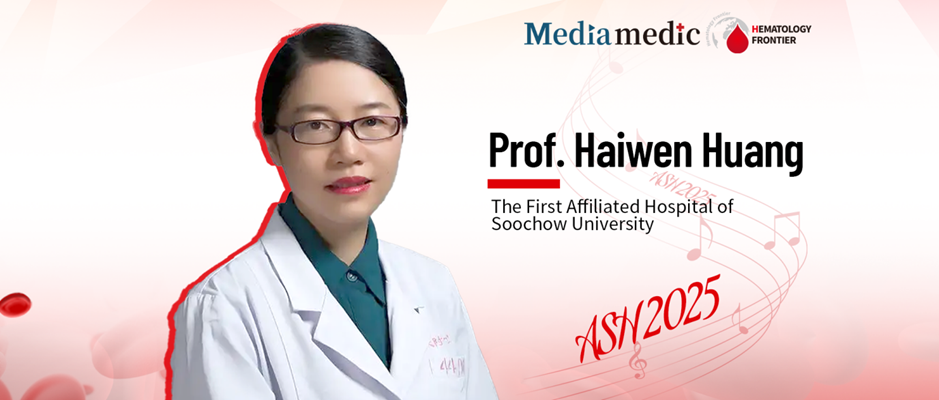
Expert Profile

Huang Haiwen, MD, PhD First Affiliated Hospital of Soochow University
Professor, Chief Physician, Doctoral Supervisor Head of the Lymphoma Ward, First Affiliated Hospital of Soochow University Member, Lymphoid Diseases Group, Chinese Society of Hematology Member, Lymphohematology Group, Chinese Society of Clinical Oncology Member, Lymphoma Quality Control Expert Committee, National Cancer Center Expert Reviewer for Doctoral and Master’s Theses, Ministry of Education Vice Chair, Lymphoma Committee, Chinese Medical Education Association Standing Member, Integrative Chinese and Western Medicine Lymphoma Committee, Chinese Anti-Cancer Association Deputy Leader, Lymphoma Group, Jiangsu Society of Hematology Standing Member, Lymphoma Committee, Jiangsu Anti-Cancer Association
Research Assistant, Faculty of Medicine, The University of Hong Kong (2005–2006) Resident Physician, Montpellier University Hospital, France; certified hematologist (2006–2007) Senior Visiting Scholar, Montpellier University Hospital, France (2009–2010) Visiting Scholar, University of California, Los Angeles (2013)
Recipient of the 2023 “People’s Good Doctor” Outstanding Contribution Award (Lymphoma) Principal or co-investigator on multiple national and provincial research grants Author of more than 20 SCI-indexed publications Reviewer for Chinese Journal of Hematology, Annals of Hematology, and Hematology Oncology