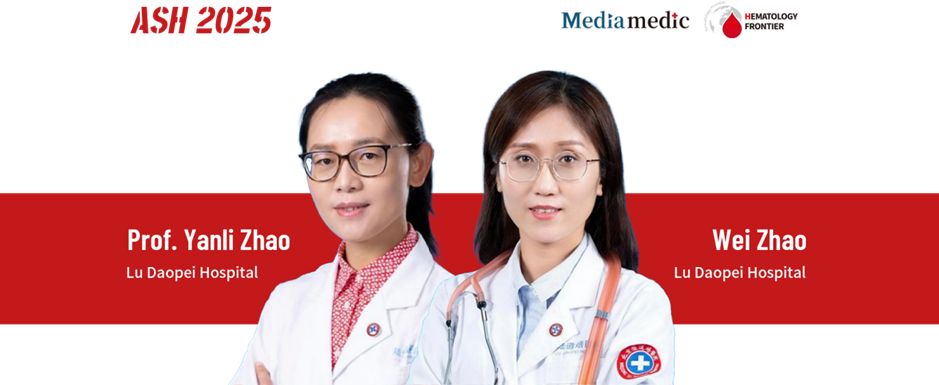
The 67th Annual Meeting of the American Society of Hematology (ASH) was held in Orlando from December 6 to 9, 2025, showcasing the latest global advances in hematology. Multiple studies from Prof. Yanli Zhao’s team at Lu Daopei Hospital were accepted at this year’s meeting. This feature highlights three key studies addressing:
- long-term outcomes of allogeneic hematopoietic stem cell transplantation (allo-HSCT) in CEBPA-mutated acute myeloid leukemia (AML),
- transplant outcomes in TP53 multi-hit mutated hematologic malignancies, and
- the clinical value of haploidentical transplantation combined with third-party umbilical cord blood (UCB) in aplastic anemia (AA).
Together, these studies provide important insights to refine transplant strategies and therapeutic pathways in hematologic diseases.
Study 1
Allogeneic HSCT Mitigates Prognostic Differences Between bZIP and Non-bZIP CEBPA Mutations in AML: A Long-Term Follow-Up Study
First Author: Yanli Zhao
Background
According to the 2022 WHO and ICC classifications, CEBPA-mutated (CEBPAmu) AML, particularly cases with double mutations (CEBPAdm) or involvement of the bZIP domain, is categorized as favorable risk, with overall survival (OS) rates of 65–80% after chemotherapy. However, prognostic heterogeneity persists: patients with single mutations (CEBPAsm) or non-bZIP mutations often have inferior long-term outcomes (OS 40–60%). This study evaluated long-term outcomes after allo-HSCT in CEBPAmu AML and examined the prognostic impact of mutation zygosity and bZIP involvement.
Methods
A retrospective analysis included 219 CEBPAmu AML patients who underwent first allo-HSCT at Lu Daopei Hospital (Beijing and Hebei Yanda) between December 2012 and December 2023. CEBPA mutations were identified by qPCR or next-generation sequencing. Patients with APL (AML-M3) or prior allo-HSCT were excluded. Follow-up continued until January 1, 2025. Primary endpoint was OS; secondary endpoints included leukemia-free survival (LFS), non-relapse mortality (NRM), and cumulative incidence of relapse (CIR).
Results
- Median patient age: 32 years (range 2–68)
- Donor type: haploidentical (80.4%), matched unrelated (10.5%), matched sibling (9.1%)
- At transplant: 74.4% in CR (36 MRD-positive), 25.6% in NR/PR
- Co-mutations present in 87.7%, most commonly GATA2, WT1, FLT3-ITD, NRAS, CSF3R
Among all patients, CEBPAdm showed numerically better 5-year OS and LFS than CEBPAsm, though differences were not statistically significant. In patients transplanted in CR, bZIP involvement did not significantly affect OS, LFS, NRM, or CIR, and outcomes were comparable across mutation subtypes. Similar findings were observed in NR/PR patients, though outcomes were universally inferior compared with CR cohorts. Donor type (haploidentical vs. MUD/MSD) did not influence outcomes.
Conclusion
For CEBPAmu AML patients achieving CR, allo-HSCT provides favorable long-term outcomes, regardless of mutation subtype or bZIP involvement. Allo-HSCT may mitigate adverse prognostic effects associated with mutation heterogeneity and co-mutations, supporting its role as a potentially curative option across all CEBPA-mutated AML subgroups.
Study 2
Multi-Hit TP53 Mutation Is an Independent Adverse Prognostic Factor in Transplantation for Hematologic Malignancies
First Author: Yanli Zhao
Background
TP53-mutated hematologic malignancies carry extremely poor prognoses, particularly in cases with multi-hit TP53 alterations, now recognized as a distinct entity in the 2022 WHO/ICC classifications. Allo-HSCT remains the only potentially curative option. This study evaluated transplant outcomes with a focus on TP53 mutational burden.
Methods
A total of 272 TP53-mutated patients (AML, MDS, ALL, MPAL) undergoing allo-HSCT between 2019 and 2023 were retrospectively analyzed. TP53 status was classified per ICC criteria into single-hit (n=124) and multi-hit (n=148) groups. Follow-up extended to January 1, 2025.
Results
- Complex karyotype present in 59%, more frequent in AML/MDS
- Co-mutations detected in 73.2%
- Among patients transplanted in CR, single-hit TP53 was associated with significantly better 2-year OS (62.8% vs. 45.5%) and LFS (58.9% vs. 39.4%), and lower relapse incidence (15.6% vs. 35.5%)
- NRM did not differ significantly
- In NR/PR patients, outcomes were uniformly poor regardless of TP53 burden
Multivariable analyses identified single-hit TP53, achievement of CR before HSCT, and MRD negativity as independent predictors of improved survival.
Conclusion
Allo-HSCT provides clinical benefit in TP53-mutated disease, particularly in single-hit TP53 patients and those transplanted in remission. Multi-hit TP53 mutations confer a markedly higher relapse risk, underscoring the importance of achieving disease control prior to transplantation.
Study 3
Third-Party Umbilical Cord Blood Does Not Reduce GVHD in Haploidentical HSCT for Aplastic Anemia
First Author: Wei Zhao
Background
Haploidentical allo-HSCT is an effective therapy for aplastic anemia (AA), but graft failure, rejection, and infections remain concerns. Third-party cell infusion has been proposed to improve outcomes, though evidence in AA is limited.
Methods
A retrospective analysis included 251 AA patients undergoing haploidentical HSCT between 2012 and 2024. Patients were grouped into haplo-HSCT + UCB (n=171) and haplo-HSCT alone (n=80). All received standardized BU/CY/FLU/ATG conditioning and CsA/MMF/sMTX GVHD prophylaxis. Follow-up continued through June 30, 2025.
Results
- No primary graft failure in either group
- Median neutrophil and platelet engraftment: 9 and 10 days
- No significant differences in grade III–IV aGVHD, moderate–severe cGVHD, viral reactivation, mixed chimerism, or 5-year OS (80.0% vs. 76.8%)
- UCB infusion did not reduce GVHD risk nor increase graft failure
Conclusion
In AA patients undergoing haploidentical HSCT, third-party UCB infusion does not reduce GVHD incidence and offers no clear survival advantage, though it also does not increase graft-related risks.
Expert Profile
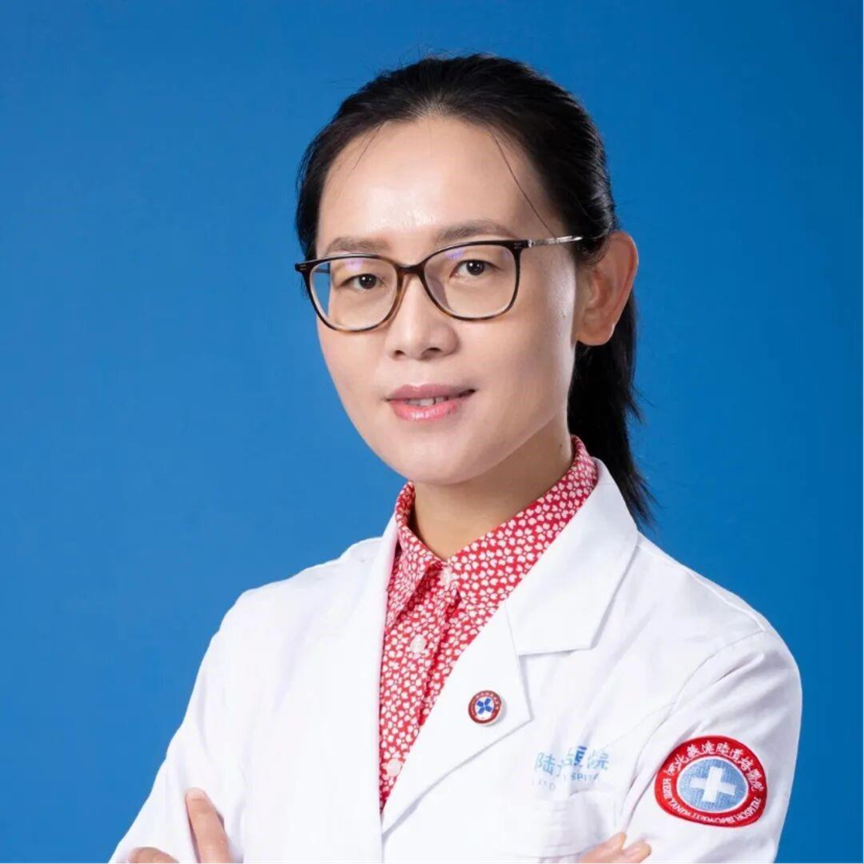
Prof. Yanli Zhao
Lu Daopei Hospital Director, Hematopoietic Stem Cell Transplantation Over 20 years of transplant experience; >1,500 allo-HSCTs performed Extensive expertise in haploidentical, unrelated, sibling, and cord blood transplantation Frequent presenter at ASH, EBMT, APBMT; publications in Frontiers in Immunology and related journals

Dr. Wei Zhao
Lu Daopei Hospital Associate Chief Physician Completed nearly 900 allo-HSCT procedures Research focus: post-transplant immune reconstitution and complications First/corresponding author of multiple SCI and core journal publications; abstracts presented at EBMT, EHA, and ASH