From December 6–9, 2025, the 67th American Society of Hematology (ASH) Annual Meeting was held in Orlando, bringing together the latest global advances in hematologic research and clinical practice. Multiple studies from Prof. Yang Liang’s team at Sun Yat-sen University Cancer Center were selected (including one oral presentation), covering: immune-evasion mechanisms driven by FLT3/ITD in AML, whether MRD can reliably predict progression-free survival (PFS) in the era of novel CLL therapies, and the efficacy and safety of a new BCL2 inhibitor as monotherapy or in combination therapy for CLL/SLL. These works provide important new ideas and data supporting precision treatment and innovative immunotherapy strategies in hematologic malignancies.
Publication Number: 771 FLT3/ITD-Driven Noncanonical STAT1 S727 Phosphorylation Upregulates CD276, Mediating CD8⁺ T-Cell Exhaustion and Immune Evasion in AML 中文标题:FLT3/ITD驱动的非典型STAT1 S727磷酸化上调CD276,介导AML中CD8⁺ T细胞的衰竭与免疫逃逸 First Author: Yun Wang Type: Oral Presentation
Core Content
This study investigated how FLT3/ITD mutations in acute myeloid leukemia (AML) affect CD8⁺ T-cell function and the underlying mechanisms. FLT3/ITD mutations reshape the immune microenvironment, significantly reducing CD8⁺ T-cell frequency and driving high expression of T-cell exhaustion markers.
Using single-cell RNA sequencing and flow cytometry, the authors showed that FLT3/ITD-mutant cells exert an immunosuppressive effect mainly through upregulation of CD276 (B7-H3). FLT3/ITD signaling induces noncanonical phosphorylation of STAT1 at S727, which in turn transcriptionally activates CD276. Elevated CD276 suppresses CD8⁺ T-cell cytotoxicity, proliferation, and IFN-γ secretion, thereby promoting T-cell exhaustion and immune evasion.
The study further confirmed, via genetic and pharmacologic approaches, that STAT1 S727 phosphorylation is essential for FLT3/ITD-induced CD276 transcriptional activation. Therapeutically, the authors used an anti-CD276 monoclonal antibody (MGA271) and a CD276-targeted bispecific engager (MG009) to restore CD8⁺ T-cell function and markedly enhance antitumor immune responses.
In FLT3/ITD AML mouse models, combination therapy with the FLT3 inhibitor quizartinib plus MGA271 or MG009 almost completely eradicated leukemia and restored a pool of functional CD8⁺ T cells.
This work reveals a key mechanism of FLT3/ITD-driven immune evasion in AML and identifies CD276 as a critical mediator of CD8⁺ T-cell exhaustion. It provides strong preclinical evidence that dual targeting of FLT3 and CD276 is a promising immunotherapeutic strategy with substantial translational potential.
Publication Number: 2132 New Chronic Lymphocytic Leukaemia Therapies: Does Measurable Residual Disease Testing Accurately Predict Progression-Free Survival? 中文标题:新型慢性淋巴细胞白血病(CLL)治疗:微小残留病(MRD)检测能否准确预测无进展生存期(PFS)? First Author: Yun Wang Type: Poster
Core Content
This study evaluated how accurately measurable residual disease (MRD) can predict progression-free survival (PFS) in chronic lymphocytic leukemia (CLL) in the context of modern therapies.
By analyzing 41 clinical trials including 9,569 patients, the authors found that the predictive value of MRD for PFS differed by treatment class. In patients treated with Bruton tyrosine kinase inhibitors (BTKi), MRD positivity was only weakly associated with PFS (HR = 1.52), whereas in patients treated with venetoclax or other regimens, MRD showed a stronger association with PFS (HR = 4.46 and 3.86, respectively).
Across all subgroups, detectable MRD (dMRD) was consistently associated with higher risk of disease progression, with particularly elevated risk in patients with del(17p)/TP53 mutations, mutated IGHV, or relapsed/refractory (R/R) disease. Bone marrow MRD had better predictive performance for PFS than peripheral blood MRD, and MRD assessments performed 12–32 months after treatment initiation had the highest predictive value.
At the individual-patient level, MRD status correlated with PFS; however, at the trial level, the correlation between MRD and PFS was weak overall (Spearman’s R = –0.35, R² = 0.02), especially in BTKi-treated cohorts (R² = 0.04). Bone marrow MRD had higher trial-level surrogacy than blood MRD (R² = 0.86 vs 0.63). Sensitivity analyses indicated that MRD’s accuracy in predicting PFS was limited across different sample sources, timepoints, and assay methods.
In summary, while MRD is prognostic at the patient level, its performance as a surrogate endpoint for PFS is suboptimal in studies involving BTKi ± venetoclax. The authors conclude that MRD should not be used as a reliable surrogate endpoint for PFS in trials of BTKi-based regimens.
Publication Number: 5677 Mesutoclax (ICP-248) Monotherapy or Combined with Orelabrutinib Demonstrates Encouraging Activity and Safety in Patients with Chronic Lymphocytic Leukemia/Small Lymphocytic Lymphoma (CLL/SLL) 中文标题:Mesutoclax单药或联合奥布替尼在慢性淋巴细胞白血病/小淋巴细胞淋巴瘤(CLL/SLL)患者中的活性和安全性研究 First Author: Yang Liang Type: Poster
Core Content
This study assessed the safety and efficacy of the BCL2 inhibitor mesutoclax (ICP-248) as monotherapy and in combination with the second-generation BTK inhibitor orelabrutinib in patients with CLL/SLL.
A total of 66 patients were enrolled: 42 treatment-naïve (TN) and 24 relapsed/refractory (R/R). Mesutoclax was administered with a step-up dose escalation to 100 or 125 mg once daily, aiming to reduce tumor lysis syndrome (TLS) risk. TN patients received two cycles of orelabrutinib induction followed by combination therapy, while R/R patients received mesutoclax monotherapy until disease progression or unacceptable toxicity.
Mesutoclax was well tolerated; no dose-limiting toxicity was observed up to 150 mg/day. The most common grade ≥3 adverse events were neutropenia, leukopenia, and thrombocytopenia. No treatment-emergent adverse events led to drug discontinuation or death.
In TN patients treated at 125 mg, the overall response rate (ORR) reached 100%, with a complete response rate (CRR) of 28.6%. The rate of undetectable MRD (uMRD) in peripheral blood was 65%. Median times to CR and uMRD were 7.1 and 5.8 months, respectively.
In R/R patients at 125 mg, ORR was also 100%, with a CRR of 27.8%. Among those who had failed prior BTKi therapy, ORR remained 100% and CRR was 30%, with a 12-month PFS rate of 100%.
These results indicate that mesutoclax, as monotherapy or combined with orelabrutinib, has a favorable safety profile and induces deep responses in both TN and R/R CLL/SLL patients, including those with prior BTK inhibitor failure. Mesutoclax-based regimens thus represent a promising new therapeutic strategy for CLL/SLL.
Expert Profile – Prof. Yang Liang

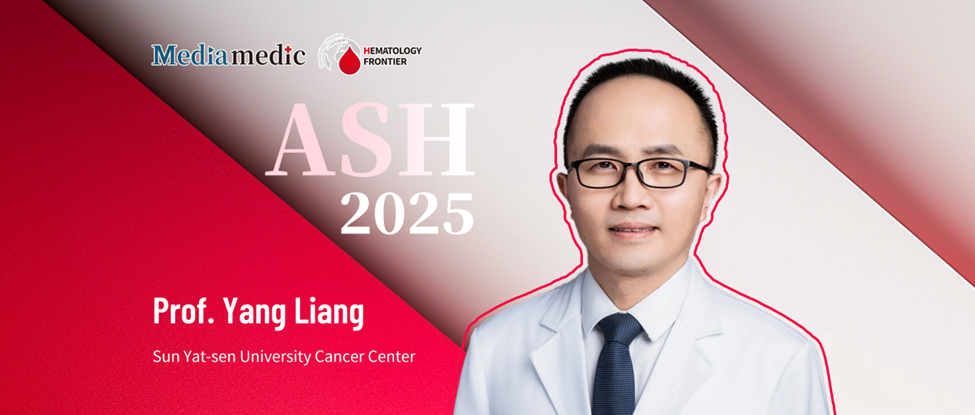
Prof. Yang Liang Sun Yat-sen University Cancer Center
Director of the Department of Hematologic Oncology, Chief Physician, Researcher, and Group Leader in the State Key Laboratory of Oncology in South China.
Standing Committee Member, Hematology Physician Branch, Chinese Medical Doctor Association Vice-Chair, Hematologic Oncology Committee, Chinese Anti-Cancer Association (CACA) Vice-Chair, Leukemia Committee, Chinese Society of Clinical Oncology (CSCO) Standing Committee Member, Hematology Branch, China International Exchange and Promotive Association for Medical and Health Care Member, Plasma Cell Disorders Group, Hematology Branch, Chinese Medical Association Vice-Chair, Hematology Physician Branch, Guangdong Medical Doctor Association
He is a high-level recruited talent in Guangdong Province, a Pearl River Talent Program scholar and “Hundred Talents” scholar of Sun Yat-sen University.
Prof. Liang has led or participated in multiple National Natural Science Foundation and provincial/ministerial-level projects. He has published numerous clinical and translational papers in high-impact journals such as the New England Journal of Medicine, Nature Reviews Disease Primers, Journal of Clinical Oncology, and Cancer Cell. His work has been cited over 3,700 times, with an H-index of 23 and an i10-index of 36.
He serves as an international editorial board member of Leukemia and as Editor-in-Chief of the hematology section of the Journal of Translational Medicine, and reviews for journals such as Signal Transduction and Targeted Therapy (STTT), Journal for ImmunoTherapy of Cancer (JITC), Cell Reports, and the Chinese Journal of Hematology.