Allogeneic hematopoietic cell transplantation (allo-HCT) remains the only curative option for patients with myelodysplastic syndromes (MDS). However, clinical decision-making in the transplant setting remains challenging. Two critical and unresolved issues are how to accurately apply the new molecular International Prognostic Scoring System (IPSS-M) for risk stratification in transplant recipients, and how to select the optimal conditioning intensity to balance efficacy and toxicity for individual patients.
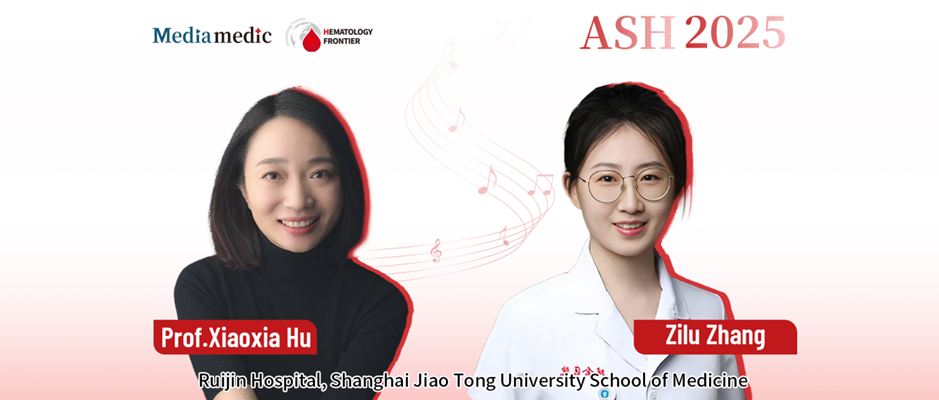
To address these questions, Prof. Xiaoxia Hu’s team at Ruijin Hospital, Shanghai Jiao Tong University School of Medicine, conducted a large multicenter retrospective study. At the 67th Annual Meeting of the American Society of Hematology (ASH), Hematology Frontier invited Dr. Zilu Zhang, the oral presenter of the study, to provide an in-depth interpretation of the findings, focusing on the real-world prognostic value of IPSS-M in transplant cohorts, the clinical significance of the Transplant Conditioning Intensity (TCI) score, and personalized transplant strategies across different risk groups—offering key evidence to optimize MDS transplant practice.
Investigator’s Perspective
Dr. Zilu Zhang
In MDS, many aspects of allogeneic transplantation remain controversial. Our team therefore conducted a large retrospective study to address two core clinical questions.
First, while IPSS-M has been validated as a prognostic tool mainly in non-transplanted MDS cohorts, outcomes after allo-HCT are influenced by multiple factors, including pre-transplant cytoreductive therapy, transplant-related variables, and post-transplant maintenance or preemptive treatment. Thus, the first key question was whether IPSS-M alone retains prognostic value in transplant recipients.
Second, conditioning intensity selection in MDS lacks a unified standard. The traditional dichotomy of myeloablative conditioning (MAC) versus reduced-intensity conditioning (RIC) does not adequately balance relapse risk and non-relapse mortality (NRM). Given that many MDS patients are older with heterogeneous fitness and comorbidities, choosing the appropriate conditioning intensity remains a major challenge.
Recently proposed conditioning intensity scoring systems have shown superior prognostic performance in AML, but have not been validated in MDS. This provided the rationale for our study. Using large, multicenter retrospective data, we aimed to clarify the prognostic relevance of IPSS-M in transplant cohorts and to explore a more precise method for assessing conditioning intensity—ultimately supporting individualized transplant decision-making to improve long-term outcomes.
Our findings revealed marked molecular heterogeneity within the IPSS-M very-high-risk group, particularly involving TP53 mutations and complex karyotype (CK)—a distinction critical for clinical decision-making. Although these patients had a high post-transplant relapse risk, intensifying conditioning did not significantly reduce relapse, but instead increased non-relapse mortality.
Therefore, for IPSS-M very-high-risk patients, clinical focus should shift from escalating pre-transplant conditioning intensity toward more effective relapse-prevention strategies, such as optimized post-transplant maintenance or combination approaches incorporating targeted therapy and immunotherapy—aiming to improve long-term survival while maintaining transplant safety. In contrast, non–very-high-risk patients appear to benefit from low-to-intermediate intensity conditioning. Overall, our results support the use of low-to-moderate conditioning intensity to optimize transplant outcomes in MDS.
Looking ahead, we plan to integrate molecular disease features, transplant-related variables, and patient clinical status using larger multicenter datasets, to develop and validate a transplant-specific prognostic model beyond IPSS-M—transforming a practical scoring system into a reliable tool for transplant decision-making and long-term outcome prediction in MDS.
Study Abstract
Abstract 1062
Impact of IPSS-M Score and Conditioning Intensity on Outcomes After Allogeneic Hematopoietic Cell Transplantation in Patients With Myelodysplastic Neoplasms
Background: Allo-HCT is the only curative therapy for MDS. Prognosis after transplantation is influenced by disease burden, age, comorbidities, and risk stratification. However, the prognostic value of IPSS-M assessed at transplant and the role of conditioning intensity remain controversial.
Methods: We conducted a multicenter retrospective study of MDS patients aged ≥14 years who underwent first allo-HCT between March 2019 and March 2025.
Results: A total of 572 patients were included. Median age was 48 years (range 14–77), with a median post-transplant follow-up of 21.6 months. Donor types included haploidentical (65.4%), matched sibling (24.5%), and matched unrelated donors (10.9%). MAC was used in 379 patients, and RIC in 193.
The cumulative incidence of grade II–IV and III–IV acute GVHD by day 100 was 22.4% and 14.1%, respectively. The 3-year overall survival (OS), relapse, and non-relapse mortality (NRM) were 77.8%, 18.6%, and 11.4%, respectively.
Multivariable analysis identified age ≥55 years, multi-hit TP53 mutation and/or complex karyotype, IPSS-M very-high-risk category, TCI score 4–6, and HCT-CI ≥3 as independent adverse factors for OS. TCI 4–6 and HCT-CI ≥3 were associated with increased NRM.
Compared with lower-risk groups, the IPSS-M very-high-risk subgroup had inferior OS (3-year OS 59.0% vs. 82.2%, P<0.001). This group showed molecular heterogeneity: 23.4% carried TP53 mutations (92% multi-hit), while TP53-wild-type patients—commonly harboring ASXL1, U2AF1, and RUNX1 mutations—had improved but still inferior outcomes.
No significant differences in OS, relapse, or NRM were observed between MAC and RIC. When conditioning was stratified by TCI, high-intensity conditioning (TCI 4–6) was associated with worse OS and higher NRM, without reducing relapse—an effect significant only in the IPSS-M very-high-risk subgroup.
Conclusion: Direct allo-HCT without bridging therapy was associated with better OS and disease control. IPSS-M very-high-risk status predicts inferior survival. For MDS patients eligible for allo-HCT, low-to-intermediate conditioning intensity appears optimal, reducing NRM without increasing relapse risk.
Expert Profiles

Prof. Xiaoxia Hu
Ruijin Hospital, Shanghai Jiao Tong University School of Medicine
MD, Chief Physician, PhD Supervisor Translational Medicine Center, Ruijin Hospital Member, Chinese Anti-Cancer Association (Hematologic Malignancies) Shanghai Outstanding Young Medical Talent
Author of 40+ papers in Blood, JCI, Leukemia, AJH, and related journals Second Prize, Shanghai Science and Technology Progress Award (First Class)

Dr. Zilu Zhang
Ruijin Hospital, Shanghai Jiao Tong University School of Medicine
Attending Physician, Department of Hematology Research focus: Allo-HCT and acute GVHD Principal investigator of National Natural Science Foundation Youth Project