The treatment of relapsed/refractory B-cell acute lymphoblastic leukemia (R/R B-ALL) remains a major clinical challenge. While CAR-T cell therapy can induce rapid and deep remissions, many patients continue to face a substantial risk of relapse. Consolidation with allogeneic hematopoietic stem cell transplantation (allo-HSCT) following CAR-T therapy has emerged as a promising curative strategy. However, evidence regarding its long-term efficacy, optimal timing, and the role of molecular biomarkers in guiding treatment decisions has remained limited.At the 2026 ASCO Annual Meeting, Dr. Zhihui Li of Beijing Gobroad Boren Hospital presented findings from a large real-world study evaluating outcomes in patients with R/R B-ALL who underwent allo-HSCT following CAR-T therapy. The study not only confirmed the long-term benefits of this sequential treatment approach but also demonstrated the clinical value of measurable residual disease (MRD) status and molecular markers such as TP53 in guiding treatment decisions. These findings provide important evidence to support standardized clinical practice and the development of genotype-guided personalized treatment strategies.
Oncology Frontier – Hematology Frontier spoke with Dr. Li about the rationale behind the study, its key findings, and its implications for clinical practice.
Confirming the Long-Term Benefit of CAR-T Followed by allo-HSCT
When discussing the motivation for the study, Dr. Li noted that although CAR-T therapy can rapidly induce remission in patients with R/R B-ALL, many patients remain at risk of subsequent relapse.
The research team sought to determine whether CAR-T therapy could serve as an effective bridge, enabling more patients to safely transition to allogeneic transplantation, which remains one of the most important curative options for this patient population.
Given the lack of large-scale studies with long-term follow-up and the limited understanding of factors influencing post-transplant outcomes, the investigators launched what is currently one of the largest real-world analyses in this setting. The study included 300 patients who underwent allo-HSCT after CAR-T therapy and evaluated long-term outcomes through extended follow-up.
According to Dr. Li, the study offers three major clinical insights.
First, it confirms the long-term efficacy of the sequential treatment strategy. Patients achieved a 3-year overall survival (OS) rate of 74.5%, a disease-free survival (DFS) rate of 64.0%, a cumulative relapse incidence of 28.4%, and a non-relapse mortality rate of just 7.6%. These outcomes provide strong support for the feasibility and effectiveness of CAR-T-to-transplant consolidation.
Second, the study identifies an important biological marker for determining the optimal timing of transplantation. Achieving MRD negativity before transplantation emerged as a key predictor of relapse risk. Patients who remained MRD-positive prior to transplant had a 3.7-fold higher risk of relapse compared with those who achieved MRD-negative status.
Third, the study clarifies the prognostic significance of TP53 mutations. The findings suggest that patients harboring TP53 mutations should proceed to transplantation as soon as MRD negativity is achieved and may benefit from intensified conditioning regimens. For patients who fail to achieve MRD negativity, alternative therapeutic strategies should be explored.
MRD Negativity Defines the Optimal Timing for Transplantation
The study demonstrated a strong association between pre-transplant remission status and long-term outcomes.
Dr. Li emphasized that the optimal timing of allo-HSCT following CAR-T therapy should not be determined simply by the amount of time that has elapsed since treatment. Instead, biological response should guide decision-making.
The findings indicate that patients who achieve MRD-negative complete remission after CAR-T therapy should proceed to transplantation as early as possible, provided their overall clinical condition permits. In the study, these patients achieved a 3-year overall survival rate exceeding 74%.
The investigators identified an optimal transplantation window between four and eight weeks after CAR-T infusion. Transplantation performed too early—within approximately three weeks of CAR-T therapy—may increase transplant-related risks because patients may not have fully recovered from CAR-T-associated toxicities. Conversely, excessive delays beyond three months may reduce treatment benefit due to disease recurrence or declining CAR-T cell persistence.
The study also highlighted the particular challenges associated with TP53-mutated disease. Even when MRD negativity is achieved, patients carrying TP53 mutations remain at elevated risk of relapse. For these individuals, transplantation should be initiated promptly once MRD-negative remission is documented, and intensified conditioning strategies should be considered to further reduce relapse risk.
Overall, the findings suggest that the ideal time for allo-HSCT is immediately after achieving MRD-negative remission, typically within one to two months following CAR-T infusion.
Molecular Profiling Is Shaping the Future of Personalized Treatment
Another important aspect of the study was its evaluation of somatic mutations and their impact on clinical outcomes.
Among the 179 patients who underwent genomic sequencing, TP53 was identified as one of the most frequently mutated genes, occurring in 15.1% of cases. More importantly, TP53 mutations emerged as one of the strongest adverse prognostic factors, increasing the risk of death by more than 3.5-fold after transplantation.
The analysis also showed that GNAS and KDM6A mutations were associated with a higher risk of relapse, while ETV6 mutations were linked to an increased risk of non-relapse mortality.
According to Dr. Li, molecular profiling is expected to play an increasingly important role in three key areas of clinical decision-making.
The first is risk stratification. Rather than adopting a one-size-fits-all approach, clinicians can use genomic information to tailor treatment strategies for individual patients. For example, patients with TP53 mutations may require more aggressive intervention, with transplantation performed immediately after achieving MRD negativity.
The second is treatment-timing optimization. Molecular findings can help identify patients who require earlier transplantation and closer monitoring.
The third is therapeutic customization. Mutation profiles may guide the selection of conditioning regimens and maintenance strategies, including the incorporation of hypomethylating agents, targeted therapies, or other novel treatment approaches.
Dr. Li believes that molecular profiling is driving a transition in R/R B-ALL management from traditional disease-stage-based treatment toward genotype-guided precision medicine. As genomic technologies become more accessible, genetic testing should no longer be viewed solely as a research tool but as an integral component of routine clinical practice.
Conclusion
The results of this large real-world study provide compelling evidence supporting allo-HSCT as an effective consolidation strategy following CAR-T therapy in patients with R/R B-ALL.
Equally important, the findings demonstrate that biological markers such as MRD status and TP53 mutations can play a pivotal role in optimizing treatment timing, refining risk stratification, and guiding personalized therapeutic decisions. As precision medicine continues to evolve, integrating molecular profiling into routine clinical practice may further improve outcomes for patients facing this highly challenging disease.
Expert Profile

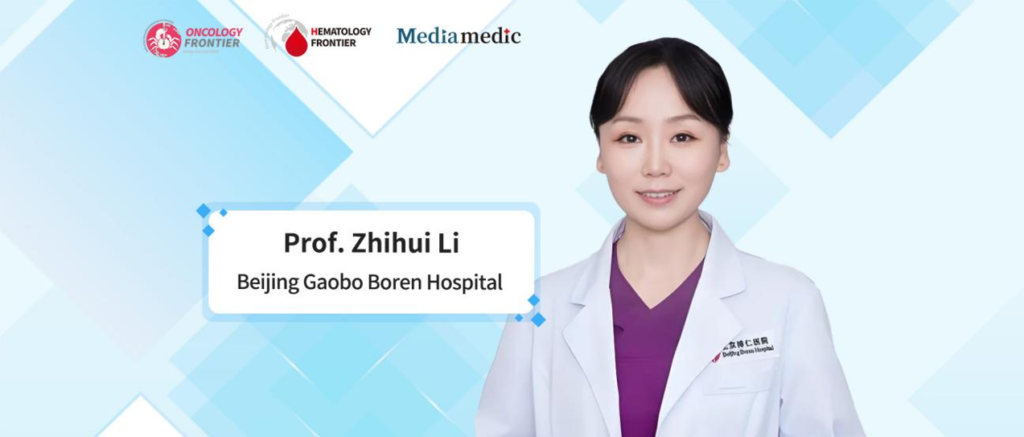
Dr. Zhihui Li
Beijing Gobroad Boren Hospital
Director, Department of Hematology II (Hematopoietic Stem Cell Transplantation), Beijing Gobroad Boren Hospital, Gobroad Medical Hematology Research Center
Chief Physician | MD
Clinical Expertise
Dr. Zhihui Li has extensive experience in both clinical practice and translational research in hematology. Her expertise includes CAR-T-to-transplant strategies and the management of hematologic malignancies and transplant-related complications, particularly in:
- B-ALL and T-ALL
- NK/T-cell lymphoma
- Hemophagocytic lymphohistiocytosis (HLH)
- Aplastic anemia
- Myelodysplastic syndromes (MDS)
- Prevention and treatment of complications following hematopoietic stem cell transplantation
Professional Appointments
- Vice Chair, Digital Diagnosis and Treatment Committee for Hematologic Diseases
- Committee Member, Clinical Application Committee, China Medicinal Biotech Association
- Committee Member, Hematologic Oncology Committee, China Anti-Cancer Association
- Committee Member, Pediatric Oncology Nutrition Committee, National Oncology Nutrition Society
- Committee Member, Infection and Inflammation Radiology Committee, Chinese Research Hospital Association
- Committee Member, Hematopoietic Stem Cell Transplantation Committee, Beijing Cancer Prevention and Treatment Society
- Editorial Board Member, Radiology Science