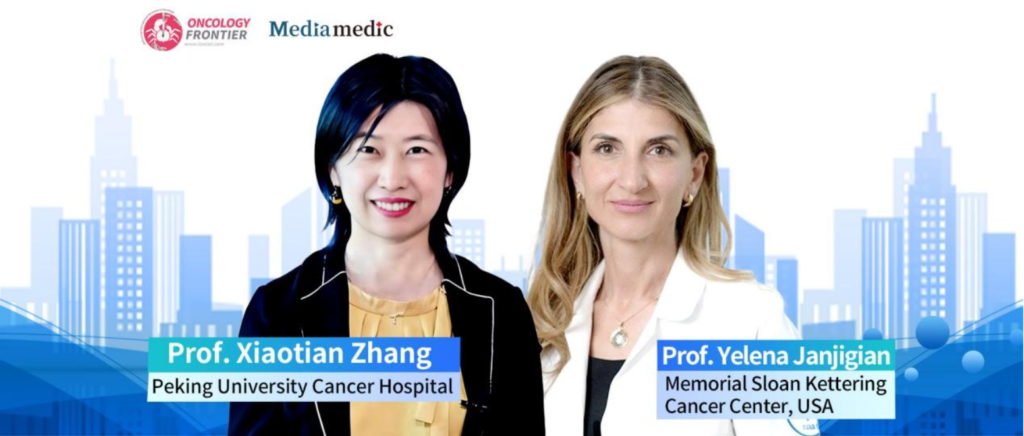
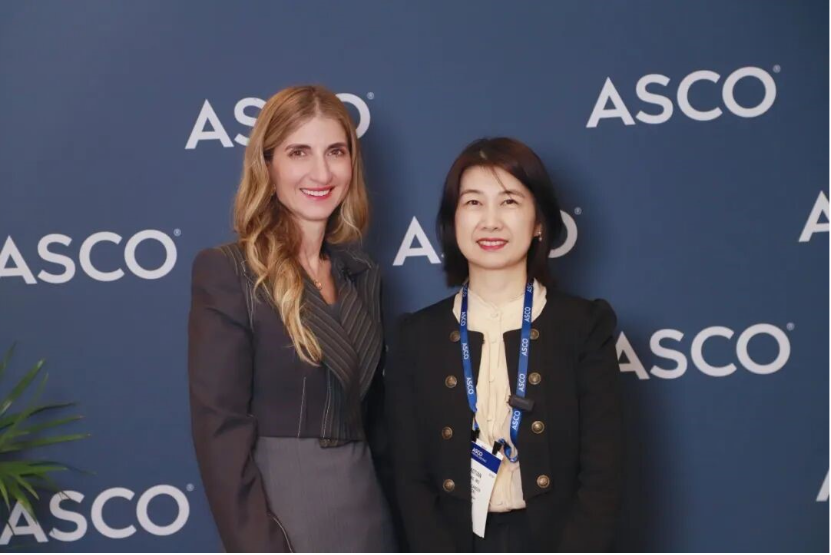
The landmark results of the DESTINY-Gastric04 (DG04) trial have firmly established trastuzumab deruxtecan (T-DXd) as the missing piece in second-line HER2-targeted treatment for gastric cancer. At the 2026 American Society of Clinical Oncology (ASCO) Annual Meeting, the DESTINY-Gastric03 (DG03) study was also unveiled, highlighting the promising potential of T-DXd in the first-line setting. As T-DXd moves from later-line therapy toward frontline treatment for HER2-positive gastric cancer, an increasing number of patients stand to benefit. How do clinical practices differ between China and the United States amid this evolving therapeutic landscape? At ASCO 2026, Oncology Frontier invited Prof. Xiaotian Zhang, a Chinese investigator of the DG04 study, and Prof. Yelena Janjigian, the principal investigator of DG03, to discuss the current treatment landscape for HER2-positive gastric cancer and future directions for HER2-targeted therapy.
Oncology Frontier:
Based on your clinical experience, how would you compare the current landscape of HER2-targeted therapy for HER2-positive gastric cancer in China and the United States?
Prof. Xiaotian Zhang:
Gastric cancer remains a major health burden in China, with approximately 358,700 new cases and 260,400 deaths annually, accounting for nearly half of the global disease burden. Consequently, China plays a pivotal role in advancing gastric cancer prevention and treatment worldwide. Overall, HER2 overexpression is observed in 11.47% of Chinese gastric cancer patients, increasing to 14.92% among those with stage IV disease, making HER2-targeted therapy an essential component of treatment.
In recent years, the treatment landscape for gastric cancer in China has undergone significant transformation as HER2-targeted therapies have become increasingly available. Findings from the real-world REHEARSAL study demonstrated substantial increases in HER2-targeted treatment across all therapy lines between 2018 and 2023. The proportion of patients receiving HER2-targeted therapy increased from 60.83% to 90.19% in the first-line setting and from 42.31% to 54.39% in the second-line setting. Following the approval of HER2-directed antibody-drug conjugates (ADCs), including trastuzumab deruxtecan (T-DXd) and disitamab vedotin (RC48), approximately 58.34% of third-line patients also received HER2-targeted therapy. In addition, emerging ADCs and bispecific antibodies have further expanded the therapeutic armamentarium.
Precision treatment relies on standardized HER2 testing. From the EVIDENCE real-world study led by Professors Lin Shen and Shukui Qin to the more recent REHEARSAL study, HER2 testing has become increasingly standardized across both tertiary medical centers and community hospitals in China. Improved diagnostic standardization has enabled more appropriate patient selection for HER2-targeted therapy, translating into better progression-free survival (PFS) and overall survival (OS).
Current clinical practice in China continues to follow the CSCO Guidelines for Gastric Cancer. In the first-line setting, treatment is individualized according to PD-L1 CPS, integrating the ToGA and KEYNOTE-811 approaches. Based on the HERIZON-GEA-01 study, zanidatamab (ZW25) has also received a Grade II recommendation. In the second-line setting, T-DXd is currently the only Category I recommended therapy, while both T-DXd and RC48 are recommended in the third-line setting. Looking ahead, promising agents such as HLX22 and ZW25 are expected to further improve outcomes. Future clinical trials will be critical for optimizing treatment strategies in complex patient populations, including those with PD-L1 CPS ≥5 and HER2-positive disease, or tumors co-expressing Claudin 18.2 and HER2.
Prof. Yelena Janjigian:
The rapid development of innovative gastric cancer therapies in China has provided valuable treatment options for patients worldwide. In the United States, the incidence of gastric cancer continues to rise, particularly gastroesophageal junction cancer (GEJC), where approximately 30% of cases are HER2-positive. Therefore, HER2 testing and targeted therapy remain essential components of patient management.
The HER2 treatment landscape outlined in the NCCN Clinical Practice Guidelines for Gastric Cancer has evolved rapidly. Following positive results from the DESTINY-Gastric01 (DG01) and DESTINY-Gastric02 (DG02) studies, T-DXd received FDA approval and has become the preferred second-line treatment for HER2-positive gastric cancer in the United States.
First-line treatment is also advancing rapidly. While the landmark ToGA trial established the foundation for HER2-targeted therapy, the widespread prevalence of HER2-positive disease with PD-L1 CPS >1 has led to broad adoption of the KEYNOTE-811 regimen combining pembrolizumab, trastuzumab, and chemotherapy. More recently, the HERIZON-GEA-01 study reported encouraging survival outcomes, with zanidatamab (ZW25) plus tislelizumab and chemotherapy achieving a median overall survival of 26.4 months, providing another promising frontline option.
As a highly potent ADC, T-DXd combines HER2-targeted specificity with a powerful cytotoxic payload. It has already been approved in both China and the United States for second- and third-line treatment of HER2-positive gastric cancer. Moving this therapy into the first-line setting is particularly important, as some patients experience rapid disease progression and may never receive later-line therapy. At this year’s ASCO meeting, the DESTINY-Gastric03 (DG03) study demonstrated that T-DXd 5.4 mg/kg combined with capecitabine and pembrolizumab was well tolerated in the frontline setting, without increasing the incidence of serious toxicities such as interstitial lung disease (ILD), while achieving a disease control rate approaching 100%. This highly promising regimen is now being further evaluated in the phase III DESTINY-Gastric05 (DG05) trial, and positive results could establish a new global treatment standard.
Oncology Frontier:
Following the approval of T-DXd in China for second-line HER2-positive gastric cancer based on the DG04 study—and its adoption as the standard second-line therapy in both Chinese and international guidelines—could you discuss the evolution of HER2-targeted therapy in advanced HER2-positive gastric cancer and the clinical significance of the DG04 trial?
Prof. Yelena Janjigian:
The DESTINY-Gastric clinical program has clearly demonstrated the remarkable clinical value of HER2-targeted ADCs in the second- and later-line treatment of gastric cancer, with the potential to substantially improve long-term outcomes for some patients.
Before T-DXd, several attempts to extend HER2-targeted therapy beyond first-line treatment failed to improve survival. These included the TyTAN trial evaluating lapatinib, the GATSBY study of trastuzumab emtansine (T-DM1), and the T-ACT trial investigating trastuzumab continuation beyond progression. All three studies yielded negative results, with median overall survival remaining below 11 months. Consequently, ramucirumab plus paclitaxel (RAM+PTX) remained the only established second-line standard despite not being a biomarker-driven treatment.
The emergence of T-DXd marked a major turning point. It restored the role of HER2-targeted therapy after trastuzumab resistance and revitalized research in this field. The phase II DG02 trial first demonstrated that, among Western patients with HER2-positive advanced gastric or gastroesophageal junction adenocarcinoma previously treated with trastuzumab, second-line T-DXd achieved a median PFS of 5.6 months and a median OS of 12.1 months. These results led to FDA approval in 2021, and the NCCN Guidelines subsequently listed T-DXd as the preferred second-line therapy in 2022.
More recently, the landmark DESTINY-Gastric04 (DG04) trial has further strengthened the evidence base. The global phase III study enrolled 494 patients with HER2-positive gastric cancer and demonstrated significant survival benefits compared with the standard RAM+PTX regimen. Median overall survival improved from 11.4 months to 14.7 months (HR 0.70; 95% CI, 0.55–0.90; P=0.0044), while the 2-year overall survival rate more than doubled, increasing from 13.9% to 29.0%. These findings have redefined the global standard of care for second-line treatment of HER2-positive advanced gastric cancer.
Prof. Yelena Janjigian:
Driven by the compelling results of the DESTINY-Gastric04 (DG04) trial, Chinese regulators approved trastuzumab deruxtecan (T-DXd) for second-line treatment of HER2-positive gastric cancer in approximately six months—a remarkably rapid timeline that deserves recognition. While gastric cancer is relatively uncommon in the United States, it represents a major public health burden in China. I am deeply impressed by the strong support from the Chinese government and the rapid adoption of innovative therapies by Chinese investigators. I would also like to sincerely congratulate Prof. Xiaotian Zhang and the entire Chinese research team for their outstanding contributions to the success of the DG04 study.
Prof. Xiaotian Zhang:
Thank you very much, Professor Janjigian. This achievement reflects the collective efforts of all investigators involved. HER2 overexpression represents a distinct molecular subtype of gastric cancer, and over the past two decades, the field has witnessed the emergence of several breakthrough therapies.
Regarding the DG04 study, I would like to highlight the importance of repeat biopsy. Although the clinical trial protocol required a second biopsy before enrollment, obtaining new tumor tissue after disease progression is often difficult in routine clinical practice. In China, nearly all patients undergo HER2 immunohistochemistry (IHC) testing at initial diagnosis, but HER2 reassessment after progression remains suboptimal. To facilitate broader implementation of DG04 findings in real-world practice, circulating tumor DNA (ctDNA)-based liquid biopsy may become an important alternative for patients in whom repeat tissue biopsy is not feasible.
Looking ahead, we hope that ADCs will leverage their unique bystander effect to extend clinical benefit to patients with HER2-low or intermediate expression, thereby expanding the eligible treatment population. Encouraging early results have already been observed with the domestically developed ADC disitamab vedotin (RC48) in this setting.
In the frontline setting, the growing number of anti-HER2 agents combined with PD-1 inhibitors, across different treatment sequences, represents both a major opportunity and a clinical challenge. In China, more than 50% of patients are able to receive second-line therapy, while approximately 40%–50% proceed to third-line treatment. Therefore, we need highly effective first-line regimens—such as the T-DXd-based combination evaluated in DESTINY-Gastric03 (DG03)—to maximize disease control from the outset. At the same time, determining the optimal chemotherapy intensity remains an important unanswered question, requiring carefully designed clinical trials to balance efficacy with tolerability.
Oncology Frontier:
T-DXd has demonstrated impressive efficacy across multiple HER2-positive and HER2-low malignancies. Do you believe it has similar potential in gastric cancer?
Prof. Xiaotian Zhang:
In gastric cancer, we cannot simply apply the experience gained from breast cancer, as the concepts of HER2-low and HER2-ultralow disease have not yet been clearly established in this setting. The primary challenge lies in the pronounced spatial and temporal heterogeneity of gastric cancer, which was also a key factor contributing to the negative results of previous HER2-targeted studies such as T-ACT and GATSBY.
T-DXd is a next-generation ADC that combines highly specific HER2 targeting with the potent DXd cytotoxic payload. Once released within tumor cells, DXd exhibits excellent membrane permeability, allowing it not only to eliminate HER2-positive target cells but also to diffuse into the surrounding tumor microenvironment and destroy neighboring tumor cells with little or no HER2 expression. This unique bystander effect offers a promising strategy to overcome tumor heterogeneity and acquired resistance and has already been validated in clinical studies.
Looking ahead, future HER2-targeted treatment strategies for gastric cancer—particularly in patients with HER2-low expression—may further evolve. On the targeting side, bispecific antibodies capable of simultaneously engaging two tumor-associated targets may enhance efficacy. Regarding payload design, future ADCs may move beyond DXd and MMAE to incorporate novel cytotoxic agents, including nucleotide- or nucleic acid-based payloads. We are optimistic that T-DXd and other next-generation ADCs will continue to unlock new therapeutic mechanisms, overcome tumor heterogeneity, and deliver even greater clinical benefit for patients with gastric cancer.
Oncology Frontier:
At this year’s ASCO Annual Meeting, you presented results from the DESTINY-Gastric03 (DG03) study, which demonstrated the feasibility of T-DXd in the first-line setting. How do you interpret these findings?
Prof. Yelena Janjigian:
The remarkable survival benefit achieved by trastuzumab deruxtecan (T-DXd) in the second-line treatment of gastric cancer gave us the confidence to explore its potential in the frontline setting, which was the primary rationale behind the DESTINY-Gastric03 (DG03) study.
DG03 is a multistage Phase Ib/II clinical trial designed to evaluate the feasibility of first-line T-DXd in patients with HER2-positive esophageal, gastric, or gastroesophageal junction adenocarcinoma (E/G/GEJA).
During the early dose-finding and safety evaluation phase, T-DXd was investigated in combination with several chemotherapy regimens, including capecitabine and platinum-based therapies, to establish the optimal balance between efficacy and safety. Out of caution regarding toxicity, the oxaliplatin-containing combination was temporarily discontinued. Our focus has since shifted to combinations of T-DXd with capecitabine or T-DXd plus the PD-1 inhibitor pembrolizumab.
Dose optimization was another key objective of the study. When T-DXd was administered at an initial dose of 6.4 mg/kg in combination with pembrolizumab, we observed an increased risk of interstitial lung disease (ILD). In contrast, the combination of T-DXd 5.4 mg/kg with capecitabine and pembrolizumab demonstrated a much more favorable clinical profile, achieving a disease control rate (DCR) approaching 100% while maintaining acceptable safety.
Across the three T-DXd-containing treatment cohorts, the incidence of Grade 3 treatment-related adverse events was 77%, 34%, and 39%, respectively, indicating an overall manageable safety profile.
Overall, the DG03 study established a strong foundation for first-line T-DXd therapy by demonstrating both encouraging efficacy and acceptable safety. This promising treatment strategy is now being further evaluated in the ongoing Phase III DESTINY-Gastric05 (DG05) trial.
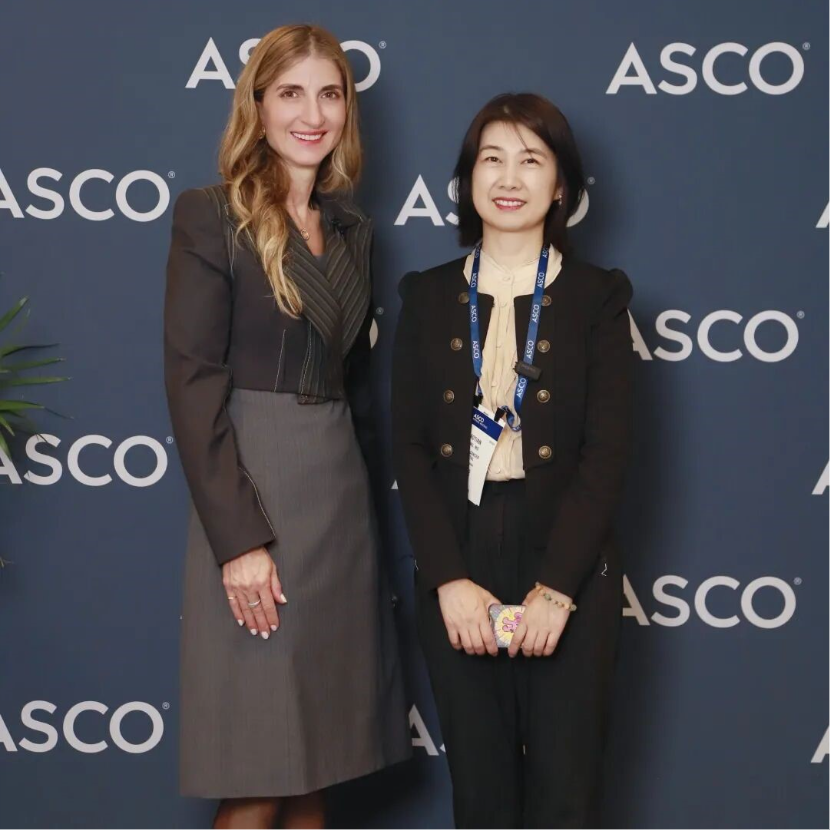


Prof. Xiaotian Zhang

Prof. Yelena Janjigian