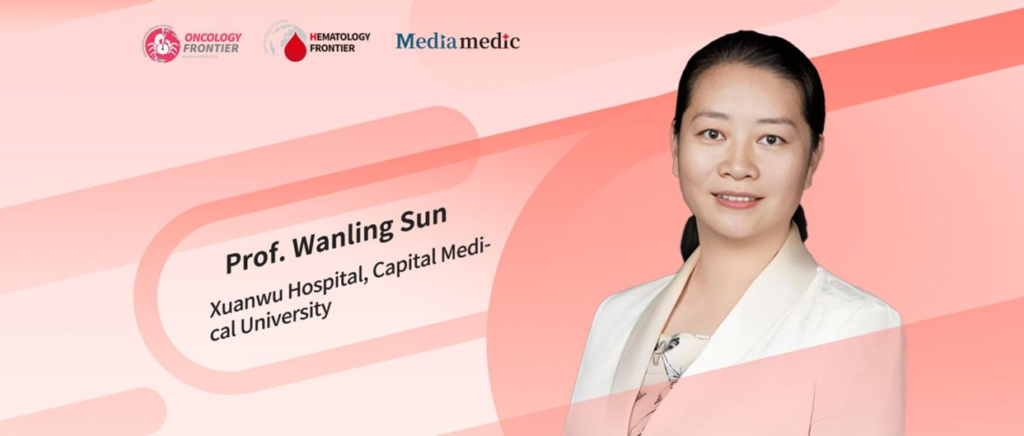
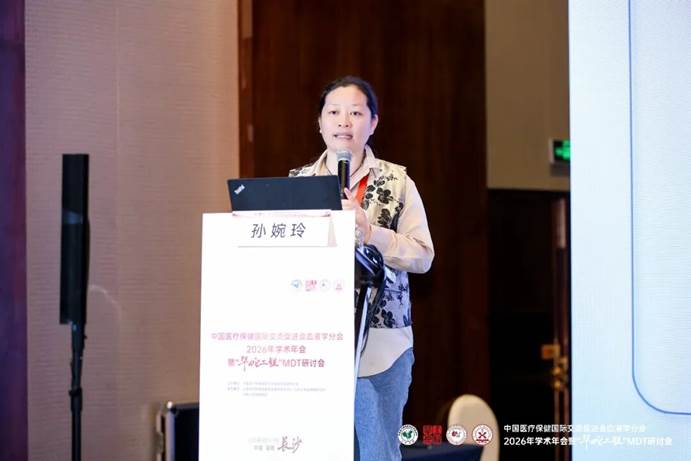
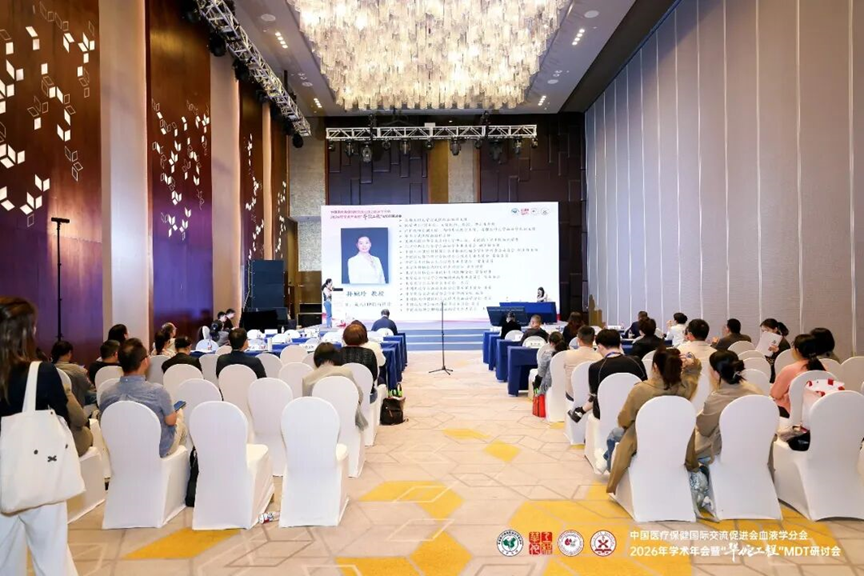
From April 10 to 11, 2026, the Annual Academic Meeting of the Hematology Branch of the China International Exchange and Promotive Association for Medical and Health Care (CPAM), together with the “Huatuo Project” MDT Workshop, was held in Changsha.During the conference, Professor Wanling Sun from Xuanwu Hospital, Capital Medical University, was invited by Hematology Frontier. Drawing on extensive clinical experience and the Chinese Guidelines for the Diagnosis and Treatment of Adult Primary Immune Thrombocytopenia (2025 edition), she provided an in-depth interpretation of the key updates and their clinical implications. Her insights offer important guidance for clinicians in understanding and applying the new recommendations, thereby advancing standardized and individualized management of primary immune thrombocytopenia (ITP) in China.
Q1: Epidemiology and Current Status of ITP in China
The newly released Chinese Guidelines for the Diagnosis and Treatment of Adult Primary Immune Thrombocytopenia (2025 edition) provide an important reference for standardized and individualized care. Could you first share the current clinical characteristics and epidemiological status of ITP in China?
Professor Wanling Sun: The 2025 update of the guidelines includes several important revisions. One of the most notable advances is the incorporation of updated epidemiological data specific to China. In previous versions, the incidence of ITP in China had not been clearly defined, and data from Europe and the United States were often referenced.
In contrast, the updated guidelines now provide, for the first time, epidemiological data based on the Chinese population, indicating that the incidence of primary immune thrombocytopenia in China is approximately 3 to 7 cases per 100,000 individuals. This finding not only highlights geographic variations in disease epidemiology but also offers clinicians more accurate and regionally relevant data to inform diagnosis and management.
Q2: Key Updates in Diagnosis and Treatment Path ways
The updated guidelines introduce important changes in diagnostic evaluation and treatment pathways for ITP. Could you elaborate on the core updates and their clinical significance?
Professor Wanling Sun: Although first-line therapy for adult ITP is generally effective, a proportion of patients exhibit resistance or fail to maintain a sustained response. To address this challenge, the updated guidelines introduce the concept of “1.5-line therapy.”
The core idea is to identify, at an early stage, patients who are likely to have a suboptimal response to corticosteroid therapy and to introduce agents traditionally reserved for later lines of treatment at an earlier point. Specifically, for patients who initially respond to corticosteroids but experience a decline in efficacy during tapering, combination therapy with an additional agent can be initiated.
This strategy promotes a more individualized treatment approach and has the potential to improve clinical outcomes by intervening earlier in patients at risk of treatment failure.
Q3: Refinements in Treatment Strategies and Individualized Selection
In the area of treatment—often the primary concern for clinicians—how has the guideline refined existing strategies, and how should therapies be selected based on patient characteristics?
Professor Wanling Sun: In recent years, the treatment landscape for ITP has evolved significantly with the introduction of new therapeutic agents. While corticosteroids remain the cornerstone of initial therapy, patients with refractory, relapsed, steroid-resistant, or steroid-dependent disease now have access to a broader range of options, reflecting the rapid development of novel agents in hematology.
For example, therapies targeting B-cell–related pathways, such as Bruton tyrosine kinase (BTK) inhibitors and spleen tyrosine kinase (SYK) inhibitors, can suppress the production of antiplatelet antibodies at their source.
In addition, advances in diagnostic technologies have highlighted the role of abnormal complement activation in the pathogenesis of ITP. In patients with evidence of complement dysregulation, traditional treatments such as high-dose intravenous immunoglobulin or splenectomy may be less effective, underscoring the need for alternative therapeutic approaches.
These developments provide a strong mechanistic basis for individualized treatment strategies and exemplify the successful translation of basic research into clinical practice, ultimately guiding more precise diagnosis and management of ITP.
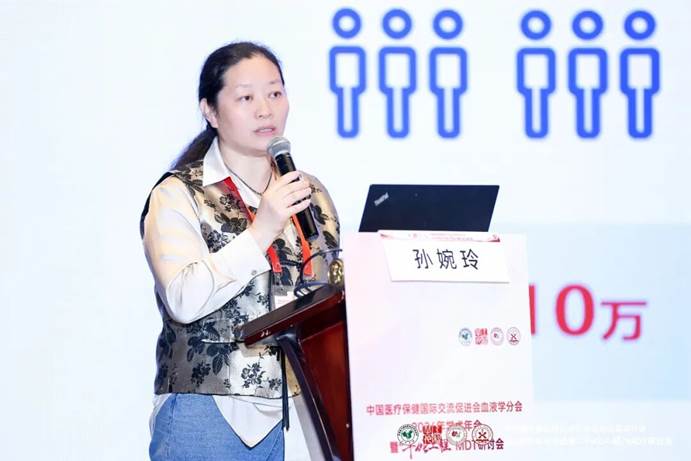
Expert Profile

Wanling Sun Xuanwu Hospital, Capital Medical University
Chief Physician; Professor; Doctoral Supervisor
Director, Department of Hematology Deputy Director, Department of Internal Medicine Teaching and Research Director, Internal Medicine Residency Training Program Deputy Director, Department of Hematology, Capital Medical University
Visiting Scholar, Medical University of Innsbruck (Austria) and the National Institutes of Health (USA)
Principal Investigator of projects funded by the National Natural Science Foundation of China and key programs of the Beijing Natural Science Foundation
Professional Affiliations: Vice Chair, Multidisciplinary Diagnosis and Treatment Committee for Central Nervous System Lymphoma, China Association for Promotion of Health Science and Technology Vice Chair, Hematology Committee, Beijing Association of Integrative Medicine Standing Council Member, Internal Medicine Physicians Branch, Beijing Medical Doctor Association Standing Council Member, Hematology Physicians Branch, Beijing Medical Doctor Association Standing Committee Member, Red Blood Cell Disease Committee, Beijing Anti-Cancer Association Member, Hematology Branch, Beijing Medical Association Standing Committee Member, Medical Information Committee, Chinese Women Physicians Association Member, Hematologic Immunology Branch (5th Committee), Chinese Society of Immunology Member, Myeloma Expert Committee, Chinese Society of Clinical Oncology (CSCO) Standing Committee Member, Healthcare Technology Committee, China Health Insurance Research Association Standing Committee Member, Lymphatic Disease Committee, Chinese Medical Education Association Member, Experimental Diagnostics Group (12th Committee), Hematology Branch, Chinese Medical Association