
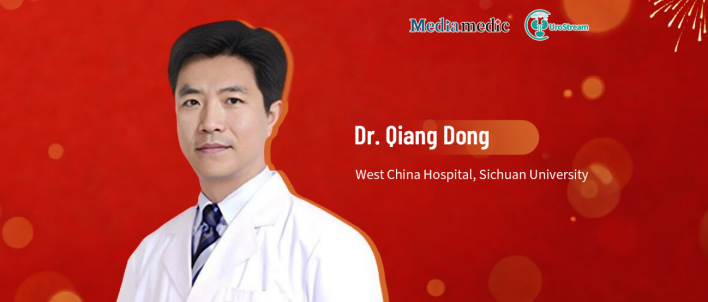
Editor’s Note: The 10th West China Urologic Oncology Tianfu Academic Conference was successfully held from November 5 to 7, 2026. Focusing on genitourinary cancers, the conference covered the three major tumor types—urothelial carcinoma, renal cancer, and prostate cancer—and featured in-depth discussions on key topics including precision diagnosis and treatment, multidisciplinary collaboration, and professional development. On this occasion, Oncology Frontier – UroStream invited Professor Qiang Dong of West China Hospital, Sichuan University, and Chair of the Conference, to share his insights into the highlights of this year’s meeting, practical approaches to implementing full-course multidisciplinary team (MDT) management, and the development of young physicians.
01
Oncology Frontier – UroStream:
As Chair of the Conference, looking at this year’s agenda, which areas of research progress do you consider particularly noteworthy? In your view, what do these topics reveal about current trends in the diagnosis and treatment of urologic cancers?
Professor Qiang Dong: This year marks the 10th anniversary of the West China Urologic Oncology Tianfu Academic Conference, which has consistently focused on genitourinary cancers. The program this year covered all three major tumor types: urothelial carcinoma, renal cancer, and prostate cancer.
Among these, I believe prostate cancer has seen the most notable advances. The discussions on prostate cancer at this year’s meeting were more precise and detailed. For example, they addressed how to stratify patients into low-, intermediate-, and high-risk groups, as well as whether metastases are synchronous or metachronous. These factors have a significant impact on treatment selection and are making the diagnosis and treatment of prostate cancer increasingly individualized and precise. What impressed me most was that more accurate disease stratification can provide stronger guidance for treatment selection.
02
Oncology Frontier – UroStream:
With continued advances in perioperative and systemic therapies, collaboration between urology and medical oncology is becoming increasingly important. What are the main obstacles to the effective implementation of multidisciplinary collaboration today? How can MDT evolve from case discussions into full-course patient management?
Professor Qiang Dong: Clinical medicine is no longer divided into clearly separated surgical and medical disciplines as it was in earlier years. There is now increasing cross-disciplinary integration, reflected in the growing trend of “surgical approaches becoming more medical, and medical approaches becoming more surgical.” This illustrates the broader movement toward multidisciplinary integration.
Regarding the challenges of implementing tumor MDT, the answer is actually contained in your question: current multidisciplinary discussions tend to focus primarily on treatment. The key to overcoming this limitation and achieving effective implementation is to move beyond multidisciplinary discussions toward full-course management.
An MDT comprising surgeons, medical oncologists, pathologists, radiologists, radiation oncologists, and other relevant specialists should not be limited to formulating treatment plans and holding multidisciplinary discussions. Instead, its scope should extend to diagnosis, screening, follow-up, and prognosis, evolving into comprehensive management throughout the entire disease course. This represents an important expansion of how multidisciplinary teams operate and is also a key means of ensuring that MDT becomes fully integrated into clinical practice, providing stronger guidance and support for patient care.
03
Oncology Frontier – UroStream:
Given the rapid evolution of evidence-based research and treatment technologies in urologic oncology, what capabilities do you believe young physicians need to develop to better meet the demands of future clinical practice and research?
Professor Qiang Dong: The key phrase that resonates most strongly with me is “proactive learning.” Unlike in earlier years, there are now many more ways to access new knowledge, perspectives, and even technologies. Therefore, young physicians who are just beginning their careers, or are still in the early stages of professional development, should take a more proactive approach to learning.
They should seek advice from experienced colleagues, obtain information through online resources, and actively participate in national, international, and regional academic conferences. By learning through these various forms of academic exchange, they can gradually develop their own systematic understanding of technologies, knowledge, and professional perspectives. This will provide stronger support for their professional growth. That is one of my most important personal reflections: proactive learning is the key.
Professor Qiang Dong