

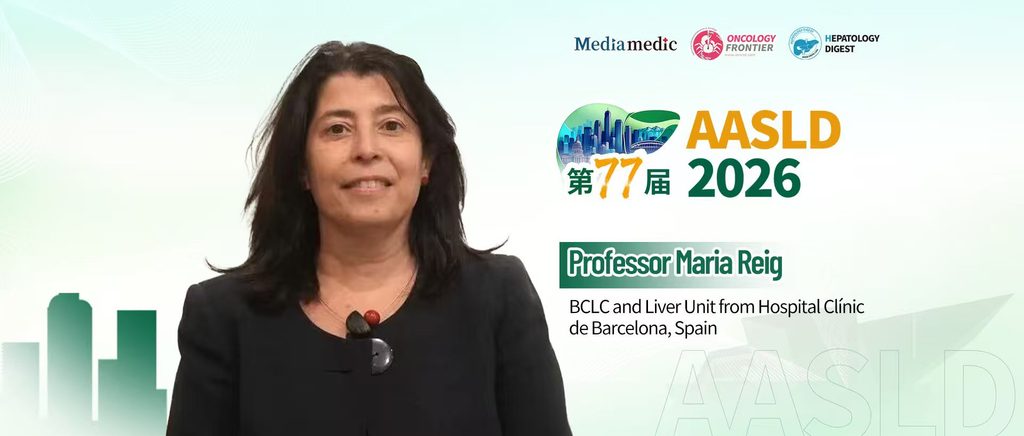
As the global burden of metabolic dysfunction-associated steatotic liver disease (MASLD) intensifies, systemic therapy for MASLD-related hepatocellular carcinoma (HCC) has emerged as a focal topic at AASLD 2026. These patients frequently present with metabolic syndrome, obesity, diabetes, and advanced fibrosis, resulting in treatment tolerance and prognostic evaluation that differ substantially from those of virus-related HCC. In her plenary session at the congress, Professor Maria Reig of BCLC and Liver Unit from Hospital Clínic de Barcelona, Spain, emphasized that the traditional paradigm of stratifying treatment strategies by "etiology" urgently needs updating. Clinical decision-making should shift toward individualized stratification centered on patient phenotype, comorbidities, and hepatic reserve. Hepatology Digest conducted an on-site interview with Professor Reig, engaging in an in-depth dialogue on treatment tolerance and future evolution in metabolic-related HCC.Hepatology Digest: MASLD-related HCC patients often have comorbid metabolic syndrome, obesity, diabetes, and advanced fibrosis/cirrhosis. How do these characteristics affect their tolerance and response to conventional systemic therapies (immune checkpoint inhibitors combined with VEGF inhibitors, TKIs)? What are the key differences in clinical practice between these patients and those with HBV-related HCC?
Prof. Reig: First, I want to emphasize that it is unreasonable to use etiology as the sole criterion for selecting systemic therapy. Preclinical studies once suggested that the MASLD background might impair response to checkpoint inhibitors through immune microenvironment exhaustion. However, real-world data show that patients with different etiologies—whether viral, metabolic, or alcohol-related—exhibit overall similar efficacy when receiving checkpoint inhibitor therapy. Etiology itself is not an independent predictor of treatment response. The hypothesis that etiology may influence treatment response has not been proven.
The true clinical challenge in MASLD-related HCC lies in host factors rather than the tumor itself. These patients frequently have comorbid obesity, type 2 diabetes, sarcopenia, and cardiovascular-metabolic complications, and may concurrently present with occult portal hypertension. They do not necessarily show drug insensitivity; rather, they are more likely to enter the treatment landscape at a later disease stage due to poor performance status and delayed healthcare-seeking, often being diagnosed at an advanced terminal stage. This confounding factor can seriously interfere with our judgment of treatment efficacy and is a critical variable that must be incorporated into clinical decision-making.
Therefore, the key distinction from HBV-related HCC is not whether immunotherapy can be used, but that metabolic-group patients carry a heavier comorbidity burden, have more prominent extrahepatic complications, and require more refined assessment of hepatic functional reserve. The treatment goal is not only tumor shrinkage, but also preventing hepatic decompensation while preserving hepatic reserve.
Hepatology Digest: What special considerations apply to first-line therapy for unresectable MASLD-related HCC? How do you weigh different regimens when bevacizumab is contraindicated or hepatic functional reserve is limited?
Prof. Reig: When the atezolizumab-bevacizumab combination is restricted—for example, due to risks of portal hypertensive bleeding, elevated bilirubin, impaired renal function, or poor performance status—we should not attribute poor response to etiology, but should return to a comprehensive assessment of the patient’s overall clinical profile.
The primary consideration is the comorbidity spectrum: Does the patient have poorly controlled diabetes, severe obesity-related cardiopulmonary risks, or sarcopenia? These factors directly determine treatment tolerance. The second is dynamic assessment of hepatic reserve and decompensation risk, which requires indicators such as ALBI grade, INR, ascites, and history of variceal bleeding to judge whether the patient can withstand the toxicity of immune combination or tyrosine kinase inhibitor regimens.
Another often underestimated but extremely important dimension is time toxicity—how many hours per week does the patient need to spend traveling for treatment, monitoring, and infusion? For metabolically vulnerable populations, frequent visits themselves constitute a non-negligible treatment burden. Currently, we have no predictive biomarkers to determine in advance which patients will benefit from a specific regimen. Therefore, when bevacizumab is contraindicated, individualized prioritization must be made among comorbidities, hepatic reserve, and time toxicity. Some patients may be suited for single-agent immunotherapy or low-toxicity TKIs; some may be better candidates for sequential design combining locoregional therapy with systemic treatment; while those at high risk of decompensation should prioritize liver protection rather than aggressive tumor shrinkage.
Hepatology Digest: Looking ahead, how do you envision the evolution of systemic therapy for MASLD-related HCC over the next 3–5 years? What are the most urgent research or clinical practice needs regarding biomarker-guided individualized dosing, dose adjustment to prevent hepatic decompensation, and multidisciplinary collaboration?
Prof. Reig: I believe the future evolution of systemic therapy will require identifying new targets to understand the heterogeneous evolutionary patterns of the tumor microenvironment across different patients. However, it must be remembered that etiology itself is not a theoretical textbook—the same patient may have overlapping infections of different viruses, or combined alcohol consumption and other inflammatory factors, presenting mixed etiologies and mixed phenotypes. Therefore, my core proposition is to phenotype the patient and define the treatment strategy based on that.
Specifically, the most urgent needs for the next 3–5 years include: developing dynamic biomarkers that can predict the risk of hepatic decompensation rather than merely predicting tumor response,; exploring dose individualization strategies for metabolically vulnerable populations, such as initial dose reduction and intermittent dosing; establishing multidisciplinary phenotype clinics integrating hepatology, oncology, nutrition, radiology to collectively define “treatable phenotypes.” The ultimate goal is to shift clinical decision-making from the labeling mindset of “Is this MASLD- or HBV-related HCC?” to precise stratification thinking based on “What phenotypic combination of hepatic reserve, metabolic complications, sarcopenia, portal hypertension, and time toxicity does this patient have?” This is the viable path to preventing hepatic decompensation and improving the long-term prognosis of patients with metabolic-related HCC.