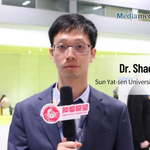
The 2026 Congress of the European Society for Medical Oncology (ESMO 2026) was held in Madrid, Spain, from October 23 to 27. At this year's congress, the team led by Professor Xiaohua Wu from Fudan University Shanghai Cancer Center presented four studies of innovative drugs developed in China, spanning three major gynecologic malignancies: cervical cancer, ovarian cancer, and endometrial cancer.These studies ranged from JSKN033, the world’s first fixed-dose subcutaneous combination of a bispecific HER2-targeted antibody-drug conjugate (ADC) and a PD-L1 inhibitor, to updated overall survival (OS) data from the bispecific HER2 ADC JSKN003 in platinum-resistant ovarian cancer (PROC). They also included long-term follow-up results, with 48.5 months of data, for first-line maintenance therapy with the domestically developed next-generation PARP inhibitor senaparib, as well as a Phase II investigation of the TROP2 ADC sacituzumab tirumotecan (Sac-TMT) plus pembrolizumab in pMMR endometrial cancer.
At the congress, Oncology Frontier interviewed Professor Xiaohua Wu to discuss the innovative mechanisms, key findings, and clinical implications of these four studies. The following is the full interview.
Oncology Frontier: JSKN033, which you presented at this congress, is the world’s first fixed-dose subcutaneous combination of a bispecific HER2-targeted ADC and a PD-L1 inhibitor. In previously treated patients with cervical cancer, what changes does this novel formulation design—subcutaneous ADC plus immunotherapy—bring in terms of administration convenience and quality of life compared with conventional intravenous combination regimens? Can the ORR, DoR, and safety data reported at this congress support its potential as a new treatment option for previously treated cervical cancer?
Professor Xiaohua Wu: JSKN033 is a fixed-dose subcutaneous combination formulation consisting of a bispecific HER2-targeted ADC and a PD-L1 inhibitor. This novel formulation design introduces several innovations.
First, it represents a mechanistic innovation. The ADC provides targeted tumor killing, while the PD-L1 inhibitor activates the immune response. The bispecific HER2 design, together with a topoisomerase I inhibitor payload (DAR of 4), theoretically offers both enhanced targeted cytotoxicity and synergistic immune activity.
More importantly, it represents a formulation innovation. Conventional combinations of ADCs and immune checkpoint inhibitors are generally administered intravenously, requiring patients to undergo repeated hospital visits or prolonged infusions. JSKN033 combines the two drugs into a high-concentration subcutaneous formulation that can be administered within seconds. Its bioavailability and pharmacokinetic profile also represent a novel approach. This substantially improves administration convenience and treatment adherence, which is particularly meaningful for improving patients’ quality of life.
In terms of efficacy, the JSKN033-102 study (NCT06770881) presented at this congress enrolled previously treated patients with cervical cancer. Among them, 75% had received prior immunotherapy, 56.3% had received bevacizumab, and 10.9% had received an ADC. These patients, who had failed first-line immunotherapy or had previously been treated with immunotherapy, had extremely limited subsequent treatment options and generally poor prognoses.
As of March 20, 2026, among the 64 enrolled patients, the recommended-dose group receiving 8.4 mg/kg achieved an objective response rate (ORR) of 52.9% (18/34), a disease control rate (DCR) of 88.2%, and a median progression-free survival (mPFS) of 7.2 months. Efficacy was consistent across subgroups defined by HER2 expression, PD-L1 expression, and prior immunotherapy or bevacizumab exposure.
Regarding safety, the incidence of grade ≥3 treatment-related adverse events (TRAEs) was 26.6%. Injection-site reactions were the most common TRAEs. No dose reductions, treatment discontinuations, or deaths due to TRAEs were observed. Interstitial lung disease (ILD) is a safety signal that requires attention and close monitoring.
Overall, JSKN033 has demonstrated encouraging efficacy and manageable safety in patients with immunotherapy-pretreated, difficult-to-treat cervical cancer, potentially offering these patients an entirely new treatment option. We are currently conducting a confirmatory Phase III clinical trial and look forward to positive results that will benefit more patients with refractory disease.
Oncology Frontier: In the PROC setting, you reported updated OS data for JSKN003 after a median follow-up of 20.5 months. How does the bispecific HER2 ADC define the population most likely to benefit from treatment in PROC? Could HER2 expression or HER2-low status become a new predictive biomarker for efficacy in ovarian cancer? How have the OS results after 20.5 months of follow-up evolved compared with the earlier data? What is the clinical significance of the survival benefit offered by JSKN003 in this population, where later-line treatment options are extremely limited?
Professor Xiaohua Wu: JSKN003 is a bispecific HER2-targeted ADC. The data presented at this congress were an updated analysis of 47 patients with multiply relapsed PROC pooled from two Phase I studies, JSKN003-101 and JSKN003-102. As of March 10, 2026, the median follow-up had reached 20.5 months.
Previous ADCs have often relied on single targets, such as folate receptor or TROP2. However, HER2 expression in ovarian cancer is not particularly high. The bispecific design of JSKN003 does not depend on high HER2 expression, which is one of its particularly distinctive advantages.
The data showed that, among the 47 patients, 66.0% had received at least three prior lines of therapy, 80.9% had received bevacizumab, and 63.8% had received a PARP inhibitor. This was a typical heavily pretreated, difficult-to-treat population.
The overall ORR was 63.8% (confirmed ORR, 55.3%), median duration of response (DoR) was 9.2 months, and mPFS was 8.3 months. Median OS reached 23.5 months. Such survival data are unprecedented in a population such as PROC, where later-line treatment options are extremely limited.
It is particularly worth emphasizing that efficacy was consistent between patients with HER2 expression (IHC 1+/2+/3+, 38.3%) and those without HER2 expression (IHC 0, 44.7%). This indicates that the benefit of JSKN003 does not depend on HER2 expression status and may provide a new treatment option for patients with PROC who have low HER2 expression and have previously lacked targeted treatment options.
Regarding safety, the incidence of grade ≥3 TRAEs was 21.3%, with anemia being the most common event (6.4%), consistent with previous reports.
A confirmatory Phase III study, JSKN003-306 (NCT06751485), is currently being conducted in the overall HER2 population. We look forward to further confirmation of the value of this treatment strategy.
Oncology Frontier: The FLAMES study updated the PFS results for first-line maintenance therapy with senaparib in patients with newly diagnosed advanced ovarian cancer. PARP inhibitors have been used in first-line maintenance therapy for more than a decade. As a next-generation PARP inhibitor developed in China, how did senaparib perform in the updated PFS analysis across different subgroups, including patients with BRCA mutations and those with wild-type BRCA? Compared with pivotal studies such as SOLO-1 with olaparib and PRIMA with niraparib, what are the differentiating advantages of senaparib? Do the long-term safety data provide clinicians with greater confidence in its continued use?
Professor Xiaohua Wu: The FLAMES study first reported its interim analysis results at the 2023 ESMO Congress and met its primary endpoint.
At this congress, we presented updated confirmatory PFS results after a median follow-up of 48.5 months, or approximately four years. As of September 1, 2025, the median PFS assessed by blinded independent central review (BICR) was 38.7 months in the senaparib group, compared with 13.6 months in the placebo group.
Subgroup analyses showed sustained benefit regardless of BRCA status. Median PFS reached 49.8 months in patients with BRCA mutations (HR, 0.41) and 33.3 months in patients with wild-type BRCA (HR, 0.49). Consistent benefits were also observed across all prespecified subgroups, including FIGO stage, residual disease status, and response to first-line platinum-based chemotherapy. These findings indicate that the efficacy of senaparib as first-line maintenance therapy does not depend on BRCA mutation status and extends to the overall patient population.
Regarding safety, the safety profile did not change with longer follow-up and remained primarily characterized by known events such as hematologic toxicity. Senaparib also allows flexible stepwise dose reductions to 100 mg, 80 mg, and 60 mg, facilitating long-term management.
In the updated safety analysis (n=403), only 5.6% of patients in the senaparib group discontinued treatment because of treatment-related adverse events. Common TEAEs (occurring in ≥20% of patients) included anemia, neutropenia, leukopenia, thrombocytopenia, elevated transaminases, weight gain, nausea, and abdominal pain. No treatment-related deaths occurred.
Taken together, the nearly four-year follow-up data confirm that first-line maintenance therapy with senaparib provides sustained and clinically meaningful PFS improvement for patients with advanced ovarian cancer, with a favorable safety profile. It can therefore serve as one of the cornerstone agents for first-line maintenance therapy.
Oncology Frontier: The final study focused on pMMR advanced endometrial cancer. Your team reported Phase II results for the TROP2 ADC sacituzumab tirumotecan (Sac-TMT) plus pembrolizumab in patients with pMMR endometrial cancer whose disease had progressed following platinum-based treatment. What were the ORR and DoR results reported at this congress?
Professor Xiaohua Wu: Among the molecular subtypes of endometrial cancer, patients with pMMR disease are often less sensitive to first-line immunotherapy. Following recurrence, they rely primarily on chemotherapy and have very limited treatment options. We therefore investigated whether combining an ADC with immunotherapy could offer an advantage over conventional chemotherapy.
The data presented at this congress came from the pMMR endometrial cancer cohort of the 2870-002/SKB264-II-06 study (NCT05642780).
Sac-TMT is a TROP2-targeted ADC that uses a unique bifunctional linker to efficiently deliver a belotecan-derived topoisomerase I inhibitor payload to tumor cells. Its mechanism complements that of pembrolizumab: while the ADC kills tumor cells, it also activates the immune response, potentially “heating up” relatively “cold” tumors such as pMMR endometrial cancer.
As of January 26, 2026, a total of 40 patients with pMMR advanced endometrial cancer whose disease had progressed following platinum-based treatment had received Sac-TMT plus pembrolizumab. The median follow-up was 8.1 months, and 43% of patients had received at least two prior lines of therapy.
The confirmed ORR was 38%, while the overall ORR including confirmed and unconfirmed responses was 48%. The best overall response included complete response (CR) in 3% of patients, partial response (PR) in 35%, and stable disease (SD) in 43%. Median DoR had not yet been reached (range, 1.8+ to 7.8+ months), and mPFS was 7.6 months.
Regarding safety, 45% of patients experienced grade ≥3 TRAEs. The most common were neutropenia (18%), leukopenia (18%), anemia (15%), and stomatitis (10%). No fatal TRAEs occurred, and the overall safety profile was manageable.
These results support Sac-TMT plus pembrolizumab as a potential new treatment option for patients with pMMR endometrial cancer whose disease has progressed following platinum-based therapy. They also provide a rationale for the ongoing Phase III TroFuse-033 study, which is evaluating Sac-TMT plus pembrolizumab as first-line maintenance therapy in pMMR endometrial cancer.
In addition, the TroFuse-005 study reported at this congress showed positive results with Sac-TMT as second-line treatment following progression on first-line chemotherapy plus immunotherapy. To my knowledge, both PFS and OS were positive, and the safety profile was manageable. These findings are certainly worth following closely.
Oncology Frontier: From the subcutaneous combination formulation of JSKN033 to the use of Sac-TMT to “heat up” cold tumors, can we identify a common trend—that ADCs developed in China are reshaping the treatment landscape in gynecologic oncology through approaches such as immunotherapy combinations and novel formulations? How do you envision the future positioning of these studies in international treatment guidelines?
Professor Xiaohua Wu: At this year’s ESMO Congress, I presented four studies: JSKN033, a subcutaneous combination of a bispecific HER2 ADC and immunotherapy, is challenging the treatment paradigm for previously treated cervical cancer; senaparib is strengthening the position of first-line maintenance therapy in ovarian cancer with nearly four years of follow-up data; Sac-TMT plus immunotherapy is being explored in pMMR endometrial cancer; and JSKN003 is offering a new treatment option for platinum-resistant ovarian cancer.
Together, these studies cover three major gynecologic malignancies—endometrial cancer, cervical cancer, and ovarian cancer—and span the treatment continuum from first-line maintenance to recurrent and refractory disease. They all demonstrate important achievements by China in the field of gynecologic oncology.
In recent years, Chinese gynecologic oncology research has clearly moved from “following” and “running alongside” international research toward “taking the lead.” This progress is now an undeniable reality. It has been driven by China’s large patient population, the rapid development of its biopharmaceutical industry, and the many clinicians who have devoted themselves to clinical research. It has also depended on the timely approval of innovative drugs by the national drug regulatory authorities.
With this solid clinical evidence, I am confident about the future. These innovative drugs will not only benefit patients in China but also bring benefits to patients worldwide. I also look forward to more research from China being incorporated into international guidelines and contributing “Chinese solutions” to the treatment of gynecologic cancers.