In the treatment of head and neck cancers, particularly oral squamous cell carcinoma (OSCC), clinicians have long faced a difficult trade-off: achieving radical tumor control often requires surgery that sacrifices critical anatomical structures, including the tongue, floor of the mouth, and jawbone, all of which are essential for speech, swallowing, and appearance. To further reduce the risk of local recurrence, postoperative radiotherapy or concurrent chemoradiotherapy is frequently added. However, the resulting complications, such as trismus, xerostomia, dysphagia, and tissue fibrosis, can continue to impair patients' quality of life for years.Over the past decade, immunotherapy has gradually shifted treatment toward the preoperative setting. Neoadjuvant immunochemotherapy not only offers the potential to improve pathological complete response rates but also raises the possibility of administering systemic treatment before surgery and, in selected responders, even omitting postoperative radiotherapy. Nevertheless, several important questions remain unanswered: What is the optimal sequence of perioperative treatments? Which patients can safely avoid radiotherapy? And could shortening postoperative adjuvant treatment compromise long-term survival? These questions require answers from randomized controlled trials.
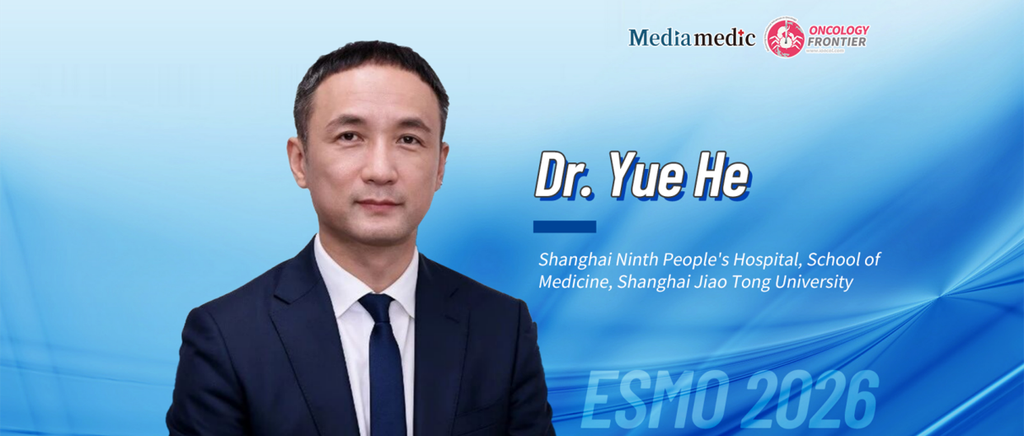
At the 2026 European Society for Medical Oncology (ESMO) Congress, the OPTIMAL study, led by Professor Yue He’s team at Shanghai Ninth People’s Hospital, Shanghai Jiao Tong University School of Medicine, was presented as a late-breaking abstract (LBA) in the Rapid Oral Abstract Session. For the first time in a randomized controlled setting, the study investigated the efficacy and safety of a treatment strategy involving perioperative tislelizumab combined with chemotherapy, followed by omission of postoperative radiotherapy in patients meeting predefined criteria. Following the congress, Oncology Frontier interviewed Professor Yue He on site. This article presents the key findings of the study, together with Professor He’s perspectives on its design, functional preservation, plans for phase III research, and the future treatment landscape.
Study Overview
Background
Studies such as KEYNOTE-689 have already demonstrated that immunotherapy can provide survival benefits in patients with resectable head and neck squamous cell carcinoma. However, investigators also observed that the event-free survival (EFS) curves began to separate at approximately six months and subsequently gradually plateaued. This suggests that there is still room to explore the optimal duration and intensity of postoperative immunotherapy.
An important biological rationale for this approach is that memory T cells are primarily retained in lymph nodes. If patients respond well to neoadjuvant immunotherapy, omitting postoperative radiotherapy may help avoid radiation-induced damage to the lymph node immune microenvironment, thereby better preserving immune function and potentially enhancing the value of subsequent adjuvant immunotherapy. The OPTIMAL study was designed based on this rationale.
Study Design
The study enrolled patients with resectable locally advanced oral squamous cell carcinoma (LA-OSCC), stratified by stage III or stage IVa disease, who were randomized 1:1 to the experimental or control group.
Experimental group: Patients first received three cycles of tislelizumab (200 mg) combined with albumin-bound paclitaxel (260 mg/m²) and cisplatin (75 mg/m²), administered once every three weeks, followed by surgery. Postoperatively, patients who achieved a major pathological response (MPR) and had no high-risk features, such as positive surgical margins or extranodal extension (ENE), received only six cycles of adjuvant tislelizumab, without postoperative radiotherapy. All other patients continued to receive standard postoperative radiotherapy (RT) or concurrent chemoradiotherapy (CRT).
Control group: Patients underwent surgery directly, followed by standard postoperative radiotherapy or concurrent chemoradiotherapy.
The primary endpoint was two-year EFS. Secondary endpoints included objective response rate (ORR), progression-free survival (PFS), overall survival (OS), and safety.
Key Results
Between June 2024 and April 2026, a total of 116 patients were enrolled. In the experimental group, 58 patients were evaluable, with an ORR of 81.03%. Of these, 55 underwent surgery. The MPR rate was 65.45%, and the pathological complete response (pCR) rate reached 45.45%.
During follow-up, nine EFS events occurred in the subgroup receiving neoadjuvant treatment followed by postoperative radiotherapy: three cases of disease progression during the neoadjuvant phase, five recurrences, and one death due to radiotherapy-related complications. There were three deaths in total. By comparison, only two EFS events and no deaths occurred in the subgroup that received neoadjuvant treatment followed by omission of radiotherapy. In the control group, 19 EFS events occurred, including eight deaths.
Regarding safety, the incidence of grade ≥3 treatment-related adverse events (TRAEs) was 25.9% in the experimental group, lower than the 36.2% observed in the control group. Adverse events in the control group were mainly associated with radiotherapy and surgery.
Study Conclusions
Intensified neoadjuvant immunotherapy, followed by short-course adjuvant immunotherapy in patients achieving MPR without high-risk features, may represent a more appropriate treatment approach for locally advanced OSCC. In carefully selected patients with favorable responses, omitting postoperative radiotherapy may offer improved safety and tolerability while preserving both survival outcomes and function.
Expert Interview
In this interview, Professor Yue He shares his perspectives on the OPTIMAL study’s endpoint design, its approach to functional preservation, plans for subsequent phase III research, and the future landscape of perioperative immunotherapy.
Q: OPTIMAL is a randomized phase II study. What are its primary endpoints, and what key efficacy data have been reported so far?
Professor Yue He: The main outcomes we are evaluating in this study are EFS and OS. It is important to clarify that, at the time of the presentation at ESMO, the follow-up for EFS and OS was only approximately 14 months, which is still relatively short. However, the fact that the study was selected as an LBA for the Rapid Oral Abstract Session indicates that these 14 months of data have already revealed encouraging signals. The MPR rate in the experimental group was close to two-thirds, while the pCR rate was also approximately 45%.
Of course, reliable two-year EFS and OS data will require a longer follow-up period. We are confident that at next year’s ESMO Congress, we will be able to present more compelling EFS and OS results, providing the global oncology community with a stronger evidence base for understanding and applying the findings of this study.
Q: Surgery for oral squamous cell carcinoma often involves critical structures such as the tongue and floor of the mouth, directly affecting swallowing, speech, and appearance. How does the OPTIMAL study balance survival and functional preservation in its design?
Professor Yue He: Traditional treatment for head and neck malignancies, particularly OSCC, often involves surgery that damages important anatomical structures, including the tongue, gingiva, and jawbone, thereby affecting patients’ ability to speak, swallow, and chew.
This is why many researchers have focused on neoadjuvant treatment in recent years. The first objective of neoadjuvant therapy remains achieving better survival outcomes. However, building on this goal, an increasing number of researchers are now pursuing a dual objective: improving both EFS and OS while also making progress in functional preservation.
This is precisely the rationale behind the OPTIMAL study. By achieving favorable responses through preoperative neoadjuvant induction, we aim to reduce the damage associated with postoperative radiotherapy and thereby preserve the function of important oral anatomical structures. In this sense, the study seeks to improve not only survival but also quality of life. Strictly speaking, it is a hybrid design.
In clinical research, the most reliable approach is generally a single-variable design. However, we only felt confident in adopting this hybrid design after establishing favorable EFS and OS outcomes through neoadjuvant induction in the preceding treatment phase. This provides a basis for further improving functional preservation.
Some may be concerned that adding another phase of preoperative treatment could theoretically increase adverse events (AEs). Our perspective is that intensified preoperative treatment may indeed increase AEs in theory, but it also offers benefits in terms of EFS and OS. OPTIMAL takes this approach a step further: since we have already achieved favorable results before surgery, we can move treatment forward and correspondingly reduce the intensity of postoperative treatment. When considered as a whole, this strategy may actually reduce the overall burden of treatment-related adverse effects.
Q: Following the preliminary positive results of OPTIMAL, how will the phase III study be designed? Can pCR serve as a surrogate endpoint for long-term survival? Could perioperative immunochemotherapy eventually replace conventional postoperative concurrent chemoradiotherapy?
Professor Yue He: OPTIMAL has produced preliminary positive results, but these still need to be confirmed through two years or even longer of follow-up. Nevertheless, I believe we are moving in the right direction. What this strategy seeks to preserve is precisely the function of patients with head and neck tumors, particularly those with OSCC.
In fact, we are already advancing a phase III study in parallel. It overlaps with OPTIMAL in certain aspects and focuses on two major sources of treatment-related damage during the perioperative period: radiotherapy and highly invasive radical surgery. Our goal is to reduce the intensity of both in patients who achieve favorable responses to neoadjuvant induction, while improving functional preservation and quality of life. Approximately one-third of the patients have already been enrolled in this phase III study. Preparatory work took nearly two years. Clinical research must proceed step by step. Only after establishing reliable efficacy with the preceding preoperative induction approach can we confidently move forward with these subsequent treatment de-escalation strategies.
Regarding pCR, it is an excellent and objective pathological indicator. However, when evaluating the overall outcomes of clinical research, survival and EFS remain the most important endpoints. At present, pCR is a reliable predictive indicator, but it cannot yet replace EFS or OS. Nevertheless, there is considerable scope for research centered on pCR. We can use it to predict treatment response and guide studies exploring treatment de-escalation and improvements in quality of life. I therefore consider pCR extremely important, but it operates at a different level and serves a different purpose from OS and EFS. These endpoints should not be interpreted as addressing the same question.
As for perioperative immunochemotherapy or immunotherapy combined with targeted agents, I believe the fundamental issue is one of moving treatment earlier in the disease course: should we deliver a sufficiently intensive attack against the tumor at an earlier stage, or wait until after surgery and intervene at a relatively later stage? These represent two different treatment philosophies.
This is also closely related to advances in science and technology. Twenty years ago, before these landmark drugs became available, we had little choice but to administer conventional concurrent chemoradiotherapy postoperatively. Surgery, as the classic tumor-removal approach, had an almost unshakable position. However, with ongoing drug development and advances in cell therapy and vaccine therapy for solid tumors, particularly head and neck solid tumors, I believe the future is extremely promising. Conventional treatment paradigms are likely to evolve. For selected patients receiving individualized and precision treatment, these new approaches may eventually even replace postoperative concurrent chemoradiotherapy, which is associated with substantial adverse effects. That is my perspective.
Summary
At the 2026 ESMO Congress, the OPTIMAL study delivered an early response to an important clinical question: how can we pursue both survival and functional preservation? In patients with locally advanced resectable OSCC, perioperative tislelizumab combined with chemotherapy demonstrated a high ORR (81.03%), MPR rate (65.45%), and pCR rate (45.45%). More importantly, among patients who achieved MPR without high-risk features, omission of postoperative radiotherapy was associated with fewer EFS events and no deaths. The overall incidence of grade ≥3 adverse events was also lower in the experimental group (25.9%) than in the control group receiving conventional surgery followed by postoperative radiotherapy or chemoradiotherapy (36.2%).
These findings point toward an emerging treatment paradigm: move effective treatment into the preoperative setting, use adequate neoadjuvant induction to achieve pathological responses, and then de-escalate treatment in patients who demonstrate favorable responses. This could mean omitting postoperative radiotherapy and, potentially in the future, exploring less extensive radical surgery, with the aim of preserving patients’ essential abilities to speak, swallow, and chew without compromising survival.
Of course, these early findings still require further validation. As Professor Yue He emphasized, mature two-year EFS and OS data are not yet available and will require additional follow-up. At present, pCR is a reliable predictive indicator rather than a validated surrogate endpoint, while omission of radiotherapy and surgical de-escalation should be considered only in carefully selected responders. The phase III study already underway under Professor He’s team will put this strategy of reducing treatment intensity while preserving function to the test in a larger patient population with longer follow-up.
For patients with OSCC, the ultimate goal of treatment has never been simply to survive, but to live with quality of life. The OPTIMAL study offers a glimpse of a future in which, in the era of immunotherapy, radical cancer treatment and functional preservation may no longer have to be mutually exclusive.
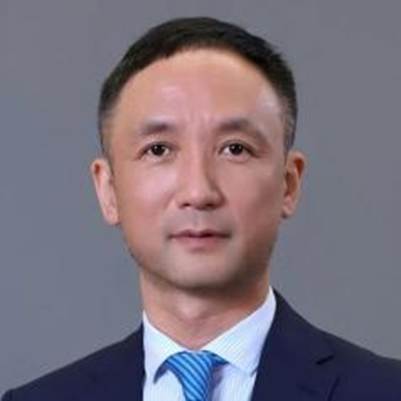
Professor Yue He