
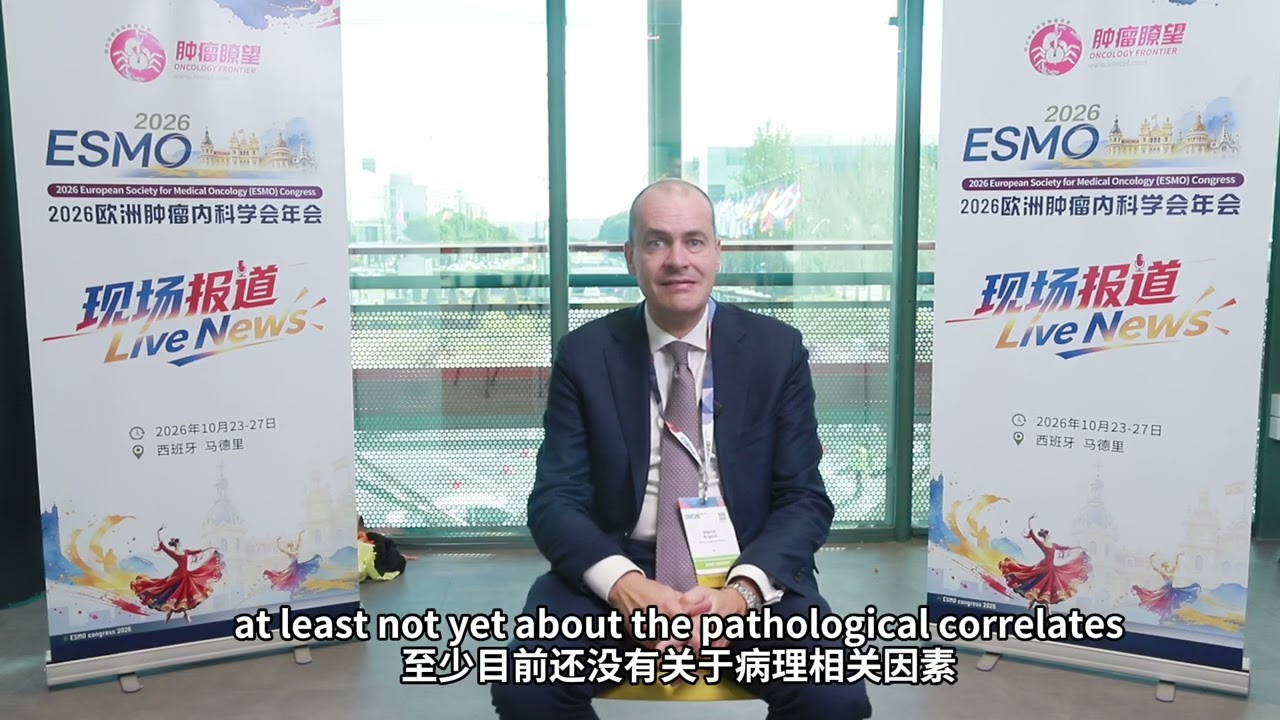
Editor's Note: For patients with high-risk localized or locally advanced prostate cancer who are candidates for surgery, the clinical value of perioperative treatment intensification compared with surgery alone, as well as the identification of patients most likely to benefit, remain central questions in current clinical research. At the 2026 European Society for Medical Oncology (ESMO) Congress, the PROTEUS subgroup analysis reported a direct comparison of perioperative apalutamide plus androgen deprivation therapy (ADT) followed by surgery versus surgery alone. Oncology Frontier – UroStream invited the study presenter, Professor Alberto Briganti of Vita-Salute San Raffaele University in Milan, Italy, to discuss the study design, pathological findings, and their potential relationship with long-term outcomes, as well as how further subgroup analyses and biomarker assessments may help identify patients most likely to benefit from treatment intensification.Oncology Frontier – UroStream: Compared with the main PROTEUS study, this subgroup analysis directly compared perioperative apalutamide plus ADT followed by surgery with surgery alone. What key clinical question was this design intended to address?
Professor Alberto Briganti: The PROTEUS subgroup analysis was designed to address a question that had not been covered by the main PROTEUS study: the absence of a standard-of-care treatment arm in the main study’s control group. In the main PROTEUS study, patients were randomized to receive either one year of perioperative apalutamide plus androgen deprivation therapy (ADT) or ADT alone. However, the control group did not include patients undergoing surgery alone, which is the standard treatment approach for this patient population.
To answer the question of how perioperative intensification compares with standard treatment, the subgroup analysis was conducted in patients with high-risk localized or locally advanced prostate cancer. Patients were randomized to receive either one year of perioperative apalutamide plus ADT or radical prostatectomy with pelvic lymph node dissection alone. This design enabled perioperative treatment intensification to be directly compared, for the first time, with the actual surgical standard of care.
Oncology Frontier – UroStream: What were the findings for pCR, MRD, and PSA response in this subgroup analysis? Compared with the main study, what do these results suggest about pathological downstaging in high-risk patients and its potential implications for long-term prognosis?
Professor Alberto Briganti: In the PROTEUS subgroup analysis, compared with the control group, patients receiving apalutamide plus ADT had a significantly higher proportion of pT2 tumors, as well as significantly lower rates of positive surgical margins and lymph node positivity. All of these differences were statistically significant. From a surgical perspective, these findings suggest that the treatment regimen can effectively reduce the extent of tumor involvement in surgical specimens and improve the completeness of tumor resection.
However, the current study has not yet conducted a dedicated analysis of the relationship between pathological factors and pathological complete response (pCR), nor have detailed results from an in-depth pCR assessment been reported. In addition, analyses correlating these pathological indicators with metastasis-free survival are still lacking, although this relationship has been preliminarily validated in the main PROTEUS study. These analyses are currently underway, and further results will be released in due course. This means that the available data can currently characterize changes at the pathological level, but whether these improvements translate into long-term survival benefits for patients still needs to be clarified through extended follow-up and dedicated analyses.
Oncology Frontier – UroStream: As a urologist, do you think this neoadjuvant-plus-adjuvant treatment intensification strategy will change the clinical pathway for radical prostatectomy in high-risk prostate cancer? Which patients should be prioritized for this approach? How should the timing of surgery and complication management be handled?
Professor Alberto Briganti: I believe the PROTEUS subgroup analysis further reinforces the findings of the main study because it adds a patient population that received no perioperative treatment at all. Together, the two studies represent a new therapeutic possibility that could change the treatment pathway for at least some patients and introduce a new treatment strategy: selected men with high-risk disease undergoing surgery may receive intensified treatment with apalutamide plus ADT.
However, accurately identifying the appropriate patient population remains a key unresolved challenge. Prognosis varies considerably among these patients, making it essential to determine who is most suitable for treatment intensification. Further subgroup analyses and biomarker assessments will help identify patient subgroups more likely to benefit from intensified treatment. Until then, applying treatment intensification indiscriminately to all patients with high-risk disease would not represent a mature clinical decision-making approach.
Summary
The PROTEUS subgroup analysis used surgery alone as the control arm to further investigate the value of perioperative apalutamide plus androgen deprivation therapy (ADT) in patients with high-risk localized or locally advanced prostate cancer. The study showed an increased proportion of patients with pT2 disease, together with lower rates of positive surgical margins and lymph node positivity. However, the relationship between these pathological changes and metastasis-free survival still requires dedicated analysis.
The findings offer a new perspective on treatment intensification for selected patients with high-risk prostate cancer, while highlighting the importance of appropriate patient selection. Given the considerable heterogeneity in prognosis, future research should incorporate subgroup analyses and biomarker assessments to accurately identify patients who may benefit and carefully define the appropriate scope of this treatment strategy.